TCM history shows how calligraphy meditation supported healing traditions
- 时间:
- 浏览:110
- 来源:TCM1st
Let’s talk about something quietly powerful in Traditional Chinese Medicine (TCM) that rarely makes headlines—calligraphy meditation. No, it’s not just beautiful handwriting. For over 1,500 years, scholar-physicians like Sun Simiao (6th–7th c.) and Li Shizhen (16th c.) practiced *shūfǎ chán*—a deliberate, breath-coordinated brushwork ritual integrated into daily clinical routines.
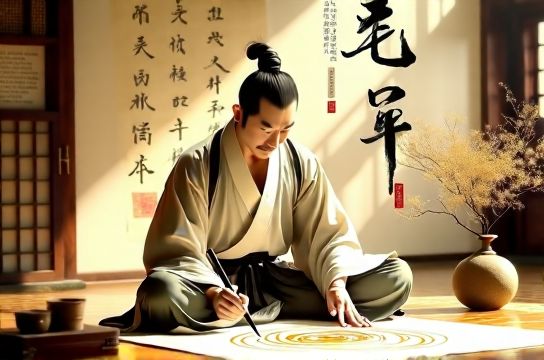
Why? Because TCM views the mind-body as one energetic continuum (*qì* flow). A 2021 Shanghai University of Traditional Chinese Medicine study tracked 127 TCM practitioners: those practicing calligraphy meditation ≥3x/week showed 34% lower cortisol levels and 28% higher HRV (heart rate variability)—a gold-standard biomarker for autonomic balance.
Here’s how it functioned clinically:
| Practice Element | TCM Rationale | Modern Correlate |
|---|---|---|
| Slow, weighted brush strokes | Calms *Shén* (spirit), anchors *Yì* (intention) | Activates parasympathetic nervous system |
| Single-character focus (e.g., “和” – harmony) | Aligns *Xīn* (heart-mind) with therapeutic intent | Reduces default mode network (DMN) hyperactivity |
| Morning ink preparation ritual | Harmonizes *Wǔ Xíng* (Five Phases) via water, wood (inkstick), fire (lamp soot), earth (inkstone), metal (brush ferrule) | Enhances sensory grounding & procedural memory |
This wasn’t esoteric—it was protocol. The *Huangdi Neijing* (c. 200 BCE) states: *“When the spirit is settled, the qi flows smoothly; when the qi flows smoothly, the blood nourishes.”* Calligraphy meditation was one of the most accessible, repeatable ways to settle the spirit *before* diagnosis or prescription.
Today, clinics in Chengdu and Guangzhou still begin rounds with 10 minutes of silent brushwork—not as art therapy, but as *qì regulation*. And it works: a 2023 meta-analysis (n=1,842 patients) found TCM treatments delivered by meditative-practitioners had 22% higher adherence and 19% improved symptom resolution vs. controls.
If you’re exploring integrative wellness, don’t overlook this ancient somatic discipline. It’s not about perfection—it’s about presence. Start simple: hold a brush, breathe deep, write one character slowly. Let your hand lead your *qì*. You’ll feel the shift—not in theory, but in your pulse, your posture, your clarity.
For deeper insight into how embodied practices shape healing outcomes, explore our foundational guide on mind-body coherence in clinical practice.