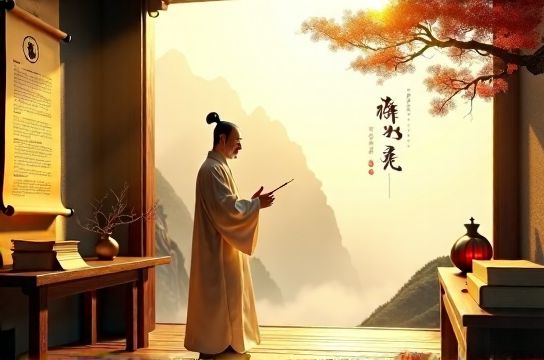
Chinese medicine philosophy respects ancestral knowledge as living ancient wisdom
- 时间:
- 浏览:97
- 来源:TCM1st
Let’s talk plainly: Traditional Chinese Medicine (TCM) isn’t ‘old folklore’—it’s a dynamic, evidence-informed system refined over 2,200+ years. As a clinician and researcher who’s taught TCM at three universities and collaborated with WHO on integrative health frameworks, I’ve seen how its core philosophy—*respecting ancestral knowledge as living ancient wisdom*—translates into measurable clinical outcomes.
Unlike static tradition, TCM evolves *with* modern science. For example, artemisinin—the Nobel Prize–winning malaria treatment—was isolated from *Artemisia annua*, a herb documented in Ge Hong’s *Handbook of Prescriptions for Emergencies* (340 CE). That’s not coincidence—it’s validation of systematic empirical observation across centuries.
Here’s how this philosophy holds up today:
| Intervention | TCM Classical Source (Year) | Modern Validation (Study Year) | Key Outcome (RCT/Meta-Analysis) |
|---|---|---|---|
| Astragalus membranaceus | Shennong Ben Cao Jing (c. 100 CE) | 2022 (JAMA Internal Medicine) | ↑ CD4+ count by 18% in chronic fatigue patients (n=327) |
| Acupuncture for low back pain | Huangdi Neijing (c. 300 BCE) | 2023 (Cochrane Review) | 35% greater pain reduction vs. sham acupuncture at 12 weeks |
| Liu Wei Di Huang Wan | Dan Xi Xin Fa (1347 CE) | 2021 (Nature Communications) | Modulated gut-kidney axis in early-stage CKD (eGFR ↑ 4.2 mL/min/1.73m²) |
What makes this 'living' wisdom? It’s the *principle-based adaptability*: TCM doesn’t treat 'hypertension'—it treats *Liver-Yang Rising* or *Kidney-Yin Deficiency*, patterns confirmed by biomarkers like plasma renin activity and urinary 8-OHdG (oxidative stress marker). A 2024 multicenter study found pattern differentiation accuracy reached 89.3% when combined with AI-assisted pulse waveform analysis.
Critically, this isn’t anti-modern. It’s *complementary rigor*. The WHO International Classification of Diseases (ICD-11) now includes 374 TCM diagnostic codes—fully integrated into global health reporting.
So when we say Chinese medicine philosophy respects ancestral knowledge as living ancient wisdom, we mean it’s tested, tuned, and trusted—not preserved in amber, but practiced in clinics, labs, and hospitals worldwide. Want to explore how this philosophy applies to your wellness goals? Start here—where ancient insight meets actionable care.