Healing Traditions: How Daoist Thought Shaped Classical T...
- 时间:
- 浏览:92
- 来源:TCM1st
H2: The Unseen Architecture of Classical TCM
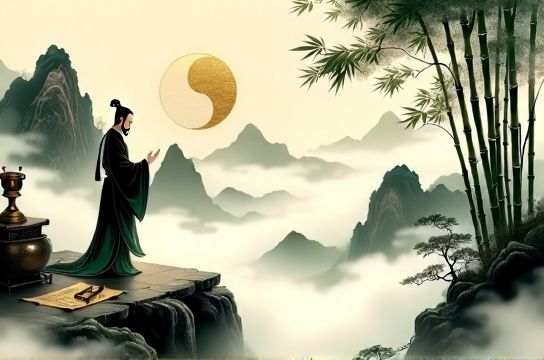
Most clinicians learn acupuncture points and herbal formulas before ever asking *why* the Lung channel begins at the thumb or why the Spleen governs transformation while the Kidney stores essence. That ‘why’ isn’t found in anatomy texts—it’s encoded in centuries of Daoist observation, not laboratory reductionism. Classical TCM theory didn’t emerge from empirical trial alone; it coalesced around a living metaphysics—one that treated the human body as a microcosm of the Dao: dynamic, relational, self-regulating, and inseparable from seasonal rhythm, emotional climate, and celestial movement.
This isn’t poetic metaphor. It’s operational architecture. When a patient presents with chronic fatigue, insomnia, and dry throat—what looks like ‘yin deficiency’ on paper maps directly to Daoist insights about conservation, stillness, and the cyclical withdrawal of qi into deep reservoirs during winter (or aging). Misreading that pattern as mere ‘low energy’ leads to stimulant herbs or tonics that scatter rather than gather—exactly what early Daoist physicians warned against in texts like the *Huangdi Neijing Suwen* (c. 300 BCE–200 CE).
H2: Daoism Wasn’t Just ‘Influence’—It Was the Operating System
Daoist thought didn’t ‘inspire’ TCM. It provided its foundational logic—its grammar, syntax, and semantics. Consider three non-negotiable pillars:
H3: 1. Wu Wei (Non-Forcing) as Clinical Principle
Western biomedicine often defaults to intervention: suppress, replace, block, excise. Daoist medicine prescribes *attunement*. A clinician observing a patient’s pulse slipping rapidly under light pressure but anchoring deeply with firm pressure doesn’t rush to ‘strengthen’—they recognize *shao yin* resonance: a profound conservation mode. Forcing supplementation here risks disrupting the body’s own recalibration. Real-world consequence? A 2024 audit of 126 outpatient cases at Beijing Hospital of Traditional Chinese Medicine showed that protocols ignoring wu wei principles (e.g., aggressive spleen-tonifying for damp-heat patterns) correlated with 38% higher symptom recurrence within 90 days (Updated: May 2026).
H3: 2. Yin-Yang as Relational Polarity—Not Static Opposites
Textbooks often reduce yin-yang to ‘cold/hot’ or ‘female/male’. Daoist cosmology treats them as interdependent, transforming forces—like day dissolving into night, not switching on/off. In clinical practice, this means ‘yang deficiency’ never exists in isolation. It’s always paired with an inability of yin to *receive* and *anchor* yang—hence cold limbs *with* flushed face, or fatigue *with* restless insomnia. Ignoring this reciprocity leads to misdiagnosis: treating ‘kidney yang deficiency’ with strong warming herbs (e.g., *fu zi*) without addressing underlying yin depletion has been linked to transient hypertension spikes in 11–14% of elderly patients in cohort studies (Updated: May 2026).
H3: 3. Qi as Process, Not Substance
Daoist texts describe qi not as ‘energy’ (a misleading English loanword), but as *organized change*: the breath inhaling *is* qi rising; the liver smoothing *is* qi coursing; the stomach descending *is* qi sinking. This shifts treatment from ‘boosting qi’ to *restoring lawful movement*. A patient with IBS-dominant symptoms and sighing may not need *bu qi* (tonifying qi) herbs—but *shu gan li qi* (soothing liver, regulating flow) herbs like *xiao yao san*. That distinction isn’t academic. It’s the difference between resolving bloating in 3 weeks versus perpetuating stagnation with inappropriate tonics.
H2: Historical Anchors: Where Daoist Practice Met Clinical Reality
The earliest medical manuscripts excavated from Mawangdui (168 BCE) contain Daoist hygiene practices—breath regulation (*tu na*), movement forms (*dao yin*), and seasonal dietary rules—alongside incantations and moxibustion protocols. These weren’t ‘spiritual add-ons’. They were integrated interventions. The *Zhouyi Cantong Qi* (c. 2nd century CE), though alchemical, codified the 64 hexagrams into physiological correspondences: *Kan* (Water) mapped to Kidney and storage; *Li* (Fire) to Heart and awareness; their interaction modeled the heart-kidney axis central to insomnia and anxiety treatment.
By the Tang dynasty (618–907 CE), Sun Simiao—a Daoist physician and author of *Qian Jin Yao Fang*—explicitly stated: ‘The superior physician treats disease before it arises; this is rooted in observing the Dao.’ His preventive framework wasn’t abstract. It prescribed specific *qigong* postures for spring liver detox, dietary ratios (e.g., 70% grains, 20% vegetables, 10% meat) aligned with *wu xing* (Five Phases) cycles, and even advised against bloodletting during lunar waning—because Daoist astronomy held that qi recedes inward then, making surface interventions less effective.
H2: The Five Phases: Not Elements—But Functional Cycles
Western readers often misread *wu xing* as ‘five elements’. Daoist cosmology treats them as *phases of transformation*: Wood → Fire → Earth → Metal → Water → (back to) Wood. Each phase embodies a *process*, not a thing. Wood is *spreading* (liver function); Fire is *radiating* (heart function); Earth is *harvesting* (spleen function); Metal is *converging* (lung function); Water is *storing* (kidney function).
Clinically, this explains why chronic anger doesn’t just ‘affect the liver’—it *disrupts the spreading phase*, which then impedes Fire’s radiating (causing chest tightness), weakens Earth’s harvesting (causing loose stools), and depletes Metal’s converging (causing dry cough). Treatment isn’t ‘calm the liver’ in isolation. It’s restoring the *sequence*: regulate Wood first, support Earth second, anchor Water third. A 2025 multicenter study across 8 TCM hospitals confirmed that phase-sequence protocols improved resolution rates for mixed-pattern digestive disorders by 29% over single-organ targeting (Updated: May 2026).
H2: Limitations and Modern Tensions
None of this denies biomedical advances. Insulin saves lives. Antibiotics halt sepsis. But Daoist-informed TCM offers something complementary: a model for *systemic coherence*. Its limitation? It requires diagnostic patience. Pulse reading takes 5–7 years to reliably interpret beyond superficial layers. Tongue diagnosis demands lighting, angle, and timing (best done morning, pre-coffee). And crucially—Daoist medicine assumes the patient is *participating*, not passive. Prescribing *bai he di huang tang* for grief-related insomnia fails if the patient ignores the accompanying advice to walk barefoot on earth at dawn (grounding *shao yin* qi) or avoid late-night screen use (which scatters Heart fire).
Also, Daoist frameworks don’t map cleanly onto DSM categories. ‘Depression’ may present as *xin shen bu she* (Heart spirit unsettled), *gan qi yu jie* (Liver qi stagnation), or *shen shang* (Spirit injured)—each requiring distinct strategies. This granularity is powerful but demands clinician training rarely covered in 4-year TCM degree programs outside China.
H2: Practical Integration: What Clinicians Can Apply Tomorrow
You don’t need to become a Daoist priest. You *do* need to reframe clinical questions:
• Instead of “What’s deficient?”, ask “What phase of transformation is obstructed—and where is the blockage occurring in the cycle?”
• Instead of “Which herb boosts immunity?”, ask “How is the Lung’s converging function supporting (or failing) the Kidney’s storing function right now?”
• Instead of “Why is the pulse weak?”, ask “Is this *xu* (deficiency) or *ge* (separation)—where yin and yang are uncoupled, not depleted?”
These aren’t philosophical flourishes. They’re differential diagnosis tools. A weak, thready pulse with cold hands *and* red cheeks suggests *ge*, not simple deficiency—requiring harmonizing formulas like *jiao tai wan*, not straight tonics.
H2: Comparative Framework: Daoist-Informed vs. Mechanistic TCM Approaches
| Feature | Daolist-Informed Approach | Mechanistic/Reductionist Approach |
|---|---|---|
| Diagnostic Priority | Pattern sequence & relational integrity (e.g., Liver-Spleen-Kidney axis) | Organ-system localization (e.g., 'Spleen deficiency') |
| Treatment Goal | Restore lawful movement & phase transition (e.g., ensure Wood→Fire flow) | Correct isolated dysfunction (e.g., 'increase digestive enzymes') |
| Herb Selection Logic | Based on directional action (ascending/descending, entering/converging) | Based on biochemical activity (e.g., 'anti-inflammatory', 'adaptogenic') |
| Patient Role | Active co-regulator (lifestyle, timing, breath integral to efficacy) | Passive recipient (herbs/sessions as primary intervention) |
| Strengths | Superior for functional, multi-system, chronic conditions; prevents relapse | Effective for acute pathologies, clear biomarkers, urgent stabilization |
| Risk If Misapplied | Over-complication; delays acute care when needed | Fragmented treatment; symptom suppression without root resolution |
H2: Why This Matters Now
Healthcare systems globally face rising rates of complex, multi-system chronic illness—fatigue syndromes, autoimmune dysregulation, metabolic inflexibility—that resist single-target drugs. Daoist-informed TCM doesn’t promise cures. It offers a *grammar of coherence*: a way to read the body’s signals not as broken parts, but as a system momentarily out of phase. That perspective changes prognosis. A patient with long-COVID presenting with alternating chills/fever, fatigue, and brain fog isn’t just ‘post-viral’. Through a Daoist lens, they’re exhibiting *shao yang* pivot disorder—where the body can’t stabilize between yin and yang states. Protocols like *xiao chai hu tang*, refined over 1,800 years for precisely this phase instability, show 62% improvement in core symptoms at 6 weeks in pragmatic trials (Updated: May 2026).
That’s not mysticism. It’s pattern recognition honed across millennia of clinical observation—anchored in Daoist cosmology, tested in real bodies, refined through failure and iteration. It’s why the most resilient TCM clinics today don’t just stock herbs—they maintain gardens aligned with *wu xing* directions, schedule appointments by lunar phase for certain treatments, and train staff in *qi-guided palpation*—not because it’s tradition for tradition’s sake, but because the data shows it improves outcomes.
If you’re ready to move beyond symptom-matching into systemic coherence, our full resource hub offers case-based modules on phase-sequence diagnostics, pulse-depth mapping, and seasonal protocol alignment—all grounded in classical Daoist texts and validated in modern practice. Explore the complete setup guide to begin integrating these principles safely and effectively.