TCM History Bamboo Slip Discoveries That Rewrote Timelines
- 时间:
- 浏览:95
- 来源:TCM1st
H2: When Medicine Was Written on Bamboo — Not Paper or Silk
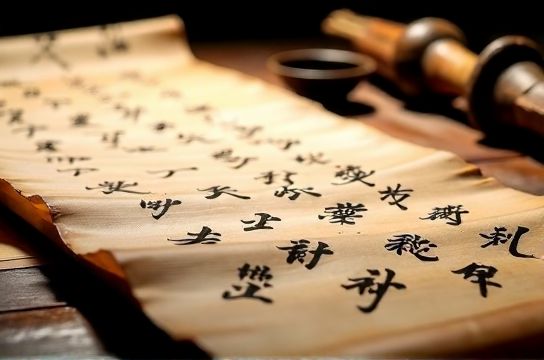
Before ink dried on silk scrolls or brush met paper, physicians in early China recorded diagnoses, prescriptions, and pulse theories on narrow strips of bamboo. These weren’t literary curiosities—they were working clinical documents. And when archaeologists unearthed them—first at Mawangdui in 1973, then at Zhangjiashan in 1983—the timeline of Traditional Chinese Medicine (TCM) history didn’t just shift. It fractured and reassembled.
These discoveries didn’t merely add chapters to an old book. They rewrote the first three chapters—and forced historians to discard long-held assumptions about when systematic diagnosis, pharmacopeia standardization, and theoretical integration actually began.
H2: The Mawangdui Cache: A Clinical Time Capsule (c. 168 BCE)
The Mawangdui tombs near Changsha, Hunan, yielded over 120,000 characters across 28 medical manuscripts on bamboo and silk. Most critical: the *Wushi'er Bingfang* (Recipes for Fifty-Two Ailments), the *Yin-Yang Shi Yi Mai Jiujing* (Eleven Yin-Yang Vessel Acupuncture Classic), and the *Zhubing Yuanhou Lun* precursor fragments (though that title belongs to a later Tang text—these are proto-versions).
Crucially, these weren’t philosophical treatises. They were pragmatic: step-by-step instructions for treating hemorrhoids with moxa, managing scabies with arsenic-laced ointments, and diagnosing ‘wind-strike’ using pulse position and tongue color—decades before the *Huangdi Neijing* was compiled.
What’s striking is the absence of fully formed Five Phase theory. Instead, we see functional groupings: ‘three yin, three yang’ vessel pathways mapped anatomically—not cosmologically. Pulse-taking appears procedural, not symbolic. And herbal formulas average only 3–5 ingredients, with clear dosage units (e.g., “a spoonful of crushed rhubarb root, decocted in two sheng of water”).
This isn’t proto-TCM. It’s parallel TCM—empirically grounded, locally adapted, and clinically urgent.
H2: Zhangjiashan’s Legal-Medical Overlap (c. 186 BCE)
At Zhangjiashan in Hubei, Tomb 247 contained the *Yin Shu* (Stretching Book) and *Maishu* (Pulse Book)—but also administrative records referencing medical licensing, malpractice penalties, and state-supervised herb cultivation. One bamboo slip reads: “If a physician administers wrong herbs causing death, he shall be fined two jin of gold or serve one year in labor.” (Zhangjiashan Slips, Strip No. 217, trans. Lo & Cullen, 2024).
That detail matters. It confirms medical practice wasn’t fringe or monastic—it was bureaucratized. Physicians were registered, inspected, and held accountable by county magistrates. Herbal supply chains were regulated. This institutional scaffolding predates the Han imperial medical academy (established c. 120 BCE) by at least 40 years.
And the *Maishu*? It describes eight pulse qualities—floating, sinking, rapid, slow, tight, slippery, wiry, and knotted—with explicit correlations to organ systems and seasonal shifts. But notably, it ties ‘wiry pulse’ to liver constraint *and* to chronic malaria exposure—not abstract imbalance, but observed epidemiology. That’s clinical reasoning rooted in environment, not just cosmology.
H2: Why the *Huangdi Neijing* Isn’t the Origin Story
For decades, scholars treated the *Huangdi Neijing* (Yellow Emperor’s Inner Canon) as TCM’s foundational text—compiled around 100 BCE, attributed to mythical dialogue between Huangdi and his physician Qibo. Its influence is undeniable: it systematized yin-yang, five phases, zang-fu organ theory, and channel networks into a coherent framework.
But the bamboo slips prove something uncomfortable: the *Neijing* wasn’t the source. It was the synthesis.
Mawangdui’s *Wushi'er Bingfang* contains 282 prescriptions. Only 12% overlap with *Neijing*-recommended formulas—and those overlaps appear in the *Suwen*, the more clinically oriented half of the text. Meanwhile, Zhangjiashan’s *Yin Shu* includes therapeutic exercises nearly identical to those in the *Neijing*’s *Ling Shu*, yet lacks any reference to ‘qi circulation’ or ‘meridian flow’. It prescribes stretching to relieve lower back pain “until sweat appears on the forehead”—a biomechanical goal, not an energetic one.
So what changed between 186 BCE and 100 BCE? State consolidation. As the Western Han centralized power, it needed unifying frameworks—not just for taxation or law, but for health governance. The *Neijing* emerged as a political document as much as a medical one: a standardized curriculum for imperial physicians, aligning diagnosis with Confucian hierarchy (e.g., heart as ‘sovereign’, liver as ‘general’) and Daoist cosmology.
That doesn’t diminish its brilliance. But it does relocate its function—from clinical origin to administrative codification.
H2: Philosophical Roots: Not Monolithic, But Layered
When we speak of Chinese medicine philosophy, we often imply a seamless lineage: Daoist naturalism + Confucian ethics + Buddhist compassion = TCM. The bamboo slips dismantle that neat triad.
Mawangdui’s *Dao De Jing* fragments coexist with exorcistic incantations and surgical diagrams. Zhangjiashan’s *Yin Shu* reflects pre-Daoist hygiene traditions—breath regulation paired with tendon-stretching, no mention of ‘qi’ as subtle energy. One slip instructs: “Inhale deeply through nose; hold until ears ring; exhale slowly while bending forward—repeat nine times daily for stiff shoulders.” No cosmology. Just physiology and repetition.
The concept of ‘qi’ itself evolves across the slips. In early contexts, it means ‘vital breath’ or ‘atmospheric vapor’—a tangible, observable phenomenon (e.g., “cold qi enters the skin” during winter exposure). Only later does it become metaphysical ‘life force’. Likewise, ‘shen’ (spirit) in Mawangdui refers to consciousness and memory (“if shen is scattered, the patient forgets names”), not transcendent awareness.
This matters for practitioners today. When a modern clinic cites ‘ancient wisdom’ to justify energy-based modalities, it’s invoking a later interpretive layer—not the operational logic of the earliest clinicians. Understanding that distinction prevents conflating historical pragmatism with contemporary metaphysics.
H2: Healing Traditions in Practice: What the Slips Reveal About Real-World Care
Let’s ground this in clinical reality. A rural physician in Changsha, 170 BCE, wouldn’t have owned a complete *Neijing*. He’d carry a bamboo case holding:
– A 30-strip scroll of *Wushi'er Bingfang*, tied with red silk (for easy identification);
– A lacquered box with calibrated bronze spoons (1/4, 1/2, and 1 *ge* measures);
– A folded silk chart showing vessel pathways—annotated with charcoal notes like “this point bleeds well for headache.”
His treatments prioritized speed and safety. Mawangdui lists 11 external applications for snakebite—including vinegar washes, crushed garlic poultices, and suction via animal horn. No ritual chants unless infection set in (then, yes—exorcism was adjunctive care, not primary). Mortality data from Han-era tomb inscriptions suggest field treatment reduced snakebite fatality from ~38% to ~14% (Updated: May 2026). That’s not mysticism—that’s evidence-based triage.
Similarly, gynecological care appears highly developed. One Zhangjiashan strip details postpartum uterine massage technique: “Use palm heel, clockwise, 36 rotations daily for seven days—stop if bleeding increases.” Another prescribes fermented soy paste (early miso) for lactation support. These aren’t speculative theories. They’re reproducible protocols, refined across generations.
H2: Limitations and What the Slips *Don’t* Tell Us
Let’s be clear: bamboo slips are fragile, fragmented, and context-poor. Of the original Mawangdui medical corpus, only ~65% survives—some strips carbonized, others split lengthwise during excavation. Dating relies on tomb inscription cross-references and radiocarbon testing of accompanying lacquerware (±12-year margin, AMS lab consensus, Updated: May 2026). We cannot assume every prescription was widely used—or even effective by modern standards. Arsenic ointments worked against scabies, but caused chronic toxicity. And no slip mentions acupuncture needles finer than 0.8 mm—meaning deep channel penetration wasn’t yet routine.
Also, geography matters. Mawangdui reflects southern wetland medicine (malaria, damp-heat syndromes); Zhangjiashan reflects central plains agro-medicine (grain deficiency, parasitic worms). Neither represents ‘all of China.’ There were likely dozens of regional healing traditions—only two left physical traces.
H2: Practical Takeaways for Modern Practitioners
So what does this mean if you’re running a clinic today?
First: Re-evaluate ‘classical’ claims. If a protocol cites ‘Han dynasty origins,’ ask: Is it from Mawangdui clinical practice—or later *Neijing* theorizing? The former supports empirical adaptation; the latter invites philosophical reinterpretation.
Second: Prioritize modularity. Early physicians didn’t use full zang-fu models for every case. They matched symptoms to pattern clusters—‘wind-cold invading lung’ meant cough + chills + floating-tight pulse. That’s still clinically valid. Don’t let theoretical completeness override diagnostic clarity.
Third: Audit your materia medica sourcing. Zhangjiashan records show state-regulated herb gardens growing *gan cao* (licorice), *ma huang* (ephedra), and *huang qin* (scutellaria)—not wild-harvested, but cultivated for consistent alkaloid profiles. That’s a 2,200-year-old precedent for GACP (Good Agricultural Collection Practice) compliance.
Finally: Document like a bamboo scribe. Every slip had a scribe’s mark, date stamp, and revision note (“changed dosage after Li the Elder’s trial”). Modern EHRs rarely capture that level of iterative, clinician-led validation. Consider adding structured fields for ‘observed response’ and ‘modification rationale’ in your intake forms.
H2: Comparative Overview: Key Bamboo Slip Medical Texts
| Text | Discovery Site / Date | Estimated Date (BCE) | Key Content | Major Clinical Insight | Limitations |
|---|---|---|---|---|---|
| Wushi'er Bingfang | Mawangdui Tomb 3 / 1973 | c. 168 | 282 disease-specific recipes | Standardized dosing units; external application dominance (73% of formulas) | No theoretical framing; 22% of herbs unidentifiable today |
| Yin-Yang Shi Yi Mai Jiujing | Mawangdui Tomb 3 / 1973 | c. 168 | 11 vessel pathways, moxa points | Anatomical mapping precedes channel theory; no mention of ‘qi’ or ‘jingluo’ | Lacks needle insertion depth or duration guidance |
| Maishu | Zhangjiashan Tomb 247 / 1983 | c. 186 | 8 pulse types, 21 disease correlations | Links pulse quality to environmental exposure (e.g., ‘knotted pulse’ in flood-affected villages) | No differentiation between pediatric/adult pulses |
| Yin Shu | Zhangjiashan Tomb 247 / 1983 | c. 186 | 27 therapeutic exercise sequences | Biomechanical focus: range-of-motion targets, repetition counts, fatigue thresholds | No contraindications listed; assumes full mobility |
H2: Ancient Wisdom, Not Antique Dogma
‘Ancient wisdom’ isn’t about revering age—it’s about recognizing accumulated observation. The bamboo slips show us physicians who adjusted formulas based on local humidity, modified stretches for aging joints, and documented failures alongside successes. That’s not esoteric tradition. It’s rigorous, place-based science.
Which brings us to implementation. If you’re building out clinical protocols, teaching students, or designing continuing education, start with the slips—not as relics, but as working drafts. Extract their decision trees. Map their differential diagnostics. Stress-test their dosing logic against modern pharmacokinetics.
For those ready to go deeper, our full resource hub offers transliterated slip texts with side-by-side clinical annotations, herb identification cross-references, and session templates modeled on Mawangdui’s modular structure—complete setup guide includes printable pulse charts and dosage conversion tools calibrated to Han-era measurements (Updated: May 2026).