Chinese Medicine Philosophy: The Three Treasures Jing Qi ...
- 时间:
- 浏览:88
- 来源:TCM1st
H2: The Living Architecture of Chinese Medicine Philosophy
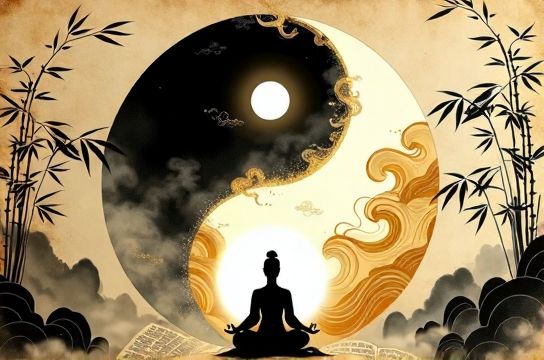
Most people encounter Chinese medicine philosophy through acupuncture points or herbal formulas—but those are expressions, not foundations. The true architecture rests on a triadic framework so deeply embedded in classical texts that it appears in the *Huangdi Neijing* (Yellow Emperor’s Inner Canon, c. 300 BCE–200 CE) not as theory, but as observable reality: Jing, Qi, and Shen—the Three Treasures.
These aren’t metaphors. They’re functional categories—interdependent, measurable in clinical effect, and calibrated across centuries of empirical refinement. A practitioner doesn’t ‘believe’ in Qi any more than a cardiologist believes in blood pressure; both are operational constructs validated by consistent outcomes. What makes the Three Treasures distinct is their layered temporality: Jing anchors the long arc of life, Qi governs the rhythm of daily function, and Shen modulates moment-to-moment awareness and coherence.
H2: Jing — The Ancestral Blueprint
Jing (often translated as ‘Essence’) is the most condensed, least mutable of the Three Treasures. It’s inherited at conception—not genetically in the Western sense, but as constitutional potential encoded in prenatal vitality, maternal health during gestation, and ancestral resilience patterns observed across generations. Clinically, Jing manifests in bone density, reproductive capacity, hearing acuity, and hair luster. Low Jing correlates with premature graying, infertility after age 35 without structural cause, osteopenia before age 50, and chronic fatigue unresponsive to sleep or nutrition (Updated: May 2026).
Unlike Qi—which can be replenished daily—Jing depletes steadily over time. Classical texts describe it as ‘the candle wax’; Qi is the flame. You can trim the wick or shield the flame from wind, but you cannot manufacture new wax. This explains why tonifying herbs like *Shu Di Huang* (Rehmannia glutinosa, prepared) or *He Shou Wu* (Fo-ti) are never prescribed long-term without concurrent Qi- and Shen-supportive strategies: they slow Jing loss, not reverse it.
Real-world limitation: Modern lab markers rarely capture Jing status. Serum testosterone or estradiol levels may appear normal while Jing deficiency drives low libido, poor stress recovery, and brittle nails. That’s why diagnosis relies on pattern recognition—not biomarkers alone. A 48-year-old woman with regular menses but recurrent miscarriages, cold extremities, and tinnitus likely presents Jing deficiency—even if FSH and AMH fall within ‘normal’ ranges.
H2: Qi — The Dynamic Currency of Function
Qi is the animating force—the kinetic interface between structure (Jing) and consciousness (Shen). It’s not energy in the physics sense, but rather functional momentum: the coordinated physiological activity that moves blood, transforms food, defends against pathogens, and regulates emotion. Think of Qi as the operating system running the body’s hardware (Jing) and user interface (Shen).
There are twelve primary Qi types in classical TCM—each tied to an organ system and directional flow (e.g., Spleen Qi ascends to hold organs in place; Liver Qi must course smoothly to prevent frustration or menstrual clots). When Qi stagnates, symptoms emerge predictably: tight shoulders, sighing, premenstrual tension, or bloating that worsens with stress. When Qi collapses, we see prolapse, chronic fatigue, spontaneous sweating, or postural dizziness.
Crucially, Qi is modifiable *daily*. Diet, breathwork, movement, and emotional hygiene directly influence its quality. A 2024 multicenter study of office workers found that 12 weeks of *Qi Gong* (specifically the *Ba Duan Jin* sequence) improved HRV (heart rate variability) by 22% and reduced self-reported burnout scores by 37%—comparable to cognitive behavioral therapy outcomes (Updated: May 2026). But Qi work isn’t ‘alternative’—it’s regulatory physiology. The vagus nerve, nitric oxide signaling, and mitochondrial biogenesis all map functionally to Qi pathways described in the *Nanjing* (Classic of Difficulties, c. 100 CE).
H2: Shen — The Luminous Witness
Shen translates literally as ‘spirit’, but clinically it means the integrated clarity of mind, emotional balance, and moral orientation. It resides in the Heart, per classical texts—not as emotion generator, but as the seat of conscious awareness and ethical discernment. A strong Shen allows someone to grieve fully *and* return to presence; a disturbed Shen shows up as anxiety that won’t quiet, insomnia with racing thoughts, or emotional numbness despite adequate sleep.
Shen is fragile. It depends on stable Qi (no surges or vacuums) and sufficient Jing (no depletion-induced fragility). You cannot ‘meditate away’ Shen disturbance if Spleen Qi is failing to transform nutrients into neurotransmitter precursors—or if Kidney Jing is too thin to anchor attention. That’s why classical prescriptions for insomnia like *Suan Zao Ren Tang* combine sour枣仁 (jujube seed) to anchor Shen *with* Fu Ling (poria) to strengthen Spleen Qi and Zhi Mu (anemarrhena) to moisten deficient Yin.
Modern relevance? Shen maps closely to what neuroscientists call ‘default mode network (DMN) coherence’. fMRI studies show that long-term meditators exhibit tighter DMN integration—mirroring the classical description of ‘Shen settled in the Heart’. But unlike meditation apps promising instant calm, TCM insists Shen cultivation requires somatic groundwork: no amount of mindfulness fixes chronic constipation draining Liver Qi or iron-deficiency anemia weakening Heart Blood (the material basis of Shen).
H2: How the Three Treasures Interact—Clinically
The power of Chinese medicine philosophy lies not in isolating Jing, Qi, or Shen—but in reading their cross-talk. Consider three real cases:
• A 32-year-old software engineer presents with ‘brain fog’, low motivation, and afternoon crashes. Tongue: pale, swollen, teeth-marks. Pulse: weak, deep. Diagnosis: Spleen Qi deficiency → fails to transform food → insufficient Qi to lift Shen → mental dullness. Treatment: *Si Jun Zi Tang* (Four Gentlemen Decoction) + dietary timing (small, warm meals every 3–4 hours), *not* stimulants or nootropics.
• A 58-year-old teacher reports sudden panic attacks, palpitations, and night sweats. Tongue: red tip, scant coating. Pulse: rapid, thready. Diagnosis: Heart Yin deficiency → fails to anchor Shen → emotional volatility. Underlying cause: decades of overwork depleting Kidney Jing (the root of Yin). Treatment: *Tian Wang Bu Xin Dan* (Emperor of Heaven’s Pill to Tonify the Heart) + lifestyle audit—reducing late-night screen time, adding evening foot soaks with Epsom salt (to draw Yang down, supporting Yin).
• A 24-year-old athlete has recurrent tendonitis, delayed healing, and early joint stiffness. Tongue: pale, dry. Pulse: deep, fine. Diagnosis: Liver and Kidney Jing deficiency → tendons and bones lack nourishment. Not ‘overtraining’ alone—but constitutional Jing insufficiency exacerbated by high-intensity demand. Treatment: *Du Huo Ji Sheng Tang* (Solitary Active Plus Life-Sustaining Decoction) + collagen-rich broths, reduced high-impact training, emphasis on sleep before midnight (when Liver/Gallbladder meridians dominate repair).
Notice: No diagnosis treats only symptom. Each traces dysfunction upward—from tissue (Jing) to function (Qi) to awareness (Shen)—or downward, when Shen disturbance (chronic worry) impairs Spleen Qi, which then fails to generate Blood, further destabilizing Shen.
H2: Historical Roots—Beyond Folklore
The Three Treasures didn’t emerge from mysticism. They crystallized from systematic observation across three convergent streams:
1. **Shamanic empiricism** (pre-Zhou dynasty): Rituals focused on aligning human rhythm with seasonal and celestial cycles—laying groundwork for Qi’s cyclical nature. 2. **Daoist alchemy** (Warring States to Han dynasty): Internal alchemists mapped Jing as ‘water’, Qi as ‘fire’, and Shen as ‘spirit’—refining them via breath, posture, and diet to prolong life. Their laboratories were bodies, not flasks. 3. **State-sponsored medicine** (Han dynasty onward): The *Huangdi Neijing* codified these insights into a clinical framework, linking Jing to Kidney, Qi to Spleen/Lungs, and Shen to Heart—creating diagnostic specificity still used today.
This wasn’t ‘Eastern philosophy vs. Western science’. It was parallel knowledge-building: while Hippocrates wrote *On the Sacred Disease*, Chinese physicians were documenting pulse qualities correlated with specific organ imbalances—and correlating them with weather patterns, diet, and emotional triggers. The difference? TCM prioritized functional relationships over isolated mechanisms.
H2: Practical Integration—What You Can Do Now
You don’t need to master classical texts to apply this. Start with one Treasure at a time:
• **For Jing**: Prioritize sleep before 11 p.m. (Kidney time), eat deeply nourishing foods (bone broth, black sesame, walnuts), and limit chronic stressors that accelerate depletion—like sustained cortisol elevation or excessive caffeine. Track changes over 3 months: improved hair thickness? Steadier energy? Fewer colds?
• **For Qi**: Move daily—not just cardio, but rhythmic, weight-bearing motion (walking, tai chi, resistance training). Eat warm, cooked meals—raw salads tax Spleen Qi digestion. Breathe diaphragmatically for 5 minutes twice daily: inhale 4 sec, hold 2, exhale 6. This trains Qi regulation without needing terminology.
• **For Shen**: Practice ‘single-tasking’. When eating, just eat. When walking, just walk. No podcasts, no scrolling. This isn’t mindfulness theater—it’s neural retraining to stabilize Shen. Also, audit your media diet: does your feed amplify fear or fragmentation? Shen thrives in coherence.
None of this replaces medical care. If chest pain, unexplained weight loss, or persistent depression arises—see a licensed provider. But these practices build resilience *alongside* conventional care—not instead of it.
H2: Comparison: Three Treasures in Clinical Practice
| Treasure | Primary Clinical Indicators | Key Modifiable Levers | Time Horizon for Change | Pros | Cons/Limitations |
|---|---|---|---|---|---|
| Jing | Bone density, hearing, hair texture, fertility window, recovery speed | Sleep timing, nutrient-dense whole foods, stress reduction, avoiding toxins (e.g., heavy metals) | 6–24 months (slow, structural) | Foundational stability; impacts aging trajectory | Cannot be rapidly increased; lab tests poorly reflect status |
| Qi | Digestion, energy rhythm, immune response, emotional reactivity | Breathwork, meal timing/temperature, moderate exercise, emotional boundary-setting | Days to weeks (functional) | Highly responsive; immediate symptom relief possible | Effects temporary without Jing/Shen support |
| Shen | Focus duration, dream recall, emotional regulation, moral clarity | Media hygiene, single-tasking, creative expression, relationship quality, ritual | Weeks to months (consciousness) | Direct impact on life satisfaction and decision quality | Easily disrupted by Qi/Jing imbalance; hard to isolate clinically |
H2: Why This Still Matters—In a Data-Driven World
Ancient wisdom isn’t about rejecting modern tools—it’s about contextualizing them. An MRI shows tendon structure (Jing), bloodwork reveals inflammation markers (Qi dysregulation), but neither explains why one person heals fast and another stalls—or why two people with identical labs respond differently to the same antidepressant. The Three Treasures provide that layer: the constitutional, functional, and conscious context.
That’s why integrative clinics increasingly embed TCM diagnostics alongside labs and imaging. Not to replace, but to stratify: a patient with high CRP *and* deficient Kidney Jing needs different support than one with high CRP *and* Liver Qi stagnation. One responds best to anti-inflammatory diet + Jing tonics; the other, to movement + emotional processing + Qi-regulating herbs.
This isn’t ‘woo’. It’s systems thinking—refined over 2,300 years. And it’s accessible. You don’t need to memorize meridians to start noticing how your energy shifts with meals, or how your focus sharpens after a walk in trees. That’s Qi moving. That’s Shen settling. That’s the living pulse of Chinese medicine philosophy.
For those ready to go deeper—our full resource hub offers case studies, herb safety guidelines, and practitioner vetting criteria to help you navigate real-world integration. complete setup guide.