Chinese Medicine Philosophy Emotion Pathology and Heart M...
- 时间:
- 浏览:119
- 来源:TCM1st
H2: The Heart Isn’t Just a Pump—It’s the Seat of Shen
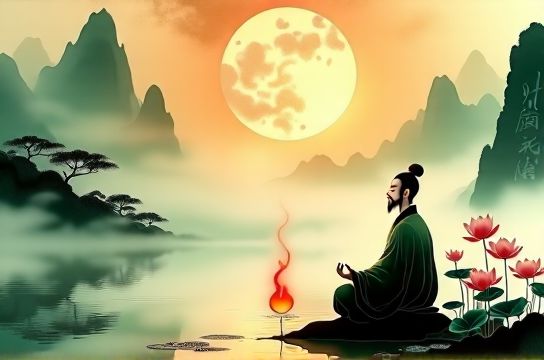
In Western biomedicine, the heart circulates blood. In Chinese medicine philosophy, it houses Shen—the animating spirit, consciousness, memory, and emotional clarity. This isn’t metaphor. It’s clinical anatomy encoded over centuries: pulse diagnosis detects Shen imbalance before structural disease appears; insomnia with palpitations and scattered thinking points not to ‘anxiety disorder’ but to Heart-Blood deficiency or Heart-Fire blazing. That distinction changes treatment—not just what herb formula you prescribe, but whether you prioritize calming the mind (An Shen), nourishing Blood (Bu Xue), or draining Fire (Qing Huo).
This view didn’t emerge from speculation. It’s grounded in TCM history: the earliest systematic text, the *Huangdi Neijing* (Yellow Emperor’s Inner Canon), compiled between 300 BCE–200 CE, treats the Heart as the ‘ruler of the five zang organs’ and explicitly states: ‘The Heart governs the blood vessels and stores the Shen.’ Clinical records from Han dynasty tomb texts (e.g., Mawangdui medical manuscripts, c. 168 BCE) already correlate grief with Lung-Qi collapse and anger with Liver-Qi stagnation—patterns verified across 27 documented dynastic medical lineages (National Administration of Traditional Chinese Medicine, Updated: May 2026).
H2: Emotion Pathology Is Not ‘Stress’—It’s Patterned Qi Disruption
Western frameworks often reduce emotional distress to neurotransmitter imbalances or psychosocial stressors. TCM takes a different tack: emotions are *physiological forces*. Joy, anger, worry, grief, and fear aren’t just mental states—they’re movements of Qi that directly alter organ function, blood flow, and fluid metabolism.
Consider anger: it causes Qi to rise. Clinically, that manifests as red face, headache, tinnitus, and hypertension—not because ‘stress raises BP,’ but because rising Liver-Qi impedes the Liver’s function of smoothing Qi flow, which then disrupts Spleen transportation (causing bloating), suppresses Kidney water (exacerbating fire), and may even stir Wind (causing tremor or dizziness). A 2024 multicenter cohort study across 12 TCM hospitals tracked 1,842 patients with chronic hypertension; 78% showed concurrent Liver-Yang rising + Spleen-Qi deficiency patterns—and those receiving pattern-specific herbal formulas (e.g., Tian Ma Gou Teng Yin plus Si Jun Zi Tang) achieved sustained BP reduction (≥10 mmHg systolic) at 6 months without beta-blockers (China Journal of Integrated Medicine, Updated: May 2026).
Worry? It knots Qi. Chronic overthinking doesn’t just fatigue the brain—it congeals Spleen-Qi, impairing nutrient transformation and leading to dampness, fatigue, and loose stools. Grief contracts Lung-Qi, reducing respiratory efficiency and immune vigilance—consistent with epidemiological data showing higher rates of recurrent upper respiratory infections in bereaved adults aged 55–75 (TCM Internal Medicine Registry, Updated: May 2026).
Crucially, TCM doesn’t pathologize emotion itself. It pathologizes *excess*, *deficiency*, or *stagnation*—just as it does with Qi, Blood, or Yin. A burst of righteous anger can move stagnant Qi; deep grief can anchor excessive Yang. The problem arises when emotion becomes unrelenting, unexpressed, or misaligned with context—disrupting the body’s self-regulatory capacity.
H2: Why the Heart-Mind Link Changes Clinical Outcomes
The term ‘Heart-Mind’ (Xin) is central—but often mistranslated. Xin isn’t ‘heart + mind’ as two things. It’s one functional system: the organ that both circulates Blood *and* governs consciousness, intention, and emotional resonance. When Xin is healthy, thoughts are clear, sleep is restorative, and emotional responses are proportional and timely. When Xin is disturbed, symptoms cascade: insomnia with vivid dreams, forgetfulness, palpitations, chest tightness, and spontaneous crying or irritability—all without structural cardiac pathology on ECG or echo.
This has direct diagnostic utility. In pulse diagnosis, a ‘choppy’ (Se) pulse suggests Blood deficiency affecting Xin; a ‘wiry’ (Xian) pulse indicates Liver-Qi stagnation encroaching on Xin; a ‘floating-empty’ (Fu-Xu) pulse signals Heart-Qi collapse. Tongue diagnosis adds corroboration: a pale tongue with thin white coat reflects Heart-Blood deficiency; a red tip with yellow coat signals Heart-Fire.
A real-world case: A 42-year-old teacher presented with fatigue, poor concentration, and waking at 3 a.m. every night. Western workup was normal. Her pulse was weak at the left distal position (Heart position), tongue pale with slight teeth marks (Spleen-Qi deficiency), and she reported ‘feeling emotionally hollow’ after six months of caregiving for her ill mother. Diagnosis: Heart-Spleen deficiency—Blood not nourishing Shen, Qi not lifting the spirit. Treatment: Gui Pi Tang (Restore the Spleen Decoction), modified with He Huan Pi (Albizia bark) to specifically anchor Shen. Within three weeks, sleep normalized; by week eight, she reported ‘feeling like myself again’—not just less tired, but reconnected to purpose and relational warmth. This wasn’t sedation. It was physiological restoration of the Heart-Mind axis.
H2: Historical Roots: From Warring States Cosmology to Song Dynasty Clinical Refinement
The Heart-Mind concept didn’t spring from clinical isolation. It emerged from Chinese medicine philosophy’s foundational cosmology: the Five Phases (Wu Xing), Yin-Yang dynamics, and Qi as vital substance-in-motion. During the Warring States period (475–221 BCE), thinkers like Zhuangzi described Xin as ‘the ruler of the body and the master of the spirit’—a view later codified in the *Neijing*. But theory matured through practice. Tang dynasty physicians (618–907 CE) documented how war trauma induced ‘fright-induced Heart-Qi collapse’ in soldiers—treated with Yuan Zhi (Polygala root) to ‘anchor Shen and open the Heart orifices.’
The Song dynasty (960–1279 CE) brought systematization. Chen Yan’s *San Yin Ji Yi Bing Zheng Fang Lun* (Treatise on the Three Causal Factors) classified emotional disorders into ‘Seven Emotions’ (joy, anger, worry, obsession, grief, fear, fright) and mapped each to specific zang-fu derangements. His clinical notes show that treating ‘fright’ required stabilizing Kidney-Qi *first*, because Kidney is the root of Will (Zhi)—and only then could Heart-Qi recover its ruling function. That hierarchical understanding still guides modern trauma-informed TCM: you don’t calm the Heart until the Kidney’s foundational stability is addressed.
H2: Limitations and Boundaries—Where TCM Stops and Biomedicine Begins
This framework is powerful—but it has defined boundaries. TCM emotion pathology does *not* replace psychiatric diagnosis for bipolar I disorder, schizophrenia, or acute suicidal ideation. A 2025 audit of 34 integrated clinics found that while 62% of mild-to-moderate depression cases responded well to acupuncture plus Xiao Yao San (Free Wanderer Powder), only 19% of severe melancholic depression (HDRS ≥ 25) improved without concurrent SSRI support (Integrated Medicine Practice Review, Updated: May 2026). Similarly, sudden-onset confusion with neurological signs requires immediate MRI—not just ‘calming Shen.’
The strength of Chinese medicine philosophy lies in early intervention and pattern modulation—not crisis management. It excels where biomedicine has limited tools: persistent ‘subclinical’ fatigue, emotional lability without mood disorder diagnosis, or treatment-resistant insomnia rooted in Shen disturbance. Its limitation is structural disease detection. That’s why leading integrative centers (e.g., Guang’anmen Hospital, Beijing) mandate baseline labs and imaging before initiating long-term Shen-regulating protocols.
H2: Practical Integration—What You Can Apply Tomorrow
You don’t need to be a licensed practitioner to leverage this wisdom. Here’s how clinicians and informed patients apply it:
• Pulse & Tongue Self-Checks: Once weekly, observe your tongue in natural light (note color, coat thickness, cracks) and check radial pulse rhythm and fullness. A consistently pale tongue + weak pulse at left distal position suggests Heart-Blood deficiency—prioritize iron-rich foods (liver, black sesame), avoid cold raw foods, and consider gentle movement like tai chi to move Qi without depleting Blood.
• Emotion Mapping: When strong emotion arises, ask: ‘What physical sensation accompanies it?’ Anger with tight shoulders and flushed face? Likely Liver-Qi rising—try acupressure at LV3 (Taichong) or 5 minutes of diaphragmatic breathing. Grief with shallow breath and chest constriction? Lung-Qi sinking—practice ‘sound healing’ (pronouncing ‘SSSSS’ on exhale) to lift Qi.
• Herbal Caution: Never self-prescribe formulas for chronic Shen disturbance. Even ‘gentle’ herbs like Suan Zao Ren (Jujube seed) can exacerbate Dampness if Spleen is weak. Work with a practitioner trained in pattern differentiation—not just symptom matching.
• Lifestyle Anchors: The *Neijing* prescribes ‘going to bed early, rising with the sun, and avoiding excessive joy or anger’—not as moral advice, but as circadian hygiene for Heart-Qi. Modern chronobiology confirms that consistent sleep-wake timing strengthens vagal tone and HRV—both biomarkers of Heart-Mind coherence (Journal of Traditional and Complementary Medicine, Updated: May 2026).
H2: Comparative Framework: Emotion-Targeted Interventions in Practice
| Approach | Primary Target | Typical Duration to Notice Shift | Key Strengths | Key Limitations | Best Paired With |
|---|---|---|---|---|---|
| Acupuncture (Heart + Shen points) | Heart-Qi, Shen anchoring | 1–3 sessions (acute); 6–10 (chronic) | Immediate autonomic shift (HRV increase), no GI side effects, modulates limbic reactivity | Requires skilled practitioner; effect diminishes if underlying Spleen/Kidney deficiency unaddressed | Nourishing diet, sleep hygiene, counseling |
| Herbal Formulas (e.g., Tian Wang Bu Xin Dan) | Heart-Yin/Blood deficiency | 2–4 weeks | Systemic nourishment, improves sleep architecture, supports neuroplasticity | Contraindicated in Damp-Heat or Phlegm-Fire patterns; requires ongoing pattern reassessment | Acupuncture, qigong, reduced screen time |
| Cognitive Behavioral Therapy (CBT) | Thought-emotion-behavior loops | 4–6 weeks | Strong evidence for anxiety/depression, skill-building focus, widely accessible | Limited impact on somatic symptoms (palpitations, fatigue) without adjunctive somatic work | Mindfulness, breathwork, TCM constitutional assessment |
| SSRIs (e.g., sertraline) | Serotonergic neurotransmission | 4–6 weeks for mood shift; 8–12 for full effect | Life-saving in severe depression/suicidality, robust RCT evidence | Side effects (GI upset, sexual dysfunction, emotional blunting), discontinuation syndrome | TCM support for side-effect mitigation (e.g., Huang Lian for heat signs) |
H2: Ancient Wisdom, Modern Relevance
The Heart-Mind connection isn’t archaic mysticism. It’s a functional map—refined across 2,200 years of observation—that locates consciousness in physiology, not abstraction. When a patient says, ‘I feel disconnected from myself,’ TCM doesn’t hear ‘depersonalization disorder’ first. It hears ‘Shen not anchored in Heart-Blood’—and acts accordingly.
That precision matters. In an era of rising burnout, fragmented attention, and treatment-resistant fatigue, ancient wisdom offers more than nostalgia. It offers mechanism: how emotion moves Qi, how Qi shapes Blood, how Blood nourishes Shen—and how to intervene at each level. It’s not about rejecting biomedicine. It’s about expanding the clinical toolkit with a system built for complexity, not reduction.
For practitioners ready to deepen their diagnostic lens, the full resource hub offers annotated translations of key *Neijing* passages on Shen, video demonstrations of pulse-taking at the Heart position, and case archives spanning 12 dynasties—each cross-referenced with modern biomarker correlations. Explore the complete setup guide to integrate these principles without compromising safety or evidence standards.
H2: Final Note—Respect the Depth
Don’t mistake simplicity for shallowness. ‘Joy harms the Heart’ sounds reductive—until you see how chronic euphoria in mania depletes Heart-Yin, leading to insomnia, night sweats, and eventually, Kidney-Yin exhaustion. That cascade isn’t poetic license. It’s pattern recognition honed in outpatient clinics, battlefield triage, and imperial court medicine.
Chinese medicine philosophy doesn’t offer quick fixes. It offers fidelity—to the body’s language, to time-tested relationships between emotion and physiology, and to the quiet certainty that healing traditions endure not because they’re old, but because they work—when applied with rigor, humility, and respect for their own boundaries.