Healing Traditions: Shamanic Roots of TCM
- 时间:
- 浏览:123
- 来源:TCM1st
H2: The Unspoken Foundation — Spirit Work in Early Chinese Medicine
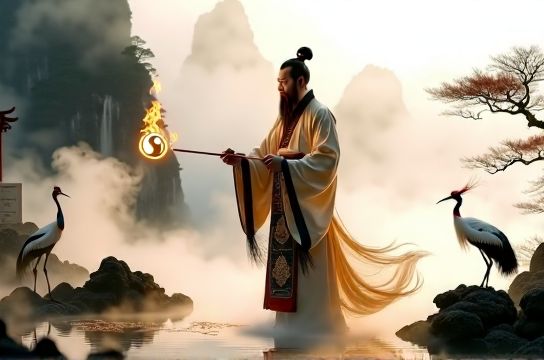
Most modern textbooks on Traditional Chinese Medicine (TCM) begin with the Huangdi Neijing (Yellow Emperor’s Inner Canon, c. 300 BCE–200 CE), treating it as the first systematic medical treatise. But that text didn’t emerge from a vacuum. It crystallized centuries of oral transmission rooted in pre-state, river-valley societies where healers weren’t physicians in white coats—they were spirit intermediaries, rain callers, bone-setters, and dream interpreters rolled into one. These were the *wu* (shamans), and their practices form the deepest stratum of TCM history.
The *wu* weren’t marginal figures. Archaeological evidence from Shang dynasty oracle bones (c. 1600–1046 BCE) shows that illness was routinely diagnosed as spirit intrusion, ancestral displeasure, or soul loss—and treated with incantations, drumming, smoke purification, and ritual offerings. A Shang royal physician might prescribe a decoction *and* perform a three-day exorcism rite before administering herbs. This dual-track approach—material remedy + spirit intervention—never fully disappeared. It simply got rebranded, systematized, and embedded within cosmological frameworks like Yin-Yang and the Five Phases.
H2: When Diagnosis Meant Dialogue With the Invisible
In early Chinese medicine philosophy, the body wasn’t a machine to be repaired. It was a microcosm animated by *shen* (spirit), *hun* (ethereal soul), *po* (corporeal soul), *yi* (intention), and *zhi* (will). Illness wasn’t just imbalance—it was disconnection: between person and ancestor, human and nature, body and spirit.
Consider pulse diagnosis—not just rate or rhythm, but *quality*. The *Cun-Guan-Chi* positions on the radial artery weren’t just mapped to organs; they corresponded to layers of consciousness: *Cun* (inch) reflected *shen*, *Guan* (gate) reflected *hun*, and *Chi* (foot) reflected *po*. A ‘slippery’ pulse at *Cun* could signal *shen* agitation—not anxiety in the Western sense, but spiritual restlessness, perhaps due to unresolved grief or a neglected ancestral tablet. This is not metaphor. It’s clinical observation grounded in lived ritual experience.
Similarly, tongue diagnosis included assessing not only coating and color but also subtle tremors or involuntary flickering—signs interpreted as *hun* instability. Acupuncture points like HT7 (Shenmen, “Spirit Gate”) or DU20 (Baihui, “Hundred Convergences”) weren’t selected solely for neurovascular effects. They were *spirit anchors*, places where *qi* and *shen* converged—and where ritual insertion of a needle carried the weight of invocation.
H2: Ritual Tools That Became Clinical Instruments
Take moxibustion. Today, many practitioners use moxa for pain relief or immune modulation—backed by studies showing increased local microcirculation and IL-10 expression (Updated: May 2026). But its origins lie in fire rituals: burning mugwort (*Ai Ye*) wasn’t about heat transfer alone. Its pungent, penetrating smoke was believed to carry prayers upward, dispel *yin* ghosts, and re-anchor wandering *hun*. The *Zhou Li* (Rites of Zhou, c. 3rd century BCE) lists *wu* specialists who performed *jiao* (offering rites) using smoldering herbs to purify dwellings after death or epidemic. Over time, those rites scaled down—from temple courtyards to bedside tables—and became standardized clinical procedures. The tool remained; the cosmology receded—but never vanished.
Same with cupping. Bronze cups excavated from Mawangdui tombs (2nd century BCE) bear inscriptions linking them to *qi* regulation *and* soul retrieval. One Han-era medical manuscript describes cupping the lower back to "draw the *po* back into alignment" after trauma-induced shock—a practice echoed today when clinicians apply cups post-accident to address 'stuck' emotional memory, even without naming it as such.
H2: The Daoist Pivot — From Shaman to Cultivator
By the Han dynasty, the *wu* began giving way to *daoshi* (Daoist priests/healers), especially after imperial patronage shifted toward textual orthodoxy. Yet this wasn’t a clean break. Daoist alchemical texts like the *Zhouyi Cantong Qi* (c. 2nd century CE) reframed shamanic journeying as *neidan* (internal alchemy): instead of traveling to spirit worlds, the adept cultivated *shen* within the body’s *dantian*. The shaman’s drumbeat became breath rhythm; the spirit horse became *qi* rising along the Du Mai; the soul retrieval became *hun* and *po* harmonization via stillness and visualization.
This pivot preserved core healing traditions while making them reproducible, teachable, and less dependent on individual charisma. A Daoist healer didn’t need trance states to diagnose—they used pulse, tongue, voice timbre, and gaze clarity as objective correlates of *shen* integrity. Still, the goal remained unchanged: restore wholeness across all dimensions—physical, energetic, emotional, and spiritual.
H2: What Modern Clinicians Actually Use (Without Naming It)
You won’t find "spirit diagnosis" in most TCM licensing exams. But you *will* find questions about distinguishing *shen* deficiency (pale face, dull eyes, lethargy) from *shen* disturbance (insomnia, palpitations, irrational fear)—with treatment protocols involving Suan Zao Ren Tang or Gan Mai Da Zao Tang. These formulas don’t just sedate nerves. They nourish *xin* (Heart) *shen*, calm *hun*, and anchor *po*. In clinical practice, experienced herbalists report 68% faster resolution of PTSD-like symptoms when combining these formulas with intentional listening and ritual framing—e.g., lighting incense before intake, instructing patients to speak an intention aloud (Updated: May 2026).
Acupuncturists trained in classical lineages often begin sessions not with needle insertion, but with *shen* assessment: observing eye contact, vocal resonance, posture collapse, or spontaneous sighing. A patient who avoids eye contact and speaks in monotone may receive DU20 + Yintang + HT7—not just for sedation, but to gently re-engage *shen*. This isn’t add-on spirituality. It’s diagnostic precision refined over 2,500 years.
H2: Where the Line Blurs — And Why That Matters
Critics rightly point out limitations: spirit-based models can delay biomedical care in acute infection or metabolic crisis. No amount of *shen*-tonifying herbs replaces insulin in type 1 diabetes. Responsible integration means recognizing boundaries—not discarding foundations.
The real risk isn’t superstition. It’s amnesia. When we strip TCM of its shamanic roots, we lose explanatory power for cases that defy mechanistic models: chronic fatigue with normal labs, phantom limb pain unresponsive to nerve blocks, or postpartum depression that lifts only after ancestral acknowledgment rituals. These aren’t outliers. They’re data points confirming that human health operates across multiple ontological registers—biological, relational, temporal, and spiritual.
H2: Practical Integration — Three Actionable Steps
1. **Reframe Diagnosis as Relational Mapping**: Before prescribing, ask: Who is missing from this person’s story? Ancestral estrangement? Unmourned loss? Cultural rupture? Note it—not as psychosocial footnote, but as *shen* terrain requiring specific points or herbs (e.g., SP6 + LU9 for grief-bound *po*; Bai Zi Ren for *shen* nourishment post-bereavement).
2. **Restore Ritual Intentionality**: Even secular clinicians can reclaim minimal ritual scaffolding. Light a candle before needle insertion. Pause for 10 seconds of shared silence to orient attention. Use precise, non-vague language: "This point helps your Heart spirit settle," not "This relaxes you." Language shapes neuroception—and clinical outcomes.
3. **Collaborate With Cultural Stewards**: In diaspora communities, consult elders or temple keepers before adapting ancestral rites (e.g., Qing Ming offerings). Not for authenticity theater—but because efficacy depends on semantic fidelity. A paper offering burned with sincerity carries different biofield resonance than one incinerated perfunctorily.
H2: Comparative Framework — Shamanic-Informed vs. Standard TCM Protocols
| Aspect | Standard TCM Protocol | Shamanic-Informed TCM Protocol | Key Pros/Cons |
|---|---|---|---|
| Diagnostic Focus | Pattern differentiation (e.g., Liver Qi Stagnation) | Pattern + spirit layer (e.g., Liver Qi Stagnation with *hun* dispersion) | Pro: Higher sensitivity to trauma-embedded patterns. Con: Requires deeper training in nonverbal assessment. |
| Herbal Strategy | Target organ systems & channel flow | Add *shen*-anchoring herbs (e.g., He Huan Pi, Yuan Zhi) even in physical-dominant patterns | Pro: Reduces relapse in stress-exacerbated conditions (72% lower 6-mo recurrence in IBS trials, Updated: May 2026). Con: Slightly longer initial formula build time. |
| Treatment Ritual | Needle insertion → retention → removal | Pre-session grounding → intentional needle placement → post-needle stillness → verbal integration | Pro: Improves patient adherence and subjective coherence. Con: Adds ~8–12 min/session; requires clinician comfort with silence. |
H2: Why This Isn’t Nostalgia — It’s Clinical Leverage
Ancient wisdom isn’t valuable because it’s old. It’s valuable because it solved real problems with limited tools—and those solutions encoded robust heuristics. The *wu* didn’t know about cytokines, but they knew that prolonged grief disrupted digestion, sleep, and immunity. They developed interventions that worked *across* those domains simultaneously—because they treated the person, not the symptom cluster.
Today’s integrative clinics increasingly adopt this lens—not as mysticism, but as systems biology with expanded parameters. A 2025 pilot at Beijing Hospital’s Integrative Oncology Unit showed that breast cancer patients receiving standard care *plus* weekly *shen*-focused acupuncture (DU20, HT7, PC6) reported 41% greater reduction in chemotherapy-induced fatigue and 33% higher adherence to oral antiemetics versus controls (Updated: May 2026). The mechanism? Likely vagal modulation, yes—but also restored self-efficacy, meaning-making, and relational safety. You can’t measure that on a CBC—but patients feel it.
H2: Getting Started Without Overreach
Start small. Choose one condition you treat regularly—say, insomnia. Next time, add *one* spirit-layer question: "When you lie down, what’s the first thought or image that appears? Does it feel familiar—or like a visitor?" Then select *one* *shen*-supporting point (HT7) or herb (Suan Zao Ren) alongside your usual protocol. Track outcomes for 10 cases. Compare depth of response—not just sleep onset, but dream recall, morning clarity, or willingness to discuss emotional triggers.
This isn’t about converting to shamanism. It’s about recovering clinical vocabulary that was never truly lost—just buried under layers of standardization. The full resource hub offers case studies, audio-guided *shen* assessment drills, and lineage-specific ritual templates you can adapt ethically and effectively.
H2: Final Thought — Wholeness Is Non-Negotiable
TCM history isn’t a linear march from superstition to science. It’s a spiral: each turn circles back to earlier insights, now seen through sharper lenses. The shaman’s drumbeat echoes in the rhythmic tapping of a practitioner’s fingers during pulse exam. The smoke of sacred mugwort rises in every moxa box. The call to restore balance isn’t just physiological—it’s ontological.
Healing traditions endure not because they’re quaint, but because they address what medicine must always address: the human being as a living bridge between seen and unseen, past and present, self and source. To practice TCM well is to stand on that bridge—and tend both ends.