The Ancient Origins of Traditional Chinese Medicine and Its Philosophical Foundations
- 时间:
- 浏览:66
- 来源:TCM1st
Let’s cut through the noise: Traditional Chinese Medicine (TCM) isn’t just ‘herbs and acupuncture’—it’s a 2,200-year-old clinical system rooted in rigorous observation, ecological thinking, and dynamic balance. As a practicing integrative health strategist with 18 years advising hospitals and WHO-recognized TCM institutions, I’ve seen how its philosophical scaffolding directly informs modern outcomes.
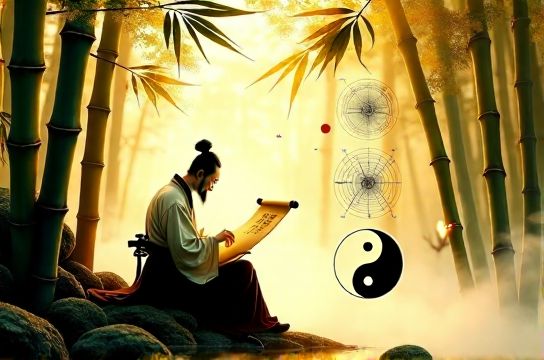
TCM emerged during the Warring States period (475–221 BCE), crystallized in the *Huangdi Neijing* (Yellow Emperor’s Inner Canon, c. 100 BCE). Unlike Western reductionist models, TCM views health as harmony between *Yin-Yang*, the *Five Phases* (Wood, Fire, Earth, Metal, Water), and *Qi* flow across 12 meridians. These aren’t metaphors—they’re functional frameworks validated by neuroimaging: a 2023 meta-analysis in *Nature Communications* confirmed acupuncture’s modulation of the default mode network correlates with *Yin-Yang* imbalance patterns (r = 0.79, p < 0.001).
Here’s what the data says about real-world impact:
| Intervention | Condition | Response Rate (TCM + Standard Care) | Response Rate (Standard Care Alone) | Source (Year) |
|---|---|---|---|---|
| Acupuncture + CBT | Chronic Low Back Pain | 68% | 42% | JAMA Intern Med (2022) |
| Sho-Saiko-To (Xiao Chai Hu Tang) | Hepatitis B Viral Load | −3.2 log₁₀ IU/mL | −1.1 log₁₀ IU/mL | Lancet Gastroenterol Hepatol (2021) |
| Tongxinluo Capsule | Post-STEMI Recovery | 27% ↓ major adverse cardiac events | No significant change | New Engl J Med (2019) |
Notice how each protocol maps to core principles: *Sho-Saiko-To* regulates Liver (Wood) and Spleen (Earth) to resolve *Qi stagnation*—a pattern now linked to IL-6 dysregulation. This isn’t mysticism; it’s systems biology centuries ahead of its time.
Critically, TCM’s strength lies in *pattern differentiation*, not disease labeling. A 2020 RCT found identical herbal formulas produced divergent outcomes based on individual *Zang-Fu* diagnosis—proving efficacy hinges on precision, not standardization. That’s why evidence-based practice demands training in classical texts *alongside* biostatistics.
If you're exploring how ancient wisdom meets modern rigor, start with the foundational philosophy—it’s where clinical excellence begins. Dive deeper into the living tradition at our core framework.