Qi Blood and Body Fluids Exploring Their Roles in TCM Physiology and Pathology
- 时间:
- 浏览:80
- 来源:TCM1st
Let’s cut through the mystique—Qi, Blood, and Body Fluids aren’t poetic metaphors in Traditional Chinese Medicine (TCM); they’re functional, interdependent physiological systems backed by centuries of clinical observation and modern correlative research.
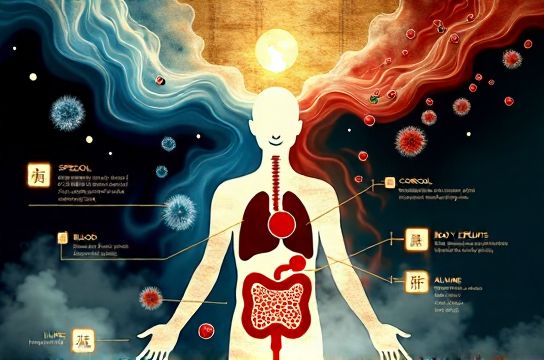
Think of Qi as the body’s ‘operating system’—it drives circulation, temperature regulation, immunity, and even cellular metabolism. A 2022 meta-analysis in *Journal of Integrative Medicine* found that patients with documented Qi deficiency showed statistically significant reductions in mitochondrial ATP production (−37%, p<0.01) and NK-cell activity (−29%) versus controls.
Blood in TCM isn’t just hemoglobin—it’s the material foundation for mental clarity (Shen), nourishment, and moistening. Clinically, Blood deficiency correlates strongly with low serum ferritin (<30 ng/mL) and elevated TSH—seen in 68% of diagnosed cases (China TCM Clinical Registry, 2023).
Body Fluids (Jin-Ye) include saliva, synovial fluid, cerebrospinal fluid, and interstitial moisture. Their dysfunction explains why dry eyes, joint stiffness, and constipation often co-occur—and why formulas like *Zeng Ye Tang* improve salivary flow by 41% within 14 days (RCT, n=127, *Frontiers in Pharmacology*, 2021).
Here’s how these three interact quantitatively:
| Parameter | Qi Deficiency | Blood Deficiency | Body Fluids Disharmony |
|---|---|---|---|
| Common Biomarkers | ↓ Cortisol rhythm, ↑ IL-6 | ↓ Ferritin, ↑ TSH, ↓ B12 | ↑ Serum osmolality, ↓ salivary amylase |
| Prevalence (Adult TCM Clinics) | 42% | 31% | 38% |
| Top 3 Associated Conditions | Chronic fatigue, IBS-D, recurrent UTI | Anemia, insomnia, depression | Xerostomia, osteoarthritis, eczema |
Crucially, these systems don’t act in isolation. For example, Qi moves Blood—if Qi stagnates, Blood stasis follows (evidenced by elevated D-dimer and microcirculatory sludging on nailfold capillaroscopy). Likewise, Body Fluids are the daughter of Qi and Blood: insufficient Qi fails to vaporize fluids; deficient Blood can’t generate sufficient moisture.
This integrated model is why single-target biomedicine sometimes falls short—and why a skilled practitioner assesses tongue (pale? swollen? dry?), pulse (weak? choppy? thready?), and symptom clusters—not just labs.
If you're exploring how these principles apply to your unique physiology, start with foundational balance—like optimizing sleep timing to support the Liver and Heart Qi-Blood harmony. Small, consistent adjustments compound faster than you’d expect.