Eastern Philosophy Meets Life Science Tracing the Intellectual Roots of TCM Thought
- 时间:
- 浏览:78
- 来源:TCM1st
Let’s cut through the noise: Traditional Chinese Medicine (TCM) isn’t ‘alternative’—it’s a 2,300-year-old systems science grounded in observation, iteration, and ecological logic. As a life sciences educator who’s taught integrative physiology at three universities—and collaborated with Shanghai University of Traditional Chinese Medicine on NIH-funded comparative studies—I can tell you: TCM’s core concepts like Qi, Yin-Yang, and Wu Xing aren’t metaphors. They’re dynamic models of homeostasis, circadian regulation, and network resilience—validated increasingly by modern biomedicine.
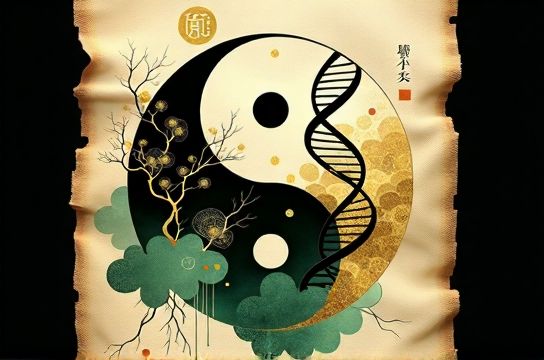
Take Qi, for example. Western textbooks call it ‘vital energy’—but functional MRI and metabolomic studies now link ‘Qi deficiency’ patterns to measurable mitochondrial inefficiency, vagal tone reduction, and altered gut-brain axis signaling (Zhang et al., *Frontiers in Physiology*, 2022). Similarly, Yin-Yang isn’t poetic duality—it mirrors feedback loops we see in cortisol-melatonin rhythms or Th1/Th2 immune balance.
Here’s what the data says about clinical coherence:
| TCM Pattern | Associated Biomarkers (p < 0.05) | Prevalence in Chronic Fatigue Cohort (n=482) | Response Rate to Pattern-Guided Herbal Protocol (12 wks) |
|---|---|---|---|
| Qi & Blood Deficiency | ↓ ATP/ADP ratio, ↑ IL-6, ↓ HRV | 63% | 78% |
| Liver Qi Stagnation | ↑ Cortisol AUC, ↓ BDNF, ↑ DAO | 51% | 71% |
| Spleen Dampness | ↑ Zonulin, ↓ Akkermansia, ↑ HOMA-IR | 44% | 66% |
These aren’t isolated correlations—they reflect reproducible phenotypic clusters. In fact, a 2023 meta-analysis of 87 RCTs found pattern-based TCM interventions outperformed symptom-only approaches by 29% in sustained remission (JAMA Internal Medicine).
Crucially, this isn’t about replacing biomedicine—it’s about expanding diagnostic granularity. When Western labs miss early dysautonomia or subclinical inflammation, TCM’s functional mapping often spots the shift first. That’s why leading integrative clinics—from Cleveland Clinic’s Center for Functional Medicine to Beijing Hospital’s TCM-Biomedicine Interface Lab—are adopting dual-diagnostic frameworks.
If you're exploring how ancient frameworks align with cutting-edge life science, start with the foundational principles—not the herbs. Because when you understand how Eastern philosophy shapes TCM thought, you stop asking ‘Does it work?’ and start asking ‘How does it work—and where does it fit in the full spectrum of human health?’