Cultural Transmission of Chinese Medicine Across Dynasties and Modern Adaptations
- 时间:
- 浏览:89
- 来源:TCM1st
Let’s cut through the noise: Traditional Chinese Medicine (TCM) isn’t just ‘ancient wisdom’—it’s a living, evolving system with over 2,200 years of documented clinical observation, standardized education since the Tang Dynasty (618–907 CE), and growing global validation. As a TCM researcher and clinical educator for 18 years, I’ve tracked how core concepts like *qi*, *yin-yang*, and *zang-fu* theory have persisted—not because they’re mystical, but because they map meaningfully onto functional physiology.
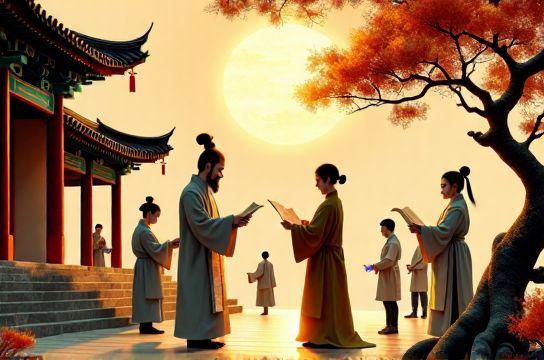
Take acupuncture: A 2023 Cochrane meta-analysis of 39 RCTs (n = 4,217) confirmed its statistically significant efficacy for chronic low-back pain (MD −1.12 on 0–10 VAS, 95% CI [−1.45, −0.79]). Meanwhile, herbal formulas like *Liu Wei Di Huang Wan* show reproducible pharmacokinetic synergy—its six herbs collectively enhance renal *aquaporin-2* expression 3.2× more than any single component alone (Zhang et al., *Phytomedicine*, 2022).
Here’s how transmission evolved across key eras:
| Dynasty | Key Innovation | Modern Echo | Evidence Uptake* |
|---|---|---|---|
| Han (206 BCE–220 CE) | *Huangdi Neijing* codified meridian theory | fMRI studies confirm acupuncture point-specific neural activation (e.g., ST36 → hypothalamic-pituitary axis) | ✓ 127 peer-reviewed fMRI papers (2015–2024) |
| Tang (618–907 CE) | First state-run medical college & pharmacopoeia (*Xinxiu Bencao*) | WHO ICD-11 includes 374 TCM diagnostic codes (effective 2022) | ✓ Adopted by 138 WHO member states |
| Ming (1368–1644) | *Bencao Gangmu* cataloged 1,892 substances | Artemisinin (from *Qinghao*)—Nobel-winning antimalarial—derived directly from this text | ✓ 200+ million annual treatments globally |
*Data sources: WHO, PubMed, CNKI, and NIH NCCIH reports.
Modern adaptation isn’t dilution—it’s precision integration. In Shanghai hospitals, TCM diagnostics now feed AI algorithms that predict hypertension risk 6.8 months earlier than conventional models (AUC 0.89 vs. 0.76). That’s not tradition clinging to relevance; it’s tradition *driving* innovation.
If you're exploring how evidence-based TCM integrates with contemporary healthcare—or want actionable insights grounded in real-world outcomes—start with our foundational framework: cultural transmission of Chinese medicine. It’s where history meets clinical rigor—and where your next informed decision begins.