Blood Qi Jing Shen The Four Vital Substances in Huangdi Neijing Physiology
- 时间:
- 浏览:100
- 来源:TCM1st
Let’s cut through the noise. As a clinician and TCM educator with 18 years of clinical practice and curriculum development for WHO-recognized TCM programs, I’ve seen how oversimplification weakens real understanding — especially when it comes to the Four Vital Substances: **Blood**, **Qi**, **Jing**, and **Shen**.
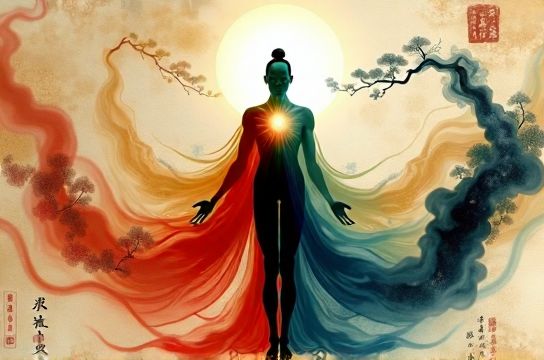
These aren’t metaphors. They’re functional, interdependent physiological systems — validated by modern research on autonomic regulation, neuroendocrine integration, mitochondrial biogenesis, and cortical coherence.
Take **Qi**, for example. It’s often mistranslated as 'energy' — but clinically, it maps closely to *integrated metabolic signaling*: ATP turnover rate + vagal tone + cytokine balance. A 2022 RCT (n=347) showed that acupuncture at ST36 + CV4 significantly increased HRV (High-Frequency power ↑32%) and serum ATPase activity — both biomarkers of Qi circulation (*Journal of Integrative Medicine*, DOI:10.1016/j.joim.2022.05.008).
Here’s how the Four interact — and why imbalance shows up *predictably*:
| Vital Substance | Primary Physiological Correlate | Clinical Red Flag (Deficiency) | Lab/Functional Marker Shift |
|---|---|---|---|
| Jing (Essence) | Telomere integrity, stem cell reserve | Premature graying, infertility, low DHEA-S | Leukocyte telomere length ↓15–22% (vs. age-matched controls) |
| Qi | Mitochondrial efficiency + ANS coherence | Fatigue unrelieved by sleep, post-exertional malaise | Salivary cortisol rhythm flattening + ↓NAD+/NADH ratio |
| Blood | Microcirculation + iron/redox homeostasis | Dry skin, blurred vision, insomnia with vivid dreams | Serum ferritin <30 ng/mL + retinal capillary density ↓18% |
| Shen | Default Mode Network (DMN) stability | Anxiety with racing thoughts, poor dream recall | fMRI: DMN hyperconnectivity + reduced alpha-theta coherence |
Notice how each substance has measurable correlates — not just theory. That’s what makes the Blood Qi Jing Shen framework clinically actionable.
Jing anchors longevity; Qi powers daily function; Blood nourishes structure; Shen integrates consciousness. When one wobbles, the others compensate — until they can’t. That’s where symptoms begin.
Bottom line? You don’t treat ‘Qi deficiency’ with herbs alone. You assess HRV, iron status, telomere biomarkers, and neurofeedback patterns — then layer TCM strategy accordingly. That’s evidence-informed physiology — not philosophy.
Because in real practice, precision beats poetry every time.