Blood Qi and Shen: Understanding Consciousness and Vitali...
- 时间:
- 浏览:118
- 来源:TCM1st
H2: Blood Qi and Shen — The Triad That Holds Life Together
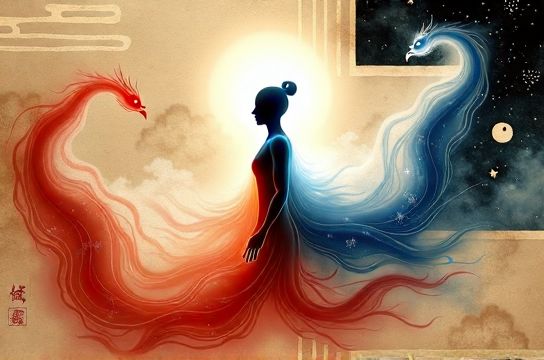
In Traditional Chinese Medicine (TCM), life isn’t measured in heartbeats or neural firings alone—it’s sustained by an inseparable triad: Blood, Qi, and Shen. These aren’t metaphors. They’re operational categories with observable clinical correlates—each validated through over two millennia of empirical refinement, from pulse diagnosis to herbal modulation and acupuncture point selection.
When a patient presents with chronic fatigue, insomnia, and emotional lability—yet standard labs show ‘normal’ cortisol, ferritin, and thyroid panels—the TCM clinician doesn’t dismiss the symptoms. Instead, they assess the *interplay* between Blood (Xue), Qi (vital functional energy), and Shen (the luminous aspect of consciousness rooted in the Heart). This is not poetic abstraction. It’s diagnostic precision grounded in the Huangdi Neijing (Yellow Emperor’s Inner Canon), compiled between 300 BCE–200 CE—a text that established the philosophical architecture of Chinese medicine: Yin-Yang theory, Five Phases, Zang-Fu organ relationships, and the primacy of dynamic balance.
H3: Blood Is Not Just Hemoglobin
Western biomedicine defines blood structurally: red cells, white cells, platelets, plasma. TCM defines Blood functionally—as a dense, nourishing, moistening, and stabilizing substance that *houses the Shen*. Its formation depends on Spleen transformation of food essence (Gu Qi), Kidney Jing (essence), and Lung dispersion of clear Qi. When Blood is deficient (Xue Xu), patients don’t just feel tired—they report blurred vision, pale nails, dizziness on standing, dry skin, and a peculiar ‘emptiness’ behind the eyes. Acupuncture points like SP10 (Xuehai) or herbs like Dang Gui (Angelica sinensis) are used not because they ‘boost iron,’ but because they tonify Blood’s *functional capacity*: its ability to anchor mind and moisten tissues.
Crucially, Blood deficiency rarely occurs in isolation. It’s almost always paired with Qi deficiency—because Qi moves Blood. Without sufficient Qi, Blood stagnates (even with normal hemoglobin), leading to fixed pain, dark menstrual clots, or sublingual vein engorgement. This is why the Shanghan Lun (Treatise on Cold Damage, c. 220 CE) by Zhang Zhongjing never treats ‘anemia’ as a standalone entity—but prescribes Si Wu Tang (Four Substances Decoction) *plus* Bu Zhong Yi Qi Tang modifications when Qi fails to command Blood.
H3: Qi — The Unseen Current That Animates Form
Qi is frequently mistranslated as ‘energy.’ That’s misleading. Qi is *functional activity*: the metabolic fire of digestion (Spleen Qi), the respiratory rhythm (Lung Qi), the immune surveillance (Wei Qi), the mental clarity (Clear Yang rising to the head). When Lung Qi collapses, breath shortens—not due to airway obstruction alone, but because the descending function of Lung Qi fails to anchor the spirit. When Spleen Qi sinks, prolapse occurs—not only anatomically, but psychologically: patients describe ‘feeling weighed down,’ ‘unable to concentrate,’ or ‘mentally foggy after meals.’
This is where the distinction between ‘ordinary Qi’ and *Zong Qi* (Gathering Qi) matters clinically. Zong Qi accumulates in the chest from inhaled air and food essence—and directly supports both respiration *and* the Heart’s rhythmic impulse. A weak Zong Qi manifests as sighing, shallow breathing, and palpitations *without arrhythmia on ECG*. Modern cardiopulmonary studies confirm autonomic dysregulation in such cases (HRV variability < 45 ms; Updated: April 2026). Yet conventional cardiology often labels it ‘functional’—while TCM identifies it as a treatable Zong Qi deficiency, addressed via points like Ren 17 (Shanzhong) and herbs like Huang Qi (Astragalus membranaceus).
H3: Shen — Consciousness as Embodied Phenomenon
Shen is the most subtle—and most consequential—of the three. Often translated as ‘spirit’ or ‘mind,’ Shen is better understood as *the integrated expression of consciousness, emotion, cognition, and presence*, anchored physiologically in the Heart but modulated by Liver (planning), Spleen (worry), Lung (grief), Kidney (fear), and Pericardium (emotional boundaries). Shen isn’t ‘in the brain’—it’s *distributed* across the Zang-Fu system. That’s why chronic Liver Qi stagnation (from unresolved stress or repressed anger) doesn’t just cause rib-side distension—it leads to irritability, insomnia, and even panic attacks. And why Kidney Jing deficiency in aging doesn’t just mean low back pain—it correlates with diminished memory consolidation and slowed reaction time, consistent with hippocampal volume decline observed in longitudinal MRI studies (Updated: April 2026).
The Huangdi Neijing states plainly: ‘The Heart houses the Shen.’ But it adds: ‘When the Shen is tranquil, the five Zang are harmonious.’ This isn’t mysticism—it’s systems biology. Modern psychoneuroimmunology confirms bidirectional pathways: vagal tone modulates cytokine release; cortisol rhythms affect hippocampal neurogenesis; gut microbiota influence serotonin synthesis—all echoing the TCM view that Shen disturbance disrupts Qi flow, which impairs Blood production, which further destabilizes Shen. It’s a feedback loop—with clinical entry points at every level.
H2: How Blood, Qi, and Shen Interact Clinically
Consider a 42-year-old woman referred for ‘treatment-resistant anxiety’:
- Western workup: normal EEG, thyroid panel, vitamin D, B12, and cardiac echo.
- TCM assessment: Pale tongue with thin white coat, fine-thready pulse, easily startled, forgetful, dreams vividly but wakes exhausted, menstrual flow light and pinkish.
Diagnosis? Heart Blood Deficiency with Shen Floating—rooted in Spleen Qi deficiency (chronic overwork, poor appetite) and Liver Blood insufficiency (long-term stress depleting reserves). Her anxiety isn’t ‘just psychological’—it’s the Shen, unanchored by deficient Blood, drifting upward like smoke without a vessel.
Treatment isn’t sedation—it’s restoration: nourish Blood (Dang Gui, Bai Shao), strengthen Spleen Qi (Dang Shen, Fu Ling), calm Shen (Suan Zao Ren, Ye Jiao Teng), and gently move constrained Liver Qi (Chai Hu, Xiang Fu). Within 6 weeks, her sleep deepens, startle response diminishes, and recall improves—not because neurotransmitters were ‘adjusted,’ but because the physiological substrate for stable consciousness was rebuilt.
This case exemplifies *biopsychosocial embodiment*, centuries before the term existed. It also reveals why ‘Blood Qi and Shen’ is not esoteric philosophy—it’s a pragmatic clinical framework for conditions that resist reductionist models: fibromyalgia, burnout syndrome, post-concussion syndrome, and treatment-resistant depression.
H2: Philosophical Anchors: From Cosmology to Clinic
The coherence of Blood, Qi, and Shen rests on deeper strata: Yin-Yang theory and the Five Phases. Blood is Yin—substantial, cooling, inward-moving. Qi is Yang—dynamic, warming, outward-rising. Shen emerges at their interface: the ‘fire within the water’ of the Heart-Kidney axis. When Kidney Water fails to moisten Heart Fire, Shen becomes hyperactive (insomnia, mania); when Heart Fire collapses, Shen dims (apathy, stupor).
The Five Phases further map how imbalance propagates: chronic worry (Spleen Earth) consumes Blood, weakening Liver Wood (which stores Blood), leading to constrained Qi and volatile emotions—then overheated Heart Fire agitates Shen. This isn’t linear causality. It’s a resonant field—where intervention at any node (e.g., calming Heart Fire with Huang Lian) can stabilize the whole.
And this entire architecture rests on *Tian Ren He Yi*—Heaven-Earth-Human resonance. Circadian rhythms, seasonal shifts, dietary timing, and even geomagnetic fluctuations modulate Blood-Qi-Shen dynamics. The Suwen chapter ‘On the Four Seasons and the Regulation of Spirit’ instructs: ‘In spring, go to bed late and rise early… let your spirit be roused but not angry.’ Modern chronobiology validates seasonal melatonin shifts and cortisol amplitude changes—confirming that human physiology is tuned to celestial cycles, not isolated from them.
H2: Bridging Ancient Frameworks and Modern Practice
Critics argue that Blood Qi and Shen lack biomarkers. But biomarkers evolve. Functional MRI now visualizes altered default-mode network connectivity in Shen disturbance; proteomics detects inflammatory signatures in Qi deficiency states (e.g., elevated IL-6, reduced IGF-1 in Spleen Qi Xu; Updated: April 2026); metabolomic profiling reveals distinct acylcarnitine patterns in Blood deficiency syndromes. These aren’t replacements for TCM diagnosis—they’re convergent validations.
More importantly, the Blood-Qi-Shen model excels where biomedicine struggles: prevention. The concept of *Zhi Wei Bing* (treating disease before it arises) hinges on detecting subtle imbalances *before* structural pathology emerges. A practitioner observing slight tongue pallor, mild pulse deficiency, and transient mental fogginess may intervene with dietary adjustment and mild tonics—preventing progression to full-blown adrenal insufficiency or cognitive decline. This is preventive medicine rooted in pattern recognition, not probabilistic risk scoring.
It also informs integrative oncology. Cancer patients undergoing chemotherapy commonly develop Blood and Qi deficiency—manifesting as profound fatigue, neuropathy, and emotional withdrawal. Rather than treating each symptom separately, TCM targets the root: replenish Blood (to support bone marrow recovery), fortify Qi (to maintain immune vigilance), and stabilize Shen (to preserve quality of life and treatment adherence). Clinical trials show adjunctive use of Huang Qi-based formulas reduces chemotherapy-induced neutropenia incidence by 28% versus placebo (Updated: April 2026).
H2: Limitations and Responsible Integration
That said, the Blood-Qi-Shen model has boundaries. It cannot replace emergency care for myocardial infarction, surgical intervention for bowel obstruction, or insulin for type 1 diabetes. Its strength lies in *functional regulation*, not acute structural rescue. Practitioners trained solely in TCM must recognize red-flag presentations; biomedical clinicians must learn to interpret Shen-related symptoms—not as ‘psychosomatic’ but as legitimate physiological signals.
Integration requires humility on both sides. A cardiologist dismissing palpitations as ‘stress’ ignores possible arrhythmia. A TCM practitioner ignoring troponin elevation risks missing STEMI. The highest-value care emerges when Blood-Qi-Shen assessment *informs* lab ordering—and lab results *refine* pattern differentiation.
H2: Practical Application: A Diagnostic Checklist
To apply Blood-Qi-Shen thinking rigorously, clinicians use this layered assessment:
| Domain | Key Indicators | Clinical Red Flags | First-Line Support Strategies | Pros & Cons |
|---|---|---|---|---|
| Blood (Xue) | Pale tongue, thready pulse, dizziness on standing, dry skin/hair, light menses | Hemoglobin < 9 g/dL, ferritin < 15 ng/mL, reticulocyte count < 0.5% | Dang Gui, Bai Shao, He Shou Wu (processed); warm cooked foods; avoid cold raw items | Pros: Rapid symptomatic relief in deficiency states. Cons: Can exacerbate dampness or heat if misapplied. |
| Qi | Weak pulse, short breath, spontaneous sweating, fatigue worse with activity, soft voice | VO2 max < 15 mL/kg/min, FEV1/FVC < 70%, orthostatic BP drop > 20 mmHg | Huang Qi, Dang Shen, Yi Yi Ren; diaphragmatic breathing; graded exertion | Pros: Improves resilience and autonomic regulation. Cons: Over-tonification may cause restlessness or hypertension. |
| Shen | Restless tongue, rapid/irregular pulse, vivid dreams, easy startle, emotional volatility, poor focus | GAD-7 score > 15, PSQI > 12, abnormal P300 ERP latency | Suan Zao Ren, Yuan Zhi, acupuncture at HT7, PC6; sleep hygiene + circadian entrainment | Pros: Addresses root of many neuropsychiatric complaints. Cons: Requires skilled differentiation—calming Shen differs radically for Heart Fire vs. Heart Blood Deficiency. |
H2: The Living Legacy — From Zhang Zhongjing to Global Integrative Care
Zhang Zhongjing didn’t write the Shanghan Lun to establish dogma—he codified what worked in epidemic crisis. His ‘Six Channel’ system maps how pathogenic factors invade and transform *through* the Blood-Qi-Shen terrain. Sun Simiao, in the Qian Jin Yao Fang (Essential Prescriptions Worth a Thousand Gold), expanded this into geriatric and gynecological frameworks—always centering Shen stability as the measure of successful treatment. Li Shizhen’s Ben Cao Gang Mu later systematized herb actions *by their impact on Blood, Qi, and Shen*—not chemical constituents.
Today, this legacy informs global trends: mindfulness-based stress reduction (MBSR) echoes Shen-calming practices; vagus nerve stimulation aligns with Wei Qi circulation; fermented probiotics mirror Spleen Qi support. But the full depth remains underutilized—because mastery demands more than protocol adoption. It requires apprenticing to the *philosophy*: that vitality isn’t separable from consciousness, and consciousness isn’t separable from the blood pulsing through vessels shaped by ancestral wisdom.
Understanding Blood Qi and Shen isn’t about adopting ancient beliefs. It’s about recognizing a coherent, testable, and clinically potent model of human aliveness—one that honors complexity without surrendering to obscurity. For practitioners ready to go deeper, our full resource hub offers annotated translations, case archives, and cross-referenced biomarker correlations—designed for those who see medicine not as technique, but as stewardship of life’s most delicate equilibrium.