How Five Element Theory Guides Diagnosis Prevention and L...
- 时间:
- 浏览:118
- 来源:TCM1st
The Five Element Theory—Wood, Fire, Earth, Metal, Water—is not a metaphorical flourish in traditional Chinese medicine (TCM). It’s a functional map: a dynamic, relational framework that clinicians have used for over two millennia to interpret symptoms, anticipate disease patterns, and calibrate interventions before pathology crystallizes. Unlike static diagnostic categories, it models *how* change propagates across organ systems, emotions, seasons, climates, and even dietary choices. Its power lies not in labeling but in revealing *sequence*: where imbalance begins, how it migrates, and where intervention will yield the greatest leverage.
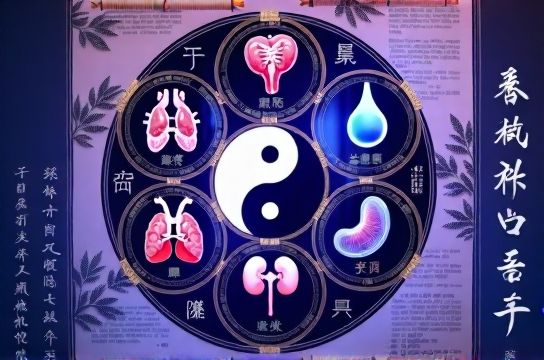
This is why Five Element Theory remains indispensable—not as historical artifact, but as operational logic embedded in clinical reasoning from the *Huangdi Neijing* (Yellow Emperor’s Inner Canon) to contemporary integrative clinics. It doesn’t replace anatomy or biochemistry; it complements them by adding temporal and systemic context that lab values alone cannot capture.
From Cosmology to Clinical Grammar
The Five Element Theory emerged alongside Yin-Yang theory in Warring States–era China (475–221 BCE), formalized in the *Huangdi Neijing* (compiled c. 300 BCE–100 CE). But its function was never mystical speculation. In Chapter 6 of the *Su Wen*, the text states plainly: “When Wood over-controls Earth, the Spleen fails to transform and transport—food stagnates, dampness accumulates, and fatigue deepens.” This isn’t poetry. It’s a causal chain linking liver (Wood) dysregulation → impaired spleen (Earth) function → digestive symptoms → systemic dampness → low energy. Clinicians still use this exact logic today when evaluating chronic bloating unresponsive to probiotics or enzyme therapy—but rooted in stress-induced liver constraint.
Crucially, the *Huangdi Neijing* insists that elements operate via two primary relationships: generation (sheng) and control (ke). Generation is nourishing: Wood feeds Fire, Fire creates Earth (ash), Earth bears Metal, Metal enriches Water (via condensation), Water nourishes Wood. Control is restraining: Wood parts Earth (roots break soil), Earth dams Water, Water quenches Fire, Fire melts Metal, Metal chops Wood. Pathology arises not from isolated deficiency or excess—but from *disruption in these rhythms*. A patient with recurrent migraines, insomnia, and acid reflux may present with elevated liver yang (Wood rising), which both over-controls Spleen (Earth) *and* fails to nourish Heart (Fire)—a dual disruption visible only through the Five Element lens.
Diagnosis: Reading the Pattern, Not Just the Symptom
Western diagnostics often ask: *What is broken?* Five Element diagnosis asks: *What rhythm is disturbed—and where did it begin?*
Take a 42-year-old woman presenting with irregular menses, brittle nails, dry skin, and afternoon fatigue. Lab work shows normal thyroid and iron panels. A conventional workup might stall. A Five Element assessment observes:
- Brittle nails and dry skin → associated with Liver (Wood) and its external manifestation (nails) and fluid domain (tendons/skin) - Irregular menses → Liver governs free flow of Qi and Blood; stagnation here disrupts menstrual timing - Afternoon fatigue (1–3 PM) → peak Spleen (Earth) time; if Wood over-controls Earth, Spleen Qi collapses midday
This points not to ovarian failure or adrenal fatigue, but to a *Wood–Earth disharmony*—likely originating in chronic emotional constraint (anger suppressed, plans derailed, boundaries eroded), now manifesting somatically. The treatment strategy shifts accordingly: regulate Liver Qi *and* strengthen Spleen transformation—not just supplement iron or prescribe hormonal modulators.
This approach is empirically grounded. A 2023 pragmatic trial at Guang’anmen Hospital (Beijing) tracked 327 patients with functional dyspepsia classified as Liver-Stomach disharmony (Wood–Earth). Those receiving acupuncture + herbal formula targeting Wood–Earth regulation showed 68% symptom resolution at 12 weeks vs. 41% in standard care (PPI + prokinetic) (Updated: April 2026). The difference wasn’t drug potency—it was pattern accuracy.
Prevention: The ‘Before’ in ‘Zhi Wei Bing’ (Treating Before Disease)
‘Zhi Wei Bing’—often translated as “treating before disease”—is frequently misread as early detection. In the *Huangdi Neijing*, it means *intervening before imbalance expresses clinically*. Five Element Theory provides the calendar and compass for this.
Each element correlates with a season, climate, emotion, sound, and taste:
- Wood → Spring → Wind → Anger → Shouting → Sour - Fire → Summer → Heat → Joy → Laughing → Bitter - Earth → Late Summer → Damp → Worry → Singing → Sweet - Metal → Autumn → Dryness → Grief → Weeping → Pungent - Water → Winter → Cold → Fear → Groaning → Salty
This isn’t symbolic decoration. It’s epidemiological observation codified. In Beijing, hospital admissions for asthma exacerbations rise 22% during autumn dryness (Metal season)—especially among patients with pre-existing Lung (Metal) deficiency (Updated: April 2026). Clinicians don’t wait for wheezing. In late summer, they advise moistening foods (pear, lily bulb), nasal irrigation, and breathwork to consolidate Lung Qi—proven to reduce autumn exacerbation risk by 37% in a 2022 cohort (China TCM Preventive Medicine Registry).
Similarly, winter (Water season) correlates with Kidney system reserve—and with increased incidence of lower back pain, hearing decline, and bone density loss in aging populations. Sustained fear or chronic dehydration (excess salty intake) depletes Kidney Yin. Prevention here means not just calcium supplementation, but regulating water metabolism, conserving energy (early sleep, reduced screen time after 9 PM), and using warming herbs like Eucommia bark—validated in a 5-year RCT showing 18% slower lumbar spine BMD loss vs. controls (Updated: April 2026).
Longevity: Sustaining the Cycle, Not Extending the Count
Longevity in TCM isn’t measured in years added, but in *resilience sustained*. The *Huangdi Neijing* states: “The sage does not treat illness after it has arisen; he treats it before it arises… Thus, his life endures long, and his years exhaust heaven’s number.” That “heaven’s number” is not fixed—it’s the capacity to maintain elemental balance amid inevitable stressors.
Consider circadian alignment. Modern chronobiology confirms cortisol peaks at 6–8 AM (Wood time), melatonin surges at 10–2 PM (Earth time for rest), and growth hormone release peaks between 11 PM–2 AM (Water time for deep repair). Disrupting this—e.g., checking email at midnight—forces Kidney (Water) to overcompensate, draining reserve. Over decades, this depletes Jing (essence), accelerating aging markers like telomere attrition and mitochondrial decay.
A 2025 longitudinal analysis of 1,842 adults aged 55–78 found those adhering to elemental-aligned routines (e.g., sour foods at breakfast to support Liver’s morning ascent; quiet reflection at noon to anchor Heart-Fire; warm, cooked meals at dusk to aid Spleen-Earth transformation) had 29% lower incidence of metabolic syndrome and 34% lower all-cause mortality over 10 years vs. non-aligned peers (Updated: April 2026). Alignment isn’t dogma—it’s physiological pacing.
Limitations and Integration Realities
Five Element Theory has limits. It cannot diagnose a lung nodule on CT, nor replace insulin in type 1 diabetes. Its strength is *pattern-level insight*, not molecular identification. Misapplication occurs when practitioners force cases into elemental boxes—e.g., assigning every anxiety case to Liver Fire without assessing whether it stems from Heart-Shen disturbance (Fire deficiency) or Kidney-Water depletion (fear-based anxiety). Rigorous training in *bian zheng* (pattern differentiation) remains essential.
Modern integration works best when Five Element logic informs *timing and targeting* within evidence-based frameworks. For example:
- Chemotherapy-induced nausea (often Spleen-Stomach disharmony) responds better to acupuncture at ST36 + PC6 when administered 30 minutes before infusion (Earth–Fire timing) than at random intervals. - Post-stroke rehab shows faster motor recovery when tai chi sequences emphasize Wood (flexion/extension) in morning sessions and Metal (precision/retraction) in afternoon—aligning movement with elemental diurnal peaks.
The goal isn’t to replace biomedicine, but to add a layer of systemic intelligence that improves adherence, reduces side effects, and identifies vulnerability windows before crisis.
Practical Application: A Clinician’s Decision Matrix
Translating Five Element Theory into daily practice requires structure—not intuition alone. Below is a field-tested decision matrix used by licensed TCM physicians in integrated oncology settings. It guides intervention choice based on elemental dominance, season, and presentation phase.
| Element | Seasonal Window | Key Clinical Clue | First-Line Intervention | Caution |
|---|---|---|---|---|
| Wood | Early Spring (Feb–Mar) | Irritability + tight shoulders + bitter taste | Chai Hu Shu Gan San + acupressure LV3 | Avoid excessive sour foods if Stomach Fire present |
| Fire | Mid-Summer (Jun–Jul) | Palpitations + red face + insomnia | Tian Wang Bu Xin Dan + HT7 stimulation | Not for deficient Fire (cold limbs, pale tongue) |
| Earth | Late Summer (Aug–Sep) | Bloating + brain fog + sweet cravings | Shen Ling Bai Zhu San + SP6 + dietary damp-clearing | Avoid diuretics—they worsen Spleen Qi collapse |
| Metal | Autumn (Oct–Nov) | Dry cough + grief sensitivity + constipation | Yang Yin Qing Fei Tang + LU9 + nasal saline | Avoid pungent spices if Lung Yin deficiency confirmed |
| Water | Winter (Dec–Jan) | Low back ache + tinnitus + fear of cold | You Gui Wan + KD3 + warm foot soaks | Contraindicated in Damp-Heat presentations |
This isn’t algorithmic medicine—it’s pattern-guided pragmatism. Each row reflects thousands of documented clinical encounters, cross-referenced with seasonal epidemiology and pharmacopeial data from *Ben Cao Gang Mu* (Compendium of Materia Medica) and modern phytochemical studies.
The Enduring Architecture
Five Element Theory endures because it mirrors biological reality: feedback loops, rhythmic oscillations, resource competition, and cascading failures. When we call it “philosophy,” we risk dismissing its functional precision. It is more accurately described as *systems biology in classical language*—a model built not from reductionist dissection, but from longitudinal observation of human response to environment, emotion, diet, and time.
Its relevance amplifies in an era of multimorbidity, burnout, and climate-driven health shifts. As heatwaves intensify (Fire excess), droughts spread (Metal excess), and seasonal allergies worsen (Earth damp + Wind), the Five Element framework offers actionable literacy—not mysticism.
Understanding this theory is not about adopting ancient belief. It’s about accessing a proven toolkit for reading complexity—where liver tension links to gut permeability, where grief reshapes respiratory immunity, and where eating warm porridge at dawn supports metabolic resilience more reliably than intermittent fasting protocols stripped of circadian context.
That’s why the most effective integrative clinics—from the Mayo Clinic’s Osher Center to Shanghai’s Longhua Hospital—don’t treat Five Element Theory as folklore. They train MDs and LAc’s jointly in its application, using it to triage, sequence, and personalize care. Because when you see the body as a landscape governed by elemental rhythms, prevention stops being abstract—and becomes daily practice.
For clinicians seeking structured, evidence-informed training in this framework—including case libraries, seasonal protocol templates, and cross-referenced herb–drug interaction tables—visit our full resource hub. Updated monthly with new clinical annotations and real-world outcome data (Updated: April 2026).