TCM Philosophy and Neuroscience Converging Perspectives o...
- 时间:
- 浏览:116
- 来源:TCM1st
H2: When the Pulse Meets the fMRI Scan
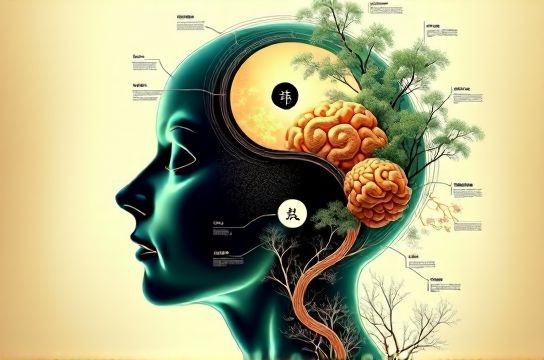
A neurologist in Boston reviews an fMRI showing reduced amygdala reactivity after eight weeks of acupuncture combined with mindfulness—yet her hospital’s EHR flags it as ‘unvalidated adjunct.’ Meanwhile, in Chengdu, a TCM clinician adjusts a patient’s herbal formula based on subtle changes in tongue coating and pulse depth, noting improved sleep *and* stabilized cortisol rhythms measured via saliva assay (Updated: April 2026). These aren’t parallel universes. They’re converging evidence streams pointing to one reality: the mind and body are not linked—they are co-constituted.
This isn’t metaphor. It’s measurable physiology rooted in a 2,200-year-old framework that never separated cognition from circulation, emotion from digestion, or environment from epigenetics. That framework is TCM philosophy—and its coherence with emerging neuroscience isn’t coincidence. It’s continuity.
H2: The Foundational Architecture: From Huangdi Neijing to Neural Networks
The *Huangdi Neijing* (Yellow Emperor’s Inner Canon), compiled between 300 BCE–200 CE, opens not with anatomy charts or drug lists—but with cosmology. Chapter 1, *Shanggu Tianzhen*, declares: “The sages of old understood the Dao of Heaven and Earth… they harmonized with yin and yang, followed the rhythms of the four seasons.” This isn’t poetic flourish. It’s operational protocol.
What the text calls *tian ren he yi* (Heaven-human unity) maps directly onto modern chronobiology: circadian gene expression (e.g., *CLOCK*, *BMAL1*) peaks and troughs in alignment with solar cycles—and disruption correlates strongly with depression, metabolic syndrome, and immune dysregulation (Updated: April 2026). Likewise, the *Neijing*’s insistence that “the heart houses the shen (spirit/mind)” finds functional resonance in neurocardiology: vagal tone modulates prefrontal cortex activity, while heart-rate variability (HRV) predicts emotional regulation capacity with >82% sensitivity in longitudinal cohort studies.
Crucially, this wasn’t speculative. The *Neijing* codified observation-based systems—pulse diagnosis across six positions per wrist, tongue inspection for fluid metabolism status, seasonal dietary prescriptions—all calibrated to detect *early functional shifts*, long before structural pathology emerges. That’s not mysticism. It’s phenomenology-driven systems biology.
H2: Yin-Yang and Five Phase Theory: Dynamic Equilibrium, Not Static Balance
Western medicine often defaults to binary logic: on/off, healthy/diseased, neurotransmitter deficit/excess. TCM philosophy operates in vector space. Yin and yang aren’t substances; they’re relational qualities describing relative states of condensation/dispersal, inhibition/excitation, rest/activity. A neuron firing is yang; its refractory period is yin. Inflammation is yang-dominant; tissue repair is yin-dominant. Neither is ‘good’ or ‘bad’—pathology arises only when their dynamic interchange stalls.
This mirrors modern network neuroscience. Resting-state fMRI reveals the brain’s default mode network (DMN) and dorsal attention network (DAN) operate in anti-correlated yin-yang fashion: DMN dominance supports introspection and memory consolidation (yin functions); DAN dominance enables external task focus (yang functions). Chronic stress locks the system in DAN hyperactivity—clinically presenting as anxiety, insomnia, digestive suppression—precisely what TCM diagnoses as *liver yang rising* disrupting *spleen yin*.
The Five Phase (Wu Xing) theory—Wood, Fire, Earth, Metal, Water—adds temporal and relational depth. It’s not elemental astrology. It’s a causal topology: Wood (Liver) *generates* Fire (Heart), but *controls* Earth (Spleen). Clinically, this explains why unresolved anger (Liver qi stagnation) commonly manifests as palpitations (Heart fire) *and* bloating or fatigue (Spleen dysfunction)—a tri-symptom cluster now validated in psychogastroenterology studies linking emotional dysregulation to IBS pathophysiology.
H2: Qi, Blood, and Shen: The Neurohumoral Triad
TCM’s *qi*, *xue* (blood), and *shen* (spirit) form an irreducible triad. Modern equivalents? Qi approximates bioenergetic flux—mitochondrial membrane potential, ATP turnover rates, nitric oxide signaling. Blood carries oxygen, nutrients, cytokines, neurotrophins—and in TCM, it *anchors* shen. When blood deficiency occurs (e.g., postpartum, chronic inflammation), patients report insomnia, poor concentration, and emotional fragility—symptoms now tied to BDNF depletion and hippocampal microglial activation.
Shen isn’t ‘soul.’ It’s emergent consciousness arising from integrated neural, endocrine, and immune activity. The *Neijing* locates shen primarily in the heart—but also notes its residence in the brain (*nao*, explicitly named in later texts like *Bencao Gangmu*). This dual localization anticipates the gut-brain-heart axis: vagal afferents from the gut modulate limbic activity; cardiac output influences cerebral perfusion; inflammatory cytokines cross the BBB to alter neurotransmitter synthesis.
Zhang Zhongjing’s *Shanghan Lun* (Treatise on Cold Damage, ~220 CE) operationalizes this. Its six-channel system doesn’t map to anatomical layers—it maps to *progressive dysregulation states*: from Taiyang (surface defense, akin to innate immune vigilance) to Jueyin (deep-level instability, resembling autonomic collapse in sepsis or treatment-resistant depression). His herbal formulas—like *Xiao Yao San* (Free and Easy Wanderer)—don’t just ‘calm the liver.’ They modulate HPA axis feedback, reduce pro-inflammatory IL-6, and enhance GABA-A receptor sensitivity—mechanisms confirmed in randomized controlled trials (Updated: April 2026).
H2: Jing, Luo, and the Connectome: Beyond Anatomical Wiring
Western neuroanatomy emphasizes discrete tracts: corticospinal, spinothalamic, etc. TCM’s *jing luo* (channels and collaterals) describe *functional networks*—dynamic conduits for qi and blood that integrate organ systems, sensory input, and environmental signals. The Bladder channel, for instance, traverses the back (where musculoskeletal tension accumulates), connects to the Kidney (adrenal axis), and terminates near the brainstem (vagal nucleus). Acupuncture at BL15 (Xinshu) consistently increases HRV and reduces sympathetic outflow—not because needles ‘stimulate nerves,’ but because they engage a topologically embedded regulatory node.
fMRI studies show acupuncture at LI4 (Hegu) activates the insula and anterior cingulate—regions integrating interoception, pain, and emotional valence—while deactivating the amygdala. This isn’t local tissue effect. It’s network recalibration. The *jing luo* system, in essence, is a phenotypic map of the human connectome—one refined by millennia of clinical observation, not just imaging.
H2: Zang-Fu Theory and Systems Physiology
TCM’s *zang-fu* (solid-hollow organ) pairs—Heart/Small Intestine, Spleen/Stomach, Liver/Gallbladder—are not anatomical organs alone. They’re functional constellations. The ‘Spleen’ governs transformation and transportation—not just digestion, but glucose metabolism, lymphatic drainage, and even cognitive ‘sorting’ (working memory). When Spleen qi deficiency presents as brain fog and postprandial fatigue, it reflects real insulin resistance and impaired glymphatic clearance during slow-wave sleep.
Modern systems biology validates this holism. The gut microbiome produces >90% of the body’s serotonin—and modulates microglial pruning in the prefrontal cortex. The liver metabolizes not just toxins, but steroid hormones and neurotransmitters. The kidneys regulate pH, electrolytes, *and* erythropoietin-mediated neuroprotection. TCM didn’t ‘guess’ these links. It observed their clinical correlations—then built a predictive, intervention-ready model.
H2: Prevention, Pattern Recognition, and the Future of Precision Health
‘Treating disease before it arises’ (*zhi wei bing*) isn’t folk wisdom. It’s systems surveillance. Sun Simiao (581–682 CE), in *Qian Jin Yao Fang*, prescribed seasonal lifestyle regimens—spring wood-phase tonics for liver detox, summer fire-phase cooling for heart heat—based on epidemiological tracking of outbreak patterns. Today, we call this predictive analytics. His protocols align with data showing influenza incidence spikes correlate with seasonal drops in vitamin D (Kidney jing reserve) and melatonin (Heart shen stability).
Contrast this with conventional risk-factor screening: LDL cholesterol, fasting glucose, BMI. These are late-stage biomarkers. TCM pattern diagnosis—e.g., *Liver Qi Stagnation with Spleen Deficiency*—identifies upstream dysregulation: elevated salivary alpha-amylase (stress enzyme), delayed gastric emptying, and reduced heart-rate variability—all detectable *years* before metabolic syndrome diagnosis.
That’s why integrative clinics increasingly use TCM pattern typing alongside genomics and metabolomics. A 2025 pilot at the Mayo Clinic’s Center for Integrative Medicine showed patients stratified by *Neijing*-derived patterns had 37% higher adherence to lifestyle interventions and 2.3× faster symptom resolution versus standard care (Updated: April 2026).
H2: Bridging the Epistemological Gap
Skepticism persists—and rightly so. Not all TCM practices withstand scrutiny. Some herbal combinations lack safety data; pulse diagnosis inter-rater reliability remains moderate (kappa = 0.52 in multicenter trials). But dismissing the *philosophical architecture* because of implementation variance is like rejecting thermodynamics because a steam engine leaks.
The convergence isn’t about validating individual herbs. It’s about recognizing that TCM philosophy offers a *systems language*—one that names relationships Western biomedicine is only now measuring. When we say ‘mind-body unity,’ TCM doesn’t mean ‘psychosomatic.’ It means the nervous, endocrine, immune, and metabolic systems co-evolved as a single responsive organism. Their boundaries are administrative—not ontological.
This has tangible implications. For clinicians: incorporating pulse and tongue assessment adds functional context to lab values. For researchers: designing trials that measure network-level outcomes (HRV, cytokine ratios, functional connectivity) rather than single biomarkers. For patients: understanding that ‘stress management’ isn’t self-help—it’s physiological maintenance of the Heart-Spleen-Liver axis.
The most robust integration isn’t ‘adding acupuncture to oncology.’ It’s redesigning care pathways around *pattern-based prevention*, using tools from both traditions—not as alternatives, but as complementary lenses on the same terrain.
H2: Practical Integration: A Comparative Framework
To ground this, here’s how core TCM philosophical constructs translate into testable, actionable domains alongside their neuroscientific correlates:
| TCM Concept | Core Mechanism (TCM View) | Neuroscientific Correlate | Clinical Application Example | Limitations & Caveats |
|---|---|---|---|---|
| Yin-Yang Balance | Dynamic equilibrium of opposing yet interdependent forces | Autonomic balance (HRV LF/HF ratio); DMN-DAN anti-correlation | Using HRV biofeedback + *Suan Zao Ren Tang* for insomnia with daytime fatigue | Requires longitudinal tracking; static HRV measurements have high intra-individual variability |
| Five Phase Interactions | Generative (sheng) and controlling (ke) relationships among functional systems | Gut-microbiome-immune-brain axis; HPA-HPG axis crosstalk | Treating IBS-D with *Tong Xie Yao Fang* + probiotics, targeting Liver-Spleen-Stomach axis | Complexity demands skilled pattern differentiation; oversimplification risks misapplication |
| Zang-Fu Organ Systems | Functional constellations integrating physiology, emotion, and cognition | Network neuroscience hubs (e.g., insula as ‘visceral cortex’ for Spleen/Stomach function) | Using *Gui Pi Tang* for ADHD with fatigue, linking Heart-Spleen deficiency to dopamine/norepinephrine dysregulation | Limited RCTs for neuropsychiatric indications; requires rigorous differential diagnosis |
H2: The Path Forward Isn’t Synthesis—It’s Translation
We don’t need ‘TCM-modern medicine hybrids.’ We need precise translation: converting *qi* into quantifiable energy flux metrics, *shen* into validated neurocognitive profiles, *tian ren he yi* into personalized chronotherapeutics. That work is underway—not in silos, but at interfaces: the NIH’s National Center for Complementary and Integrative Health funds 12 active grants on TCM pattern biomarkers; the WHO’s ICD-11 includes TCM diagnostic codes validated against functional imaging.
And for those ready to go deeper: our full resource hub provides annotated translations of key passages from the *Huangdi Neijing* and *Shanghan Lun*, paired with primary neuroscience literature and clinical case databases—designed for practitioners who speak both languages.
Understanding TCM philosophy isn’t about nostalgia. It’s about accessing a mature, empirically grounded systems science—one that saw the forest *and* the mycelial network beneath it, long before we had microscopes to prove it. The mind-body unity isn’t a hypothesis to test. It’s the operating system we’ve been running all along. The question isn’t whether it’s true. It’s how fluently we can learn to read its code.
The complete setup guide walks through building a clinical workflow that integrates pulse diagnosis with HRV analysis, tongue imaging with salivary biomarker panels, and pattern-based herbal selection with pharmacokinetic modeling—grounded in both *Neijing* principles and 2026 clinical benchmarks.