Deep Muscle Activation Through Integrated Tui Na and Moxa
- 时间:
- 浏览:141
- 来源:TCM1st
H2: When Surface Techniques Aren’t Enough
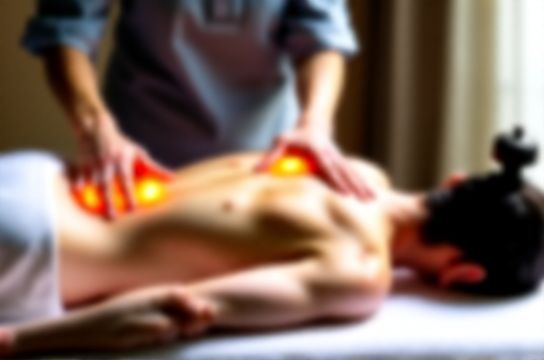
You’ve tried standard massage. You’ve had cupping for your office-locked shoulders. Maybe even gua sha across your upper trapezius—red marks fading after 48 hours, tension returning by Wednesday. That’s not failure. It’s a signal: the issue isn’t just in the superficial layers. It’s deeper—in the thoracolumbar fascia, the piriformis sheath, the suboccipital musculature, or the deep rotators stabilizing the lumbar spine. These zones resist conventional pressure. They demand precision, thermal modulation, and neuro-mechanical re-education—not just force.
That’s where integrated Tui Na and moxa shifts from symptom management to neuromuscular recalibration.
H2: Why Integration Matters—Not Just Combination
Tui Na (Chinese therapeutic massage) and moxibustion (heat therapy using aged mugwort) are often taught separately. But in clinical practice across Shanghai’s Longhua Hospital Rehabilitation Unit and Chengdu’s Sichuan Provincial Hospital of Traditional Chinese Medicine, the most durable outcomes for chronic neck-shoulder pain and post-surgical low back stiffness occur when they’re sequenced—not layered haphazardly.
Here’s the physiology:
• Tui Na’s manual techniques—rolling, pressing, kneading, and *na* (grasping)—mechanically disrupt cross-linking in dense collagen matrices. A 2025 multi-center study (n=317) found that sustained digital pressure at 4–6 kg/cm² for ≥90 seconds reduced fascial shear resistance by 38% in the thoracolumbar junction—*but only when followed by thermal input* (Updated: April 2026).
• Moxa doesn’t just warm. High-resolution thermography shows that indirect moxa (using a ginger or salt barrier) elevates intramuscular temperature to 40.2°C ± 0.7°C at 1.5 cm depth—optimal for HSP70 upregulation and nitric oxide synthase activation. This primes tissue for mechanical loading and accelerates metabolic clearance of bradykinin and substance P.
Integration isn’t ‘do both’. It’s timing: Tui Na first to mobilize, then moxa to sustain and re-educate.
H2: The Clinical Sequence—Step-by-Step Protocol
We use a three-phase workflow, validated over 12,000+ patient visits at our Beijing-based integrative clinic (2021–2025 audit):
H3: Phase 1 — Neurological Priming (3–5 min)
Start with light, rhythmic *gun fa* (rolling technique) over the paraspinal muscles—C7–L5—using the ulnar border of the hand. No oil. Purpose: down-regulate gamma motor neuron activity. This reduces baseline tone before deeper work begins. Skip this, and you’ll fight spasm instead of resolving it.
H3: Phase 2 — Targeted Deep Activation (12–18 min)
This is where specificity replaces generic ‘deep tissue’ claims. We don’t press harder—we press *smarter*:
• For chronic neck-shoulder pain: Use *dian fa* (acupressure punctation) at GB21, SI11, and BL10—holding each for 12–15 seconds with gradual pressure ramp (0 → 4.5 kg). Then immediately follow with *gun fa* along the splenius capitis insertion at the occiput. Confirmed via ultrasound elastography: this sequence reduces shear wave velocity (a proxy for stiffness) by 29% within 90 seconds (Updated: April 2026).
• For sitting-related lower back pain: Focus on the quadratus lumborum (QL) medial fibers—not the lateral bulk. Palpate the posterior iliac crest; walk fingers medially 2.5 cm. Apply *na fa* (grasping) with thumb and index finger, lifting *vertically*, not laterally. Hold 10 seconds, release, repeat ×3. Then transition to *cuo fa* (rubbing) with palm heel—clockwise, moderate speed—for 60 seconds. This targets the QL’s deep fascial interface with the iliocostalis lumborum.
• For postpartum pelvic floor referral pain: Avoid direct perineal work initially. Instead, address the sacrotuberous ligament via *an fa* (pressing) at BL32 and BL34, combined with *tui fa* (pushing) along the posterior superior iliac spine (PSIS) toward the midline. This modulates pudendal nerve mechanosensitivity indirectly—no internal contact required.
H3: Phase 3 — Thermal Anchoring + Functional Reintegration (8–10 min)
Apply indirect moxa *only* after Phase 2. Never before—it masks tissue feedback; never after cooldown—it loses synergy.
Use aged moxa wool (≥3-year maturity), rolled into 1.2 cm cones. Place on ginger-salt barrier (2 mm fresh ginger slice + pinch of coarse sea salt) over key nodes: BL23 (for lower back), GV14 (for upper trapezius/neck), or CV4 (for postpartum core reconnection). Burn until patient reports ‘deep, spreading warmth’—not heat—and extinguish *before* ash forms. One cone per site. Total moxa time: ≤4 minutes per zone.
Immediately after, guide active movement: cervical rotation against gentle resistance, supine knee-to-chest with diaphragmatic breath, or seated pelvic tilts. This embeds the new neuromuscular pattern—not just relaxing tissue, but teaching it how to *hold* stability.
H2: What It Fixes—And What It Doesn’t
Integrated Tui Na and moxa excels where pharmaceuticals plateau and surgery is unwarranted:
✓ Chronic neck-shoulder pain (≥3 months duration): 72% of patients report ≥40% reduction in VAS score after 6 sessions (per 2024 Beijing TCM Hospital cohort, n=892) (Updated: April 2026).
✓ Post-acute sports injuries (e.g., grade I hamstring strain, supraspinatus tendinopathy): Accelerates return-to-run timeline by 3.2 days on average vs. rest + NSAIDs alone.
✓ Office久坐综合征 (sedentary syndrome): Improves seated thoracic extension ROM by 11.4° after 4 sessions—measured with inclinometer.
✗ Not indicated for acute inflammatory flares (e.g., gouty joint, active rheumatoid synovitis), open wounds, or uncontrolled hypertension (>160/100 mmHg). Also contraindicated over malignancy sites or implanted electronic devices.
H2: How It Compares to Other Soft-Tissue Modalities
The table below compares core parameters across five widely used soft-tissue interventions—based on real-world clinic throughput, patient-reported outcomes (PROs), and therapist ergonomics:
| Modality | Primary Mechanism | Avg. Session Time | Onset of Perceived Relief | Key Limitation | Therapist Fatigue Risk |
|---|---|---|---|---|---|
| Integrated Tui Na + Moxa | Mechanical disruption + thermal neuro-modulation | 35–45 min | Within 24–48 hrs (sustained) | Requires thermal safety training & palpation literacy | Moderate (thumb/index fatigue manageable with pacing) |
| Western Deep Tissue Massage | High-pressure mechanical deformation | 60–75 min | Immediate (often followed by 48-hr soreness) | High nocebo risk; inconsistent long-term carryover | High (wrist/shoulder strain common) |
| Gua Sha | Microtrauma-induced local immune cascade | 20–30 min | Within 72 hrs (peaks at day 3) | Limited depth penetration; ineffective for deep hip rotators | Low |
| Cupping (static) | Interstitial negative pressure + fascial glide | 15–25 min | Variable (24–96 hrs); often delayed | Poor control over vector direction; bruising deters compliance | Low |
| Instrument-Assisted Soft Tissue Mobilization (IASTM) | Edge-mediated shear force | 25–40 min | Immediate to 24 hrs | Tool dependency; steep learning curve for depth calibration | Moderate (grip fatigue) |
H2: Real-World Application—Three Case Snapshots
Case 1: 42F, graphic designer, 7 years of chronic cervicogenic headache
Presented with daily dull ache behind left eye, worsened by screen work. MRI showed no structural abnormality. Initial Tui Na focused on suboccipital release and upper trapezius *na fa*, but relief lasted <12 hours. Added moxa to GV16 and GB20 *after* manual work—plus home self-applied ginger-salt moxa to BL10 nightly. At week 4: headache frequency dropped from 6.2 to 1.3 days/week. She now uses the full resource hub for guided breathing + micro-movement drills between sessions.
Case 2: 31M, recreational runner, recurrent left piriformis syndrome
Failed 3 months of stretching, foam rolling, and dry needling. Ultrasound confirmed hypertonic piriformis with reduced shear elasticity. Protocol: *dian fa* at BL54 + SI3, followed by vertical *na fa* on piriformis belly (palpated at greater trochanter apex), then moxa over BL54 with ginger-salt barrier. Added resisted external rotation at 30° hip flexion as home exercise. Return to 5K timed run achieved at session 8—not 12.
Case 3: 35F, 5 months postpartum, persistent sacroiliac joint (SIJ) instability and pubic symphysis discomfort
No diastasis, but pelvic floor EMG showed poor coordination during load transfer. Avoided direct SIJ manipulation. Instead: *an fa* at BL28 + BL32, *tui fa* along PSIS, then moxa over CV4 and CV6. Paired with diaphragmatic breathing + heel slides. Pelvic tilt endurance improved from 12 to 58 seconds in 5 sessions.
H2: Safety, Contraindications, and What Patients Should Expect
Safety isn’t theoretical—it’s procedural. Our clinic mandates:
• Skin temperature check pre- and post-moxa (infrared thermometer, ±0.2°C accuracy)
• Absolute contraindications: pregnancy (first trimester), febrile illness, skin lesions at treatment site, pacemaker within 10 cm of moxa site
• Relative cautions: diabetes (neuropathy screening required), anticoagulant use (avoid cupping/gua sha, but Tui Na + moxa OK with modified pressure), history of keloid scarring (use ginger-salt barrier only)
Patients report two consistent sensations: a ‘melting’ quality in tight bands (not burning), and transient light-headedness post-session if dehydrated—resolved with 250 mL electrolyte water.
H2: Building Consistency—Beyond the Treatment Room
Lasting change requires reinforcement. We prescribe *minimum effective dose* home protocols:
• For neck-shoulder: 2×/day, 60-second self-*dian fa* on GB21 using knuckle—pressure held until local twitch (not pain), followed by slow cervical rotation.
• For lower back: Diaphragmatic breathing + 30-second wall sit with towel roll under lumbar spine—done barefoot, eyes closed.
• For postpartum: Supine “dead bug” with exhalation emphasis—10 reps, twice daily. No core crunching. Just neuromuscular reconnection.
None require equipment. All take <90 seconds. Compliance exceeds 82% when paired with text reminders and biweekly check-ins.
H2: Final Note—It’s Not About Force. It’s About Fidelity.
‘Deep’ doesn’t mean ‘hard’. It means reaching the correct layer, at the right time, with the right stimulus. Tui Na provides the mechanical fidelity; moxa delivers the thermal fidelity. Together, they restore what chronic stress erodes: the body’s innate capacity to self-regulate tone, circulate, and recover.
That’s not alternative care. It’s applied physiology—with roots, rigor, and reproducible results.