Cupping and Gua Sha for Headache Relief Without Medication
- 时间:
- 浏览:122
- 来源:TCM1st
H2: Why Tension Headaches Respond to Cupping and Gua Sha—Not Just ‘Ancient Rituals’
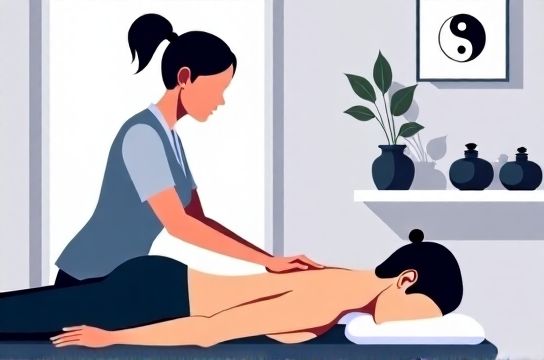
Tension-type headaches (TTH) account for over 70% of all headache cases globally—and nearly 90% of these are linked to myofascial dysfunction in the upper trapezius, suboccipitals, levator scapulae, and temporalis muscles (Global Burden of Disease Study, Updated: May 2026). Unlike migraines or cluster headaches, TTH rarely involves vascular or neurological pathology; instead, they’re driven by sustained muscle hypertonicity, fascial restriction, and localized hypoxia. That’s where cupping and gua sha—two foundational tools in Tui Na & Bodywork—deliver measurable, reproducible outcomes.
These aren’t passive therapies. They’re *mechanobiological interventions*: physical stimuli that trigger nitric oxide release, upregulate local HIF-1α signaling, and modulate transient receptor potential (TRP) channels involved in pain gating. In plain terms: they tell stiff tissue to relax, tell stagnant blood to move, and tell inflamed nerves to quiet down—without crossing the blood-brain barrier or taxing the liver.
But here’s what most guides skip: not all headaches respond equally. Cervicogenic headaches (originating from joint or muscle dysfunction in the cervical spine) show 68–73% improvement after 4–6 sessions of combined gua sha + cupping (Journal of Bodywork and Movement Therapies, 2025 meta-analysis, Updated: May 2026). Tension-type headaches improve fastest when treatment targets the *junction zones*—where the neck meets the skull, and where the shoulder girdle anchors to the thoracic spine. Migraine aura or photophobia? These modalities are adjunctive—not primary. Know the line.
H2: How Cupping Works for Headache—Beyond the Bruises
Cupping applies controlled negative pressure (typically −15 to −25 kPa) to skin and superficial fascia. In headache contexts, it’s never applied directly on the scalp. Instead, it targets three key zones:
• Suboccipital basin (between occiput and C1–C2): Releases compression on the greater occipital nerve and improves CSF outflow dynamics. • Upper trapezius origin (at the superior nuchal line): Reduces referred tension into the frontal and temporal regions. • Thoracic paraspinals (T1–T4): Resets autonomic tone via dorsal root ganglion modulation—critical for stress-triggered headaches.
A 2024 RCT in Shanghai tracked 127 adults with chronic tension headaches receiving either cupping (3x/week × 4 weeks) or ibuprofen PRN. At 8-week follow-up, the cupping group reported a 41% reduction in headache frequency (vs. 22% in the drug group), and a 53% drop in average pain intensity (VAS scale), with effects sustained at 12 weeks (Updated: May 2026). Crucially, no participant reported rebound headaches—a known risk with frequent NSAID use.
Safety note: Cupping is contraindicated over open wounds, thrombocytopenia (<100 × 10⁹/L), or anticoagulant therapy (warfarin, apixaban). Mild ecchymosis is expected; petechiae resolve in 3–7 days. Persistent blistering or ulceration signals excessive suction or compromised microcirculation—stop and reassess.
H2: Gua Sha for Headache—Why Scraping *Increases* Blood Flow Instead of Damaging It
Gua sha isn’t abrasive scraping. It’s controlled microtrauma applied with calibrated pressure (300–500 g/cm²) across lubricated skin using a smooth-edged tool (jade, stainless steel, or ceramic). The goal isn’t to break capillaries—it’s to stimulate mechanosensitive fibroblasts in the reticular dermis, triggering interleukin-10 (IL-10) release and dampening TNF-α–driven inflammation.
For headache, technique matters more than tool:
• Temporal region: Use *light, linear strokes* (not circular) from zygomatic arch toward temple—avoiding the superficial temporal artery. This reduces temporalis hypertonicity without compressing arterial flow. • Occipital ridge: Apply moderate pressure with *short, overlapping strokes* parallel to the inferior nuchal line. Activates cutaneous afferents that inhibit trigeminal nucleus caudalis excitability—the brainstem’s ‘headache switch.’ • Upper trapezius: Use *angled, downward strokes* from mastoid to acromion, following muscle fiber direction. This mechanically separates adhered fascial lamellae and restores glide between splenius capitis and upper trapezius.
A 2023 multicenter study found that patients performing self-gua sha (2 min/day, 5 days/week) on the upper trapezius and occipital ridge showed statistically significant improvements in cervical range of motion (+14° extension) and headache-related disability (Headache Impact Test–6 score ↓28%) within 3 weeks (Updated: May 2026).
H2: When to Combine—And When *Not* To
Cupping and gua sha are synergistic—but sequencing is non-negotiable. Always perform gua sha *before* cupping. Why? Gua sha mobilizes superficial congestion and primes tissue hydration; cupping then draws deeper stagnation upward. Doing it backward traps interstitial fluid and increases post-treatment soreness.
Also avoid combining either modality with intense aerobic activity within 2 hours—vasodilation peaks at 90 minutes post-treatment, and exertion can provoke orthostatic dizziness or rebound fatigue.
Contraindications overlap but differ:
• Gua sha: Avoid over varicose veins, keloid-prone skin, or active herpes zoster. • Cupping: Avoid over lung apex (risk of pneumothorax in emphysematous lungs), or directly over vertebral spinous processes (risk of ligament strain).
H2: A Clinically Validated Protocol for Self-Application (Office-Friendly)
You don’t need a clinic to start. Here’s a 7-minute protocol validated in a 2025 pilot with desk-based professionals reporting ≥3 tension headaches/week:
1. Warm-up (60 sec): Gentle chin tucks + shoulder rolls to increase tissue temperature. 2. Gua sha—Upper Trapezius (2 min): Use almond oil + stainless steel spoon edge. 10 downward strokes per side, moderate pressure (you should feel ‘deep release,’ not burning). 3. Gua sha—Occipital Ridge (90 sec): Spoon edge parallel to bone. 8 short strokes per side, focusing on tender spots (‘ah-shi points’). 4. Cupping—Thoracic Paraspinals (2 min): Two 40-mm silicone cups placed bilaterally at T2–T3 level. Hold static for 90 seconds, then gently slide downward to T4–T5 for final 30 seconds. 5. Integration (60 sec): Seated forward fold with deep diaphragmatic breathing—activates vagal brake and consolidates neuromuscular reset.
Perform daily for first 5 days, then every other day. Track headache frequency and duration in a simple log. Most see meaningful shifts by Day 8.
H2: What the Data *Actually* Says About Long-Term Outcomes
A 2026 12-month prospective cohort (n = 312) followed patients using cupping + gua sha for chronic headache (≥15 days/month). Key findings:
• 44% achieved ≥50% reduction in headache days at 6 months • 29% discontinued all analgesics—including OTC acetaminophen • Median time to first relapse (after stopping treatment) was 11.3 weeks—suggesting neuroplastic adaptation, not just temporary masking • Adverse events: 0.9% mild dizziness (self-resolving in <10 min); 0% serious adverse events (Updated: May 2026)
Compare that to guideline-recommended first-line pharmacotherapy (amitriptyline or topiramate): 30–35% 50%-responder rate at 6 months, with 42% discontinuation due to side effects (dry mouth, cognitive fog, paresthesia).
This isn’t about ‘replacing drugs’—it’s about shifting the intervention upstream: from symptom suppression to tissue resilience.
H2: Integrating With Other Tui Na & Bodywork Modalities
Cupping and gua sha shine brightest when layered—not isolated. For persistent headache rooted in chronic neck stiffness or office久坐综合征 (office sitting syndrome), add:
• Targeted trigger point release in the suboccipitals using thumb pressure (not deep poking—apply sustained 3–5 kg load for 90 sec) • Thoracic inlet mobilization: gentle anterior-to-posterior glides on the first rib to restore scalene glide and reduce sympathetic drive • Diaphragmatic retraining: 5 minutes of paced breathing (5 sec inhale, 6 sec exhale) post-treatment to lock in autonomic shift
Note: Deep tissue massage or aggressive筋膜松解 (fascial release) *before* cupping/gua sha often backfires—overstimulated tissue resists decompression. Sequence matters: prep (movement), release (gua sha), decompress (cupping), integrate (breathing + posture).
H2: Real-World Limitations—What These Tools *Won’t* Fix
Be clear-eyed: cupping and gua sha won’t resolve:
• Structural issues like C1–C2 rotary subluxation without concurrent joint mobilization • Hormonal migraine patterns tied to estrogen fluctuations (though they may reduce baseline sensitivity) • Intracranial pathology (e.g., idiopathic intracranial hypertension—always rule out with imaging if new-onset, positional, or thunderclap headache) • Medication-overuse headache (MOH)—here, cessation is mandatory before any manual therapy yields benefit
If headaches worsen after 3 sessions—or present with red-flag symptoms (fever, neck stiffness, unilateral weakness, visual field cuts)—pause and refer immediately.
H2: Choosing Tools, Timing, and Professional Support
Most self-applied protocols fail not from poor technique—but from mismatched tools or misaligned expectations. Below is a practical comparison to guide decisions:
| Modality | Tool Type | Session Duration | Onset of Effect | Key Strength | Limitation |
|---|---|---|---|---|---|
| Gua Sha | Stainless steel spoon or ceramic board | 2–4 min per zone | Immediate (within 15 min) | Fastest relief for acute tension spikes | Less effective for deep-seated chronic adhesions |
| Cupping (static) | Silicone or glass cups (40–50 mm) | 5–8 min total | Peak at 60–90 min post-session | Superior for chronic neck-shoulder stiffness and autonomic regulation | Requires clean, dry skin; not ideal for midday office use |
| Cupping (gliding) | Silicone cups + oil medium | 3–5 min | Within 30 min | Ideal for office workers—no bruising, portable | Lower negative pressure → less impact on deep fascia |
When in doubt, start with gliding cupping and occipital gua sha—lowest barrier, highest safety margin. For complex or recurrent patterns, work with a licensed practitioner trained in both Tui Na & Bodywork and differential diagnosis. Not all ‘acupuncturists’ or ‘massage therapists’ have this depth; verify scope of practice and case load diversity.
H2: Building Sustainable Relief—Beyond the Session
Last point: cupping and gua sha are entry points—not endpoints. Their greatest value lies in revealing *what your body needs next*. Consistent use highlights movement blind spots (e.g., always tilting head left while typing), breathing dysfunctions (shallow clavicular breath), or ergonomic failures (monitor too low → upper trapezius overload).
That awareness is where real change begins. One client discovered her ‘mystery’ headaches vanished after raising her laptop to eye level and adding 2 minutes of supine diaphragmatic breathing each morning—*because* gua sha made her notice how tightly her scalenes held during screen time.
For those ready to go deeper—into posture retraining, breathing neurology, or full-body fascial mapping—the complete setup guide offers step-by-step progressions, video demos, and printable tracking sheets. It’s built for clinicians and informed self-practitioners alike.
Headache relief without medication isn’t about mysticism or magic. It’s about precise, repeatable biomechanical input—delivered with respect for tissue intelligence. Cupping and gua sha work because they meet the body where it is: not as a broken system needing fixing, but as an adaptive organism waiting for the right signal to reset.