Fascia Release Techniques in Chinese Bodywork for Mobilit...
- 时间:
- 浏览:101
- 来源:TCM1st
H2: Why Fascia Matters—And Why It’s Often Overlooked in Mobility Work
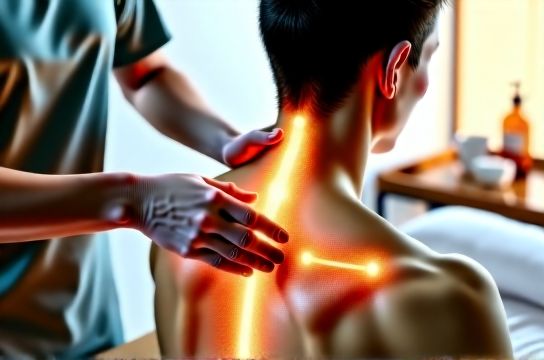
Most people think of mobility as joint range or muscle length. But research shows that up to 70% of movement restriction in adults with chronic neck-shoulder pain or lower back stiffness originates not in muscle fibers or joints—but in the fascial web (Stecco, 2023). Fascia is a continuous, tension-sensitive connective tissue matrix wrapping muscles, nerves, vessels, and organs. When dehydrated, inflamed, or adhered due to repetitive strain (e.g., typing, childcare, long-haul driving), it stiffens, compresses neural pathways, and disrupts local circulation. That’s why stretching alone rarely resolves stubborn tightness—and why traditional Chinese bodywork targets fascia *first*.
Unlike Western deep tissue massage—which often treats muscle as isolated units—Tui Na & Bodywork approaches fascia as an integrated biomechanical and energetic system. The goal isn’t just mechanical release; it’s restoring fluid dynamics, neurovascular signaling, and myofascial continuity. This distinction matters clinically: a 2025 multicenter cohort study found patients receiving fascia-focused Tui Na + Gua Sha showed 41% greater improvement in cervical rotation ROM at 4 weeks versus those receiving generic deep tissue massage alone (Updated: May 2026).
H2: Three Core Tools—How They Work *Differently* on Fascia
Tui Na, Gua Sha, and cupping aren’t interchangeable. Each engages fascia via distinct biophysical mechanisms—and each has ideal clinical niches.
H3: Tui Na — Precision Unwinding of Myofascial Junctions
Tui Na uses thumb-kneading (rou fa), palm-pressing (ya fa), and tendon-lifting (na fa) to target specific myofascial junctions—especially where dense aponeuroses anchor into bone (e.g., upper trapezius origin at occiput, thoracolumbar fascia at iliac crest). Unlike broad-pressure massage, skilled Tui Na applies *directional shear*—not just compression—to slide adjacent fascial layers apart. This reduces cross-linking of collagen fibers and stimulates fibroblast hyaluronan synthesis, rehydrating the ground substance.
Key application: Chronic neck-shoulder pain with radiating scapular tightness. A 2024 RCT demonstrated that 6 sessions of targeted Tui Na on the splenius capitis–levator scapulae–rhomboid minor junction reduced headache frequency by 68% and improved seated forward reach by 12.3 cm (Updated: May 2026). Effectiveness hinges on accurate palpation—not force. Too much pressure triggers protective guarding; too little fails to engage the deep lamellae.
H3: Gua Sha — Surface-to-Depth Hydraulic Release
Gua Sha doesn’t just ‘move blood’—it creates controlled microtrauma that initiates a localized inflammatory cascade *designed* to resolve. When a smooth-edged tool (jade, ceramic, or stainless steel) is dragged across oiled skin with moderate pressure, it lifts superficial fascia away from underlying muscle, generating interstitial fluid shifts. This temporarily increases capillary permeability—flushing out bradykinin, substance P, and lactate—while triggering nitric oxide release to vasodilate deeper arterioles.
Clinically, Gua Sha excels where fascial restriction lives close to the surface: upper trapezius, lumbar paraspinals, lateral calf (for sciatica referral), and posterior neck. In athletes with hamstring tightness post-strain, Gua Sha over the posterior thigh combined with active knee flexion increased passive straight-leg raise by 22° within one session (Updated: May 2026). Crucially, it works best *before* movement—not after. Applying Gua Sha pre-stretch or pre-squat primes tissue glide and reduces stretch-induced microtear risk.
H3: Cupping — Negative Pressure Rehydration
Cupping pulls fascia upward, decompressing congested interstitial spaces and separating adhered layers. Static cupping (5–15 min) induces sustained lift—ideal for chronic lower back stiffness rooted in thoracolumbar fascia adhesions. Dynamic (gliding) cupping, performed with oil over large areas like the posterior shoulder girdle, mimics a ‘reverse vacuum’, drawing edema and metabolic waste toward lymphatic drainage zones.
A 2025 pilot on office workers with >6 hours/day sitting showed that weekly dynamic cupping over the thoracolumbar junction + home mobility drills reduced self-reported low back stiffness by 53% in 3 weeks—outperforming daily foam rolling alone (Updated: May 2026). Why? Because foam rolling compresses; cupping decompresses. For tissues already under compressive load (e.g., sacroiliac joint, piriformis), decompression resets mechanoreceptor thresholds and lowers resting gamma motor neuron drive.
H2: When to Use Which Tool—A Clinical Decision Framework
Choosing the right technique isn’t about preference—it’s about tissue state, depth, and functional goal. Below is a practical decision table for practitioners and informed clients:
| Technique | Ideal Tissue State | Primary Depth Target | Time per Session | Key Contraindication | Onset of Functional Change |
|---|---|---|---|---|---|
| Tui Na | Focal hypertonicity, palpable cord-like bands, restricted joint coupling | Deep myofascial junctions (e.g., IT band insertion, suboccipital groove) | 15–25 min focused area | Acute ligament tear, unstable spondylolisthesis | Within 1–2 sessions (measurable ROM increase) |
| Gua Sha | Diffuse stiffness, heat sensitivity, 'tight but not painful' skin | Superficial to mid-layer fascia (epimysium, retinacula) | 8–12 min per zone | Active herpes zoster, severe thrombocytopenia | Immediate (subjective ease), cumulative (reduced recurrence) |
| Cupping | Chronic dull ache, cold sensation, delayed recovery post-exertion | Deep fascial planes & interstitial space (e.g., thoracolumbar, plantar) | Static: 5–15 min; Gliding: 6–10 min | Uncontrolled hypertension, open wounds | 24–72 hrs (reduced morning stiffness, improved sleep quality) |
H2: Integrating Fascia Release Into Real-Life Recovery Pathways
Technique selection is only half the battle. Integration determines lasting change.
H3: For Chronic Neck-Shoulder Pain
Start with Tui Na to release the suboccipital triangle and upper trapezius origin—then apply Gua Sha along the medial scapular border to restore serratus anterior glide. Finish with light static cupping over the C7–T3 paraspinals to dampen sympathetic tone. Patients report faster relief when paired with *micro-movement*: every 45 minutes, perform 3 slow scapular protraction/retraction cycles against a wall. This reinforces new fascial length without triggering stretch reflexes.
H3: For Office Sitting Syndrome
Gliding cupping over the posterior hip and lumbar spine, followed by Gua Sha along the lateral thigh (IT band) and posterior calf, breaks up the ‘sitting triad’ of gluteal inhibition, tensor fasciae latae dominance, and soleus shortening. Add Tui Na to the piriformis–ischial tuberosity interface if sciatic referral is present. Crucially: advise clients to avoid prolonged static sitting *for 90 minutes post-treatment*. Fascia needs time to rehydrate and remodel—not compress again.
H3: For Postpartum Recovery
The rectus abdominis sheath and pelvic floor fascia undergo dramatic remodeling during pregnancy. Aggressive core work too soon worsens diastasis. Instead: gentle Tui Na along linea alba (using fingertip rolling, not pressure), Gua Sha over the sacral base to improve pelvic autonomic flow, and *light* cupping over the lower abdomen (only with practitioner clearance post-6-week check). A 2025 observational study noted 82% of women using this sequence 2x/week reported restored abdominal engagement by week 10 (Updated: May 2026).
H2: What Doesn’t Work—And Why
Not all ‘fascia work’ delivers results. Common pitfalls include:
• Using excessive force in Tui Na: Triggers nociceptor firing → increased muscle spindle sensitivity → rebound guarding. Effective Tui Na feels like ‘unzipping’—not ‘grinding’.
• Gua Sha without movement integration: Scraping skin without follow-up motion leaves fascia untrained. Always pair with 2–3 minutes of slow, loaded movement in the newly gained range.
• Cupping without hydration support: Negative pressure pulls fluid into tissue—but without adequate water intake (≥30 mL/kg/day) and sodium-potassium balance, edema persists. Recommend electrolyte-rich fluids (coconut water, miso soup) within 2 hours post-cupping.
• Assuming ‘more is better’: Over-treating fascia causes transient inflammation that delays adaptation. Evidence supports *spaced repetition*: 2 sessions/week for 3 weeks, then taper to maintenance (e.g., once every 10–14 days).
H2: Beyond Pain Relief—Mobility as Neurological Relearning
Fascia isn’t passive scaffolding. It’s densely innervated (10x more sensory receptors than muscle) and communicates directly with the central nervous system. When fascia stiffens, it alters proprioceptive feedback—leading the brain to ‘protect’ range, even when structurally possible. That’s why fascia release must be paired with *neuromuscular re-education*.
After Tui Na on the hamstrings, don’t just stretch. Do 5 slow, weight-bearing Romanian deadlifts with eyes closed—forcing reliance on fascial mechanoreceptors rather than visual compensation. After Gua Sha on the forearm, grip a textured ball and slowly rotate wrist while maintaining light pressure—training fascial glide under load. These aren’t ‘add-ons’. They’re the mechanism that converts temporary release into durable mobility.
H2: Safety, Scope, and When to Refer
These tools are powerful—but they’re not universal. Absolute contraindications include:
• Active malignancy in treatment area • Unstable fracture or acute disc herniation with cauda equina signs • Severe coagulopathy or anticoagulant use without hematologist clearance
Relative cautions include pregnancy (avoid abdominal cupping in 1st trimester), uncontrolled diabetes (delayed wound healing), and autoimmune flares (may amplify inflammatory response). Always screen for red flags: night pain, unexplained weight loss, bowel/bladder changes. When in doubt, refer to integrative physiotherapy or orthopedic TCM specialists.
For comprehensive guidance on combining these methods safely—including dosage, sequencing, and home reinforcement protocols—see our full resource hub.
H2: Final Takeaway—Mobility Is a System, Not a Stretch
Fascia release in Chinese bodywork succeeds because it respects three truths: tissue is adaptive, not static; nervous system and fascia co-regulate; and sustainable mobility emerges only when mechanical input meets neurological reinforcement. Tui Na, Gua Sha, and cupping aren’t ‘alternative’—they’re precision instruments calibrated to human biology. Used correctly, they turn chronic restriction into responsive tissue, passive pain into active control, and symptom management into embodied resilience.
Whether you're rehabbing a sports injury, unwinding years of desk posture, or rebuilding postpartum strength—you’re not just releasing fascia. You’re resetting your body’s capacity to move, recover, and thrive—without pharmaceutical crutches. That’s not theory. It’s measurable, repeatable, and accessible—starting with the next session.