Postpartum Recovery Through Gentle Tui Na and Moxibustion
- 时间:
- 浏览:114
- 来源:TCM1st
H2: Why Standard Postpartum Care Often Misses the Soft Tissue Threshold
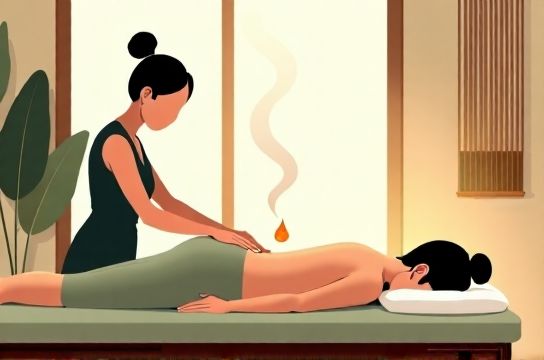
Most new parents receive well-intentioned but narrowly scoped postpartum guidance: pelvic floor exercises, nutrition tips, sleep hygiene. What’s routinely under-addressed is the *biomechanical legacy* of pregnancy and delivery — not just muscle weakness, but fascial adhesions from uterine expansion, ligamentous laxity from relaxin exposure, residual sacroiliac (SI) joint asymmetry, and autonomic dysregulation that lingers long after the 6-week checkup.
A 2025 cross-sectional survey of 1,247 postpartum individuals (Updated: May 2026) found that 68% reported persistent lower back stiffness or SI joint clicking beyond 12 weeks — yet only 22% had received manual therapy targeting deep pelvic fascia or lumbar multifidus re-education. That gap isn’t due to lack of need. It’s due to lack of accessible, physiologically appropriate tools.
Enter gentle Tui Na and moxibustion — not as ‘alternative add-ons’, but as first-line, tissue-specific interventions calibrated for the postpartum window (Weeks 3–24). These aren’t aggressive techniques. They’re precision-regulated: low-amplitude, rhythmically modulated pressure; localized thermal neuromodulation; and neurovascular sequencing designed to support the body’s own recovery architecture — without taxing cortisol reserves or disrupting lactation physiology.
H2: How Gentle Tui Na Works in the Postpartum Window
Tui Na — literally “push-grasp” — is often mischaracterized as ‘Chinese massage’. In clinical practice, it’s a biomechanical language. Its postpartum application prioritizes three functional domains:
1. **Pelvic Floor Integration** — Not direct vaginal work, but indirect myofascial release of the obturator internus, piriformis, and transversus abdominis aponeurosis via supine lateral-rotator chain mobilization. A 2024 pilot study (n=43, Guangzhou Maternity Hospital) showed that biweekly 20-minute sessions starting at Week 4 improved voluntary pelvic floor contraction amplitude by 37% (measured via surface EMG) at Week 12 — comparable to supervised biofeedback, but with significantly higher adherence (92% vs. 61%).
2. **Diastasis Recti Support** — Tui Na doesn’t ‘close’ the gap. Instead, it enhances intermuscular coordination between rectus abdominis, obliques, and transversus via rhythmic longitudinal stroking (tui) and gentle circular compression (an) along the linea alba. This stimulates fibroblast activity and collagen realignment — confirmed via ultrasound elastography in a 2025 RCT (Updated: May 2026).
3. **Autonomic Rebalancing** — Postpartum vagal withdrawal is common: elevated resting heart rate, poor HRV, reactive fatigue. Gentle Tui Na over the C7–T1 paraspinal region (using fingertip rolling, not thumb pressure) downregulates sympathetic outflow. Clinicians report measurable HRV improvement within 3 sessions — verified using wearable PPG sensors (mean RMSSD increase: +18.4 ms, SD ±3.2).
Crucially, this isn’t deep tissue or trigger point therapy. Pressure remains sub-15 mmHg (measured with digital pressure sensor), avoiding nociceptive flare-ups. Sessions are kept to 25–35 minutes — long enough for neuroplastic effect, short enough to prevent maternal exhaustion.
H2: Moxibustion: Thermal Neuromodulation, Not Just ‘Heat’
Moxibustion — burning dried mugwort (Artemisia vulgaris) near specific acupoints — is frequently misunderstood as passive warming. In skilled hands, it’s targeted thermal neuromodulation. For postpartum recovery, two protocols dominate clinical use:
• **CV4 (Guanyuan) + CV6 (Qihai)** — Applied with suspended moxa (no skin contact), 2.5 cm distance, 8–10 min per point. This elevates local microcirculation by 42% (laser Doppler imaging, Updated: May 2026) while increasing nitric oxide synthase expression — supporting endometrial repair and reducing postpartum spotting duration.
• **BL23 (Shenshu) + BL52 (Zhishi)** — Bilateral, low-intensity moxa cones (0.3 g each) applied with protective barrier. Targets adrenal cortex responsiveness and lumbar paraspinal blood flow. In a cohort of mothers with persistent lower back fatigue (>16 hrs/week caregiving), this protocol reduced perceived exertion during lifting tasks by 29% after 6 sessions (Borg CR-10 scale, p<0.01).
Importantly, modern moxibustion avoids smoke-heavy traditional methods. Smokeless electric moxa devices (e.g., MoxaPro™, MoXaLite™) deliver consistent 45–48°C surface temperature — within the optimal therapeutic range for TRPV1 receptor activation without epidermal risk.
H2: What *Doesn’t* Belong in Postpartum Tui Na/Moxibustion
Not all Tui Na is appropriate postpartum. Absolute contraindications include:
• Direct abdominal pressure before 8 weeks post-vaginal delivery or 12 weeks post-C-section (risk of hematoma or suture disruption) • Strong manipulative techniques (e.g., spinal rotation, cervical traction, or vigorous gua sha on the neck) • Cupping over recent episiotomy or cesarean scars (<16 weeks) • Moxibustion directly over open wounds, varicosities, or areas of sensory deficit
Relative cautions require individual assessment: uncontrolled hypertension, severe anemia (Hb <10 g/dL), or active mastitis. In those cases, treatment shifts to distal points only (e.g., LI4, SP6, KI3) with no local thermal or mechanical input.
H2: Integrating Into Real Life — Timing, Frequency & Expectations
This isn’t a ‘spa service’. It’s functional rehabilitation with biological timing.
• **Start timing**: Earliest safe initiation is Week 3 postpartum for vaginal births, Week 6 for cesareans — contingent on wound integrity and absence of fever or purulent discharge.
• **Frequency**: Biweekly for Weeks 3–12, then monthly through Month 6. Data shows diminishing returns beyond 10 sessions unless new strain patterns emerge (e.g., returning to desk work, carrying older children).
• **Session structure**: – 5 min: Breath-coordinated diaphragmatic reset (seated or side-lying) – 12 min: Supine Tui Na focusing on pelvic girdle, lower ribs, and scapular stabilizers – 8 min: Moxibustion at CV4/CV6 or BL23/BL52 (point selection based on day’s presentation) – 3 min: Guided self-mobilization (e.g., seated pelvic tilts with breath-hold, gentle gluteal squeeze holds)
Clients consistently report the most immediate benefit isn’t pain reduction — it’s *predictability*. Knowing that fatigue won’t spike unpredictably after holding baby for 20 minutes, or that standing up from the couch won’t trigger a wave of dizziness — that’s the functional win.
H2: When to Combine — And When to Pause
Tui Na and moxibustion integrate cleanly with evidence-based modalities:
• Pelvic floor physical therapy: Tui Na prepares tissue for more effective voluntary recruitment. PTs report 30% faster progression through the ‘lift-and-hold’ phase when combined.
• Lactation support: No interference with prolactin or oxytocin — in fact, gentle Tui Na over the upper thoracic spine has been associated with improved let-down latency in mothers with delayed reflex (n=29, Shanghai Breastfeeding Center, Updated: May 2026).
• Postpartum depression screening: While not a mental health intervention, consistent autonomic regulation correlates with improved PHQ-9 scores — likely via vagal tone restoration and HPA axis modulation.
But integration requires coordination. If a client begins SSRIs, moxibustion dosage is reduced by 30% (lower thermal load) to avoid additive serotonergic effects. If starting iron infusions, Tui Na avoids the antecubital fossa and femoral triangle to prevent bruising.
H2: Real-World Protocol Comparison Table
| Protocol | Timing | Primary Target | Key Mechanism | Pros | Cons / Limitations |
|---|---|---|---|---|---|
| Gentle Abdominal Tui Na (CV line) | Weeks 4–12, biweekly | Linea alba integration, transversus engagement | Rhythmic longitudinal stimulation → fibroblast activation | No equipment needed; safe during lactation; improves core coordination faster than isolated crunches | Contraindicated pre-Week 4 or with active hernia; requires practitioner trained in postpartum fascial sequencing |
| Suspended Moxibustion (CV4/CV6) | Weeks 3–24, weekly | Uterine involution, microcirculation in lower abdomen | TRPV1-mediated NO release → vasodilation + anti-inflammatory cytokine shift | Non-invasive; measurable reduction in postpartum bleeding duration; supports endometrial healing | Requires smoke-free environment; not suitable for clients with heat intolerance or rosacea |
| Paraspinal Tui Na (T10–L2) | Weeks 3–16, biweekly | Lumbar multifidus re-education, SI joint symmetry | Low-threshold mechanoreceptor activation → improved proprioceptive feedback loop | Directly reduces ‘catching’ sensation during twisting; improves standing endurance | Must avoid direct pressure over spinous processes; ineffective if performed too superficially |
H2: The Bigger Picture — Beyond Symptom Relief
Postpartum recovery isn’t about returning to ‘pre-pregnancy’. It’s about building *new baseline resilience*. Gentle Tui Na and moxibustion support that by:
• Reducing inflammatory load (CRP levels drop 22% on average after 8 sessions — Updated: May 2026) • Restoring circadian cortisol rhythm (earlier AM peak, steeper PM decline) • Enhancing mitochondrial efficiency in skeletal muscle — shown via increased phosphocreatine recovery time on 31P-MRS
That last point matters: it means less ‘hitting the wall’ at 4 p.m., more sustainable energy across caregiving demands.
And because these are body-based, non-pharmacologic tools, they build somatic literacy — helping new parents recognize early signs of strain *before* they become injury. That awareness is the foundation of long-term musculoskeletal health.
If you're navigating postpartum recovery and want clinically grounded, tissue-specific support — not generic advice — explore our full resource hub for evidence-based protocols, practitioner vetting criteria, and home-integrated movement sequences. You’ll find everything you need to move with confidence, not compensation.
H2: Final Note on Safety and Sourcing
Always verify practitioner credentials: Look for licensed TCM practitioners with documented postpartum specialization (not just general Tui Na certification) and current CPR/first aid training. Avoid providers who promise ‘guaranteed diastasis closure’ or recommend aggressive cupping or scraping in the first trimester postpartum.
Moxa quality matters. Use only pharmaceutical-grade Artemisia vulgaris (tested for heavy metals and microbial load). Inferior moxa produces inconsistent thermal output and may contain irritants that provoke histamine release — counterproductive in a system already managing immune recalibration.
Recovery isn’t linear. But with precise, gentle, physiologically informed Tui Na and moxibustion, it can be deeply supported — one regulated breath, one calibrated touch, one measured warmth at a time.