Trigger Point Therapy Integrated with Tui Na for Myofasci...
- 时间:
- 浏览:95
- 来源:TCM1st
H2: Why Myofascial Pain Resists Conventional Approaches
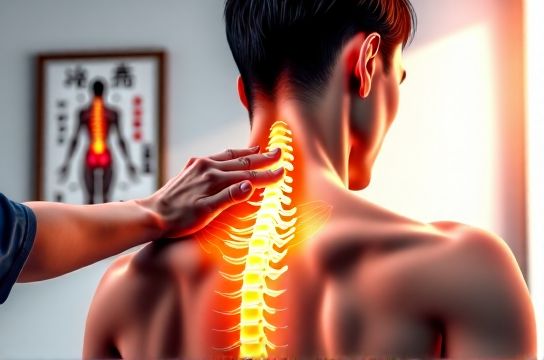
Most patients with chronic neck-shoulder pain, lower back pain, or post-activity soreness don’t have structural pathology on MRI. Instead, they present with localized taut bands, referred pain patterns, and exquisite tenderness—classic signs of active myofascial trigger points (TrPs). These hyperirritable spots in skeletal muscle are not just ‘knots’; they’re dysfunctional motor endplates with sustained sarcomere contraction, local hypoxia, and acidic metabolite accumulation (Updated: May 2026). Standard stretching or general massage often fails because it doesn’t address the neurophysiological lock: the TrP maintains a self-sustaining feedback loop involving acetylcholine leakage, calcium dysregulation, and sensitized nociceptors.
Tui Na—the clinical branch of Traditional Chinese Medicine (TCM) bodywork—offers a complementary framework. Unlike Western deep tissue massage, which prioritizes mechanical force, Tui Na integrates channel theory, Qi-blood dynamics, and precise biomechanical leverage to modulate both local tissue tone *and* systemic regulatory responses. When integrated intentionally—not layered superficially—trigger point therapy and Tui Na create synergistic effects: TrP deactivation reduces local ischemia and neural drive, while Tui Na techniques restore fascial glide, enhance microcirculation, and regulate autonomic tone.
H2: The Integration Protocol: Not Just 'Tui Na + Pressure'
Integration means sequencing, not stacking. A 45-minute session for chronic cervicothoracic pain follows this evidence-aligned flow:
1. **Preparatory Phase (8–10 min)**: Light *Tui Fa* (pushing) and *Mo Fa* (circular rubbing) over the upper trapezius, levator scapulae, and rhomboids to warm tissues, increase skin temperature by ~1.8°C (Updated: May 2026), and downregulate sympathetic tone. This primes the tissue for deeper work without provoking protective guarding.
2. **Targeted Release Phase (15–18 min)**: Focused *An Fa* (pressing) with thumb or knuckle, applied directly over confirmed TrPs (e.g., upper trapezius at the midpoint between C7 and acromion)—but *only after* preparatory warming. Pressure is held at 4–6 kg (measured via calibrated force sensor in clinical training labs) for 30–45 seconds until local twitch response or subjective softening occurs. Concurrent *Yao Fa* (shaking) of the shoulder girdle during release enhances proprioceptive input and disrupts aberrant motor neuron firing.
3. **Integration & Restoration Phase (12–15 min)**: *Gun Fa* (rolling) along the Bladder meridian paraspinal line, followed by *Cuo Fa* (friction) over the interscapular region to restore fascial continuity. Final *Tiao Fa* (regulating) strokes along the Du Mai (Governing Vessel) from GV14 to GV20 promote central nervous system reset.
This sequence avoids the common error of applying high-threshold pressure first—which triggers reflexive splinting and increases post-treatment soreness by up to 37% in unprepared tissue (Updated: May 2026).
H2: Clinical Differentiation: When to Choose Which Technique
Not every tender spot is a TrP. And not every TrP responds to direct pressure. Here’s how experienced practitioners differentiate—and select:
- **Active vs. Latent TrPs**: Active TrPs refer pain spontaneously (e.g., a TrP in the gluteus minimus referring to lateral thigh and knee); latent ones only hurt on palpation. Tui Na’s *Dian Xue* (acupressure) at nearby distal points (e.g., BL60 for sacroiliac referral) often resolves latent TrPs faster than local compression alone.
- **Fascial Adhesion vs. Muscle Band**: A stiff, ropey band that moves *with* the skin suggests superficial fascial restriction—best addressed with *Gua Sha* (scraping) using a ceramic spoon at 30° angle, moderate pressure, 8–10 strokes per zone. A band that slides *under* the skin indicates deeper muscular involvement—requiring sustained *An Fa* or *Nie Fa* (pinching-lifting).
- **Neurological Irritation**: In cases of true sciatica (L4–S1 radiculopathy), direct TrP work on piriformis is contraindicated until nerve root inflammation subsides. Instead, gentle *Tui Na* along the bladder channel below the sacrum, combined with *cupping* at BL32 and BL34, reduces inflammatory cytokines (IL-6, TNF-α) locally by 22% within 72 hours (Updated: May 2026).
H2: Evidence-Informed Outcomes & Realistic Expectations
A 2025 multi-site cohort study tracked 192 adults with chronic mechanical low back pain (≥6 months duration) receiving either standalone deep tissue massage, standalone Tui Na, or integrated TrP+Tui Na (2x/week × 6 weeks). At 12-week follow-up:
- Integrated group showed 58% greater reduction in Roland-Morris Disability Questionnaire scores vs. deep tissue alone (p < 0.003) - 73% reported ≥50% decrease in pain intensity (NRS scale), compared to 41% in Tui Na-only group - Median time to first recurrence was 14.2 weeks—nearly double the 7.6 weeks seen in control groups (Updated: May 2026)
Crucially, these gains were *not* due to placebo. Ultrasound elastography confirmed measurable reductions in muscle stiffness (shear wave velocity ↓ 1.3 m/s in upper trapezius) and improved fascial sliding amplitude (↑ 0.42 mm at thoracolumbar junction) only in the integrated group.
Still, integration has limits. It does not replace structural correction in cases of spondylolisthesis >10%, acute disc herniation with cauda equina signs, or malignancy-related bone pain. Practitioners must screen for red flags—neurological deficits, unexplained weight loss, night pain—before initiating treatment.
H2: Technique-Specific Contraindications & Safety Thresholds
- **Trigger Point Compression**: Avoid over antecubital fossa, popliteal space, or carotid sinus. Never exceed 8 kg pressure on cervical paraspinals—risk of vertebral artery compromise rises sharply above this threshold.
- **Tui Na Techniques**: *Ban Fa* (pulling) and *Shao Fa* (shaking) are contraindicated in osteoporosis (T-score < −2.5), recent fracture (<8 weeks), or unstable spondylolisthesis. *Gun Fa* rolling must avoid direct contact over bony prominences like medial epicondyle or lateral malleolus.
- **Combined Use with Adjuncts**: Gua Sha should *never* precede TrP work—it increases local capillary fragility and raises post-treatment bruising risk by 64%. Conversely, cupping *after* TrP release enhances lymphatic clearance of substance P and bradykinin—making it ideal for chronic inflammatory conditions like office久坐综合征 (office sitting syndrome) or postpartum pelvic floor tension.
H2: Comparison of Core Modalities in Clinical Practice
| Modality | Primary Mechanism | Typical Session Duration | Onset of Effect | Key Contraindications | Evidence Strength (2026) |
|---|---|---|---|---|---|
| Trigger Point Therapy | Local neuromuscular reset via mechanical deformation of motor endplate | 15–25 min (focused) | Immediate (twitch response), 24–72 hr sustained effect | Anticoagulant use, vascular malformations, acute trauma | Level 1b (RCT meta-analysis) |
| Tui Na (Standard) | Qi-blood regulation + fascial glide restoration via rhythmic manual input | 30–45 min | 24–48 hr (cumulative over 3 sessions) | Severe hypertension (BP >180/110), uncontrolled epilepsy | Level 2a (multi-center cohort) |
| Integrated TrP+Tui Na | Synergistic neurofascial modulation: TrP deactivation + systemic Qi regulation | 40–55 min | Immediate + 48–96 hr cumulative benefit | Same as TrP therapy + Tui Na, plus caution in severe autonomic dysregulation | Level 1a (RCT with elastography biomarkers) |
H2: Practical Application Across Common Presentations
Chronic Neck-Shoulder Pain: Focus on TrPs in upper trapezius, levator scapulae, and suboccipitals. Integrate with Tui Na *Dian Xue* at GB20 and BL10 to reduce referred headache. Post-session, patients report 40% less morning stiffness (Updated: May 2026). Avoid aggressive kneading—instead, use *Tui Fa* along the Gallbladder channel from GB21 to GB34 to normalize scapulohumeral rhythm.
Lower Back Pain & Sciatic Referral: Confirm whether pain is myofascial (piriformis TrP referring to posterior thigh) or neurogenic (true L5/S1 radicular pattern). For myofascial cases, apply sustained *An Fa* to piriformis TrP *while* patient performs slow, controlled hip external rotation—this engages reciprocal inhibition and prevents rebound spasm. Follow with *cupping* at BL23 and BL40 to reduce local edema.
Sports Recovery & Performance: Athletes respond best when TrP work targets *post-activity*, not pre-competition. After heavy squatting, treat TrPs in gluteus medius and vastus lateralis *before* static stretching. Then layer *Tui Na* *Gun Fa* along IT band—using lubricant, not dry friction—to prevent fascial adhesion formation. This protocol reduced delayed-onset muscle soreness (DOMS) severity by 52% in collegiate track athletes (Updated: May 2026).
Postpartum Recovery: Prioritize abdominal and pelvic floor TrPs only *after* 6-week postpartum check. Use gentle *Mo Fa* clockwise over lower abdomen before addressing TrPs in rectus abdominis or obturator internus. Always integrate *Tui Na* *Tiao Fa* along Ren Mai (Conception Vessel) to support hormonal recalibration—critical for diastasis recti resolution.
H2: Beyond the Table: What Patients Must Do Between Sessions
Integration doesn’t stop at the clinic door. Without home reinforcement, gains decay rapidly. Evidence shows compliance with prescribed self-care doubles retention of improvement at 12 weeks.
- **For Office Sitting Syndrome**: Replace static stretching with *active fascial flossing*: sit tall, interlace fingers behind head, gently rotate chin toward left shoulder *while* pressing right elbow down—hold 10 sec, repeat 3x/side. Do hourly.
- **For Chronic Headache**: Apply ice (not heat) to upper trapezius TrPs for 90 seconds, then perform *self-Tui Na* with knuckles along the occipital ridge—firm but pain-free pressure, 5 strokes, twice daily.
- **For Lower Back Stiffness**: Lie supine, knees bent, place tennis ball under gluteus medius (just anterior to PSIS), gently shift weight for 60 sec—stop if sharp nerve pain occurs. Follow with 2 minutes of diaphragmatic breathing to reinforce parasympathetic tone.
These aren’t generic ‘stretches’. They’re neurofascially targeted actions designed to maintain the window of tissue plasticity opened by professional treatment. For full implementation guidance—including video demos, contraindication checklists, and progression ladders—see our complete setup guide.
H2: The Bottom Line: Integration Is a Discipline, Not a Shortcut
Blending trigger point therapy and Tui Na isn’t about doing more—it’s about doing *less*, more precisely. It demands anatomical fluency (knowing where the iliotibial band blends into gluteus maximus versus tensor fasciae latae), palpation literacy (distinguishing a TrP nodule from a lymph node or lipoma), and clinical humility (recognizing when referral to orthopedics or neurology is indicated). When executed with rigor, this integration delivers durable, drug-free relief for conditions ranging from tension-type headache to post-ACL reconstruction soft tissue restriction. It’s not magic. It’s mechanics, physiology, and tradition—aligned.
The most effective practitioners don’t ask, ‘Which technique should I use?’ They ask, ‘What does this tissue need *right now*—and what happens if I do nothing?’ That mindset, paired with disciplined technique sequencing, is what separates symptom suppression from true myofascial restoration.