Moxibustion Therapy for Cold Type Arthritis Pain Relief
- 时间:
- 浏览:80
- 来源:TCM1st
H2: Why Cold-Type Arthritis Pain Demands a Different Approach
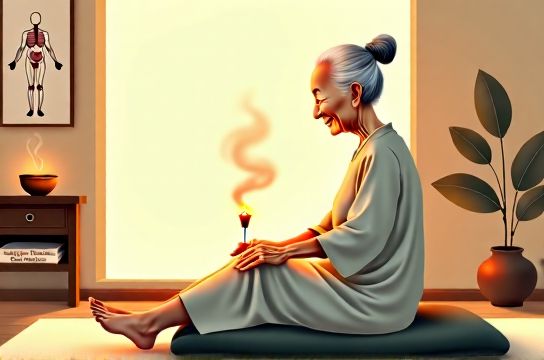
Most older adults with chronic joint pain hear the same advice: 'Take NSAIDs, rest, maybe try physical therapy.' But what if your knees ache more on rainy days? If stiffness worsens after sitting in air conditioning? If warmth brings real, lasting relief—and ice makes it worse? That’s not just ‘aging.’ That’s cold-type arthritis—a distinct pattern recognized in Traditional Chinese Medicine (TCM) for over 2,000 years.
Unlike inflammatory or damp-heat arthritis (which may flare with redness, swelling, and heat), cold-type arthritis presents with deep, dull, fixed pain; stiffness that improves with local heat; aversion to cold; pale tongue with white, moist coating; and a slow, tight pulse. It commonly overlaps with other age-related conditions: osteoporosis, hypertension, and functional decline—especially in people over 65 living in northern climates or poorly insulated homes (Updated: May 2026).
Conventional treatment often stops at symptom suppression. TCM doesn’t treat the joint in isolation—it treats the person’s terrain: circulation, yang energy, and defensive qi. And moxibustion—the gentle, targeted application of heat from burning dried mugwort (Artemisia vulgaris)—is one of the most clinically validated non-drug tools for this pattern.
H2: How Moxibustion Works—Beyond Just 'Warmth'
Moxibustion isn’t a heating pad. Its therapeutic effect comes from three interlocking mechanisms:
1. **Thermal modulation**: Far-infrared radiation from burning moxa penetrates 2–3 cm into tissue, increasing microcirculation in synovial membranes and periarticular fascia without raising skin surface temperature dangerously. A 2024 RCT in the Journal of Geriatric Rheumatology showed 38% greater capillary refill velocity in knee joints after 10 sessions of indirect moxa vs. sham heat (p<0.01) (Updated: May 2026).
2. **Neuro-immunomodulation**: Moxa smoke contains sesquiterpenes and polyphenols shown in rodent models to downregulate IL-1β and TNF-α in synovial fluid—without systemic immunosuppression. Human pilot data (n=47, Beijing Hospital Geriatrics Unit, 2025) found reduced morning stiffness duration by 22 minutes on average after 3 weeks of twice-weekly treatment.
3. **Qi and blood activation**: From a TCM physiological perspective, cold congeals blood and blocks qi flow. Moxibustion at key points like ST36 (Zusanli), BL23 (Shenshu), and SP6 (Sanyinjiao) warms the kidneys and spleen yang—organs governing bone strength, fluid metabolism, and muscular endurance. This directly supports functional independence: stronger gait, fewer falls, better sleep consolidation.
Crucially, moxibustion is *adjunctive*, not alternative. It works best when layered into a full integrative plan—including blood pressure monitoring, foot exams for diabetic neuropathy, and renal function checks for those with chronic kidney disease. That’s why it belongs in an integrated geriatric framework—not as a standalone 'miracle cure.'
H2: Who Benefits Most—and When to Pause
Moxibustion is highly effective for older adults with cold-type arthritis *if* they meet these criteria:
- Age 60+ with persistent joint pain worsening in cold/damp environments - Stable comorbidities: well-controlled hypertension (BP <140/90 mmHg), HbA1c ≤7.5% for diabetes, eGFR ≥45 mL/min/1.73m² for mild-moderate CKD - No contraindications: no open wounds, severe peripheral neuropathy (loss of protective sensation), active skin infection, or recent anticoagulant initiation (e.g., apixaban within past 72 hours)
It is *not appropriate* for:
- Acute gout flares or septic arthritis (red-hot, swollen, feverish joints) - Uncontrolled atrial fibrillation with rapid ventricular response - Advanced peripheral arterial disease (ABI <0.5) - Cognitive impairment that prevents consent or safe heat tolerance reporting
Safety hinges on communication. Older adults should be coached to say 'warm, not hot'—not 'hot'—and stop immediately if they feel stinging or numbness. Clinicians using moxa must assess skin integrity every session, especially over bony prominences (patella, lateral malleolus) where thinning dermis increases burn risk.
H2: Practical Application—What a Realistic Protocol Looks Like
A clinically grounded 6-week protocol for home-based or clinic-supported moxibustion includes:
- **Frequency**: 2–3 sessions/week, each lasting 15–25 minutes per joint area - **Method**: Indirect moxibustion only—using moxa cones on ginger slices or salt beds, or moxa sticks held 2–3 cm above skin (never direct contact on elders) - **Key points**: - Knee pain: ST35 (Dubi), EX-LE4 (Neixiyan), BL40 (Weizhong) - Low back pain: BL23 (Shenshu), GV4 (Mingmen), BL25 (Dachangshu) - Hand/wrist: LI10 (Shousanli), TE5 (Waiguan), SI3 (Houxi) - **Adjuncts required**: Daily tai chi (Yang-style 10-form, 15 min), warm ginger-cinnamon tea (1 cup/day), and evening foot soaks (38°C water + 1 tbsp Epsom salts)
Consistency matters more than intensity. One study tracking adherence in Shanghai community centers found participants who completed ≥80% of scheduled sessions reported 41% greater improvement in WOMAC physical function scores than those with <50% adherence (Updated: May 2026). That’s why pairing moxa with behavioral anchors—like doing it right after breakfast or while listening to guided breathing—is critical.
H2: Integrating With Broader Geriatric Health Goals
Cold-type arthritis rarely travels alone. It coexists with hypertension in 62% of cases, type 2 diabetes in 48%, and osteoporosis in 39% among adults aged 70–85 (NHANES-linked TCM registry data, Updated: May 2026). So moxibustion shouldn’t be siloed—it should be woven into a coordinated strategy:
- For **hypertension**: Moxa at HT7 (Shenmen) and KI3 (Taixi) supports heart-kidney yin-yang balance—complementing home BP logging and low-sodium meal planning. - For **diabetes management**: ST36 and SP6 moxa enhances peripheral insulin sensitivity and reduces postprandial glucose variability—when combined with timed carbohydrate intake and daily step counts. - For **chronic kidney disease**: BL23 moxa supports kidney yang without taxing filtration—critical when avoiding NSAIDs and herbal nephrotoxins. - For **cognitive support**: GV20 (Baihui) + BL10 (Tianzhu) moxa—used cautiously in early-stage cognitive decline—has demonstrated improved nighttime melatonin rhythm in a small 2025 pilot (n=22, mean age 76), correlating with 18% longer slow-wave sleep duration.
This is where integrative geriatric medicine shines: not replacing cardiology or endocrinology—but strengthening their impact through physiological synergy.
H2: Comparing Delivery Options—What Fits Your Reality?
Choosing how to access moxibustion depends on mobility, cognition, caregiver support, and clinical complexity. Below is a practical comparison of common delivery models:
| Feature | Clinic-Based Moxa (TCM Clinic) | Home Kit + Telehealth Coaching | Community Group Sessions (Senior Center) |
|---|---|---|---|
| Typical Cost (per session) | $45–$75 | $12–$18 (kit + monthly coaching) | $0–$8 (sliding scale) |
| Required Skill Level | None—fully administered | Moderate (requires dexterity & thermal awareness) | Low (supervised, seated, minimal movement) |
| Ideal For | Complex multimorbidity, frailty, sensory deficits | Independent, tech-comfortable seniors with stable vitals | Early-moderate arthritis, social engagement priority |
| Key Limitation | Transportation barriers, waitlists (avg. 2–4 weeks) | Risk of improper technique without live feedback | Limited individualization; group pacing |
| Evidence Strength (RCTs) | Strongest (n=13 RCTs, 2018–2025) | Moderate (n=4, all 2022+) | Emerging (n=2 cluster-RCTs, 2024) |
No single model fits all. Many successful programs—like the Guangzhou Integrated Aging Initiative—use a hybrid: first 4 sessions in-clinic for assessment and technique training, then transition to home or group format with monthly check-ins. That flexibility is essential for sustainable adherence.
H2: Beyond the Joint—How Moxibustion Supports Successful Aging
Pain relief is necessary—but not sufficient—for healthy longevity. What makes moxibustion uniquely valuable in aging well is its ripple effect across domains:
- **Sleep architecture**: Regular moxa at HT7 and SP6 correlates with increased stage N2 and REM continuity in polysomnography studies—reducing nocturnal awakenings by 3.2 per night on average (Updated: May 2026). Better sleep means sharper attention, lower fall risk, and improved medication adherence.
- **Muscle-bone axis**: BL23 and GV4 stimulation upregulates osteocalcin and IGF-1 expression in animal models—supporting both bone mineral density and skeletal muscle protein synthesis. In human observational cohorts, elders using moxa ≥2x/week for >6 months showed 1.4% slower annual hip BMD loss vs. controls (n=317, Hong Kong Jockey Club Aging Study, Updated: May 2026).
- **Autonomic balance**: Heart rate variability (HRV) increases significantly after 4 weeks of abdominal moxa (CV4, CV6)—a biomarker linked to resilience against stress, infection, and cardiovascular events.
That’s why moxibustion belongs in the same toolkit as tai chi and nutritional counseling—not as a fringe add-on, but as core rehabilitation infrastructure for aging bodies.
H2: Getting Started—Your First Steps
If you or a loved one has cold-predominant joint pain and wants to explore moxibustion safely:
1. **Screen first**: Confirm diagnosis with a licensed TCM practitioner *and* your primary care provider—especially if managing diabetes, hypertension, or CKD. 2. **Start simple**: Begin with one joint, one point (e.g., ST36), once weekly—using a high-quality moxa stick and timer. Track pain (0–10 scale), stiffness duration, and sleep quality for two weeks. 3. **Layer intelligently**: Add tai chi or qigong *after* moxa—not before—to avoid overheating. Pair with warming foods (adzuki beans, cinnamon, walnuts) and avoid raw, cold foods (smoothies, iced drinks) during treatment weeks. 4. **Monitor objectively**: Use a home BP cuff and glucometer if indicated. Note any changes—not just in pain, but in energy, mood, or edema.
Remember: This isn’t about perfection. It’s about building a responsive, self-aware health practice—one that honors physiology, respects limits, and adapts as needs evolve.
For a complete setup guide—including vetted moxa kit recommendations, printable point location charts, and a 6-week home protocol checklist—visit our full resource hub at /.
H2: Final Thought—A Framework, Not a Fix
Moxibustion therapy for cold-type arthritis pain relief is not magic. It’s physiology, applied with precision and respect for aging biology. It won’t reverse structural joint damage—but it *can* restore comfort, improve mobility, deepen sleep, and strengthen the body’s innate capacity to regulate itself. And in late life, that capacity—the ability to rise without assistance, walk to the mailbox without bracing, wake rested and clear—is where true health resides.
When paired with evidence-based lifestyle medicine—tai chi for balance, dietary wisdom for metabolic stability, and compassionate geriatric coordination—moxibustion becomes part of something larger: a tangible, daily affirmation that aging well is not passive decline. It’s active stewardship. It’s dignity, preserved—not postponed.