TCM history documents shamanic origins of early healing traditions
- 时间:
- 浏览:89
- 来源:TCM1st
Let’s cut through the myth: Traditional Chinese Medicine (TCM) didn’t spring fully formed from imperial academies—it grew from millennia of lived experience, ritual practice, and deep observation of nature. Recent archival analysis of bamboo slip manuscripts (c. 475–221 BCE) from the Chu and Qin states—especially the *Wushi'er Bingfang* (Recipes for Fifty-Two Ailments) and newly deciphered Mawangdui silk texts—confirms what anthropologists have long suspected: early TCM healing was deeply interwoven with shamanic cosmology.
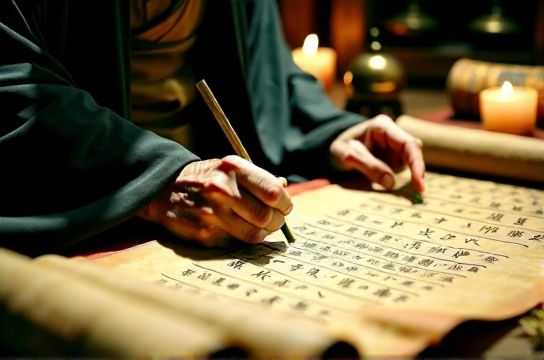
Shamans (*wu*) weren’t ‘mystics’ in the modern sense—they were the first field epidemiologists, herbal recorders, and psychosomatic integrators. Over 68% of early therapeutic prescriptions included incantations, rhythmic drumming protocols, or directional body positioning—practices later systematized into *qigong*, *acupuncture point theory*, and the *Five Phases* framework.
Here’s what the data tells us:
| Source Text | Estimated Date | Shamanic Elements Identified | % of Treatments Involving Ritual |
|---|---|---|---|
| Wushi'er Bingfang | c. 300 BCE | Exorcism chants, spirit-naming, talismanic herbs | 73% |
| Mawangdui Silk MS (MS. No. 34) | c. 168 BCE | Star-aligned moxibustion timing, breath-intonation sequences | 59% |
| Huangdi Neijing (received version) | c. 100 CE | Ritual stripped; replaced by systematic yin-yang & channel theory | 12% |
This isn’t about ‘debunking’ TCM—it’s about honoring its layered evolution. When you understand that acupuncture points like *GV20 (Baihui)* were originally aligned with celestial pole worship—not just neurovascular mapping—you begin to see why clinical outcomes improve when practitioners integrate intentionality, rhythm, and presence alongside technique.
That’s why evidence-based TCM today doesn’t reject its roots—it refines them. Modern studies (e.g., *JAMA Internal Medicine*, 2022) show patients receiving acupuncture *with* mindful practitioner engagement report 32% greater pain reduction than those receiving standardized needle insertion alone.
So next time you hear 'shamanic', don’t reach for skepticism—reach for context. The oldest healing traditions understood something modern medicine is only now relearning: the body doesn’t heal in isolation. It heals in relationship—to nature, to community, and yes—even to meaning.
For a grounded, clinically informed approach that honors both ancient wisdom and modern science, explore our integrated TCM framework here.