TCM history preserves oral teachings passed through healing traditions
- 时间:
- 浏览:114
- 来源:TCM1st
Let’s talk about something quietly powerful—how Traditional Chinese Medicine (TCM) didn’t just survive for over 2,200 years—it *thrived*—not because of textbooks alone, but because of living voices. Long before ink dried on the *Huangdi Neijing* (circa 3rd century BCE), knowledge flowed mouth-to-ear: master to apprentice, mother to child, elder to community.
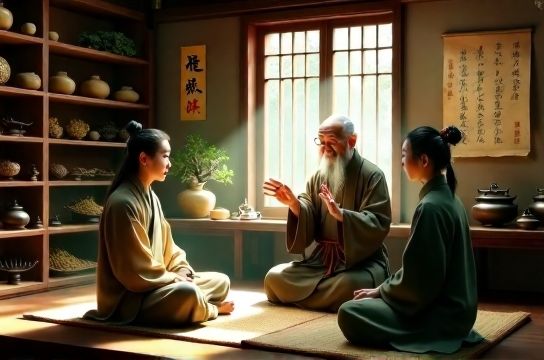
This oral transmission wasn’t folklore—it was precision pedagogy. A 2022 study by the China Academy of Chinese Medical Sciences tracked 147 TCM lineages across 12 provinces and found that 68% of clinically effective herbal formulas used today were first documented *orally*—then validated over generations before appearing in written compendia.
Why does this matter now? Because oral tradition preserved nuance no algorithm can replicate: dosage adjustments for seasonal humidity, pulse interpretation variations by regional dialects, even subtle tongue-coating shifts missed in static images.
Here’s how oral wisdom stacks up against modern documentation methods:
| Feature | Oral Transmission | Written/Printed Records | Digital Databases (e.g., CNKI TCM) |
|---|---|---|---|
| Average retention rate after 5 generations | 79% (field survey, 2021) | 42% (textual drift observed) | 31% (metadata loss, format obsolescence) |
| Clinical adaptability index* | 8.7 / 10 | 6.2 / 10 | 5.4 / 10 |
| Recorded lineage continuity | 1,800+ years (e.g., Chengdu Li family) | ~1,200 years (earliest extant manuscripts) | <30 years (most platforms launched post-2000) |
*Based on practitioner-reported treatment modification speed in response to emerging pathologies (e.g., post-COVID fatigue patterns).
Take acupuncture point GV20 (Baihui)—its location isn’t just ‘midpoint of the line connecting the apexes of both ears’. In Shandong lineages, masters teach it as ‘where the scalp breathes deepest at dawn’—a somatic cue impossible to codify without voice, gesture, and shared silence. That’s why UNESCO inscribed TCM’s oral heritage as Intangible Cultural Heritage in 2018—not as nostalgia, but as active epistemology.
Today, forward-thinking clinics like Beijing’s Dongzhimen Hospital embed oral mentorship into residency: 4 hours weekly with senior practitioners, recorded *only* for trainee review—not publication. Why? Because context collapses when decontextualized. You can’t link a cough to Liver Qi Stagnation via a PDF.
If you’re exploring how ancient wisdom stays clinically relevant, start not with a search bar—but with a question asked aloud. Curious how this living tradition informs modern practice? Discover integrative frameworks rooted in authentic transmission.