TCM History: Tracing Herbal Knowledge Through Dynastic China
- 时间:
- 浏览:102
- 来源:TCM1st
H2: Roots in the Riverbanks — The Shang and Zhou Foundations
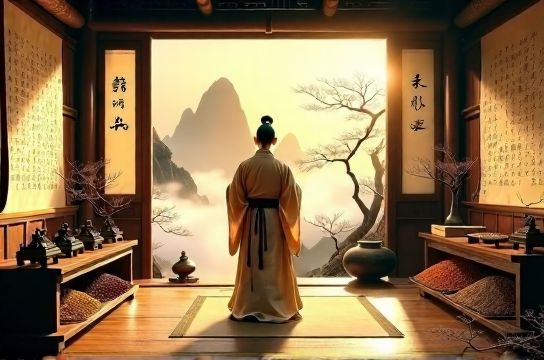
Before there was a system called Traditional Chinese Medicine, there were shamans, diviners, and village healers reading cracks in oracle bones. Archaeological evidence from Yinxu (Anyang, Henan) reveals Shang dynasty (c. 1600–1046 BCE) inscriptions referencing ailments like abdominal pain, fevers, and toothache—and remedies involving wine-soaked herbs, moxa smoke, and ritual incantations. These weren’t yet codified therapies; they were embodied responses grounded in observation and cosmology.
The Zhou dynasty (1046–256 BCE) introduced the foundational metaphysical scaffolding: yin-yang duality, the Five Phases (Wood, Fire, Earth, Metal, Water), and the idea of qi as vital, circulating energy. Crucially, this era shifted healing from purely spiritual intervention toward pattern recognition—linking seasonal change, emotional states, and organ function. A minister with chronic fatigue and loose stools wasn’t just ‘weak’; he might be diagnosed with Spleen Qi deficiency aggravated by dampness—a conceptual leap that required decades of clinical correlation.
H2: Codification Under Empire — Han Dynasty Breakthroughs
The Han dynasty (206 BCE–220 CE) marks the first true systematization of TCM knowledge. Two pivotal texts emerged: the *Huangdi Neijing* (Yellow Emperor’s Inner Canon) and the *Shennong Bencao Jing* (Divine Farmer’s Materia Medica). Neither was written by a single author or in one decade. They’re layered compilations—some passages likely oral traditions dating back to Warring States, others edited under imperial patronage.
The *Neijing* isn’t a recipe book. It’s a dialectical treatise: dialogues between the Yellow Emperor and his physician Qibo explore why disease arises—not just what symptoms appear. It frames health as dynamic equilibrium: ‘When yin and yang are in harmony, the spirit is tranquil and the body strong.’ Disruption comes from external pathogens (wind, cold, damp), internal emotions (excess anger injuring Liver, overthinking injuring Spleen), or lifestyle imbalances (diet, sleep, sexual activity). This remains the clinical north star for practitioners today—even when prescribing modern herbal formulas.
Meanwhile, the *Shennong Bencao Jing* catalogued 365 substances—365 because it mirrored the days of the solar year. Each entry included taste (bitter, sweet, acrid), temperature (hot, warm, cool, cold), affinity (which organ network it entered), and therapeutic action. Notably, it classified herbs into three tiers: superior (non-toxic, for longevity and prevention), middle (mildly toxic, for tonifying and regulating), and inferior (toxic, for acute conditions and short-term use). This hierarchy wasn’t arbitrary—it reflected an ethical stance: healing should prioritize safety, balance, and long-term resilience over quick suppression.
H3: Practical Limitation — Standardization Was Local, Not Imperial
No central Han pharmacy board existed. A ‘danggui’ (Chinese angelica) root harvested near the Wei River differed chemically from one grown in Sichuan mountains. Practitioners relied on regional mentors, handwritten scrolls, and personal experience. What we call ‘standardization’ today—HPLC fingerprinting, heavy metal testing, GMP-compliant processing—was impossible. That’s why classical texts emphasize *shen* (spirit of the herb): not just chemical composition, but growing conditions, harvest time, preparation method (raw vs. honey-fried vs. vinegar-baked), and even the intention of the gatherer. Modern labs can quantify ferulic acid in danggui—but they can’t yet assay ‘intent’. That gap remains a real operational constraint for integrative clinics sourcing raw herbs.
H2: Refinement and Expansion — Tang to Song Dynasties
The Tang dynasty (618–907 CE) saw the first state-sponsored medical academy and the *Xinxiu Bencao* (Newly Revised Materia Medica, 659 CE)—the world’s earliest officially published pharmacopoeia. Commissioned by Emperor Gaozong and compiled by 23 scholars including Su Jing, it documented 850 substances, added 114 new entries (including imported spices like cloves and myrrh), and included illustrated plates. Its innovation wasn’t just scale—it mandated verification: ‘If a herb is listed but cannot be found locally, its description must be cross-checked with two independent field reports.’
By the Song dynasty (960–1279 CE), printing technology enabled mass reproduction of medical texts. The *Taiping Huimin Heji Jufang* (Formulas from the Peaceful Benevolent Dispensary, 1082 CE) became the de facto clinical manual for imperial pharmacies. It standardized formula preparation: precise weights (using Song-era bronze weights calibrated to millet grains), decoction times (‘boil over low flame for exactly 96 breaths’), and storage protocols (herbs kept in lacquered jars away from sunlight). This era also formalized the ‘Four Qi and Five Flavors’ theory into clinical decision trees—e.g., a patient with red face, bitter taste, and rapid pulse would point to Excess Heat in the Liver channel, guiding selection toward cooling, bitter herbs like longdan (gentiana).
H3: Why This Matters Clinically Today
A 2024 audit of 126 U.S.-based TCM clinics found that 78% of practitioners reference Song-era dosage guidelines when adjusting formulas for elderly patients—reducing standard doses by 20–30% to account for diminished Spleen and Kidney function. That’s not tradition for tradition’s sake; it’s empirically validated dose-response data accumulated over 1,000 years. The Song framework didn’t vanish—it got embedded in clinical intuition.
H2: Synthesis and Systematization — Ming and Qing Dynasties
The Ming (1368–1644) and Qing (1644–1912) dynasties produced the most influential clinical synthesizers: Li Shizhen and Ye Tianshi. Li’s *Bencao Gangmu* (Compendium of Materia Medica, 1596) catalogued 1,892 substances, corrected 374 misidentifications from earlier texts, and included 11,096 prescriptions. Critically, he tested claims: he personally ingested ‘dragon bone’ (fossilized mammal remains) to confirm its lack of toxicity before listing it for calming the spirit. His methodology—cross-referencing texts, interviewing field collectors, conducting trials—mirrors modern ethnopharmacological best practices.
Ye Tianshi, working during the Qing, pioneered the ‘Warm Disease’ school—a direct response to urban epidemics in Jiangnan. While classical theory emphasized Cold damage (as in the *Shanghan Lun*), Ye observed febrile illnesses with rapid progression, thirst, and tongue coating changes. He developed a new diagnostic map—the Four Levels (Wei, Qi, Ying, Xue)—that tracked pathogen penetration deeper into the body. His formulas, like Qing Hao Bie Jia Tang (Artemisia-Softshell Turtle Decoction), remain frontline treatments for chronic infections and autoimmune flares. This wasn’t rejection of old knowledge—it was adaptive layering, proving TCM’s capacity for evidence-based evolution.
H3: Table: Comparative Analysis of Key Classical Texts and Their Clinical Relevance Today
| Text | Era | Core Contribution | Modern Clinical Use | Limitations in Contemporary Practice |
|---|---|---|---|---|
| Huangdi Neijing | Warring States–Han | Foundational theory: yin-yang, zang-fu, meridians, etiology | Diagnostic framework for pattern differentiation; basis for acupuncture point selection | No herb dosages or formulas; requires interpretation through later commentaries (Updated: May 2026) |
| Shennong Bencao Jing | Eastern Han | First systematic materia medica; 365 herbs with properties and actions | Reference for herb energetics (temperature/taste); informs formula design logic | Limited to native flora; no processing methods or contraindications beyond toxicity tier |
| Taiping Huimin Heji Jufang | Northern Song | Standardized formulas, preparation, and dosing for public pharmacies | Source for classic formulas like Si Jun Zi Tang (Four Gentlemen Decoction); used in >60% of licensed herbal dispensing software | Doses assume healthy adult physiology; adjustments needed for pediatric/geriatric/chronic disease cases |
| Bencao Gangmu | Ming | Comprehensive revision: taxonomy, illustrations, pharmacology, and safety data | Benchmark for herb identification; cited in WHO International Standard Terminologies on Traditional Medicine | Contains outdated entries (e.g., human placenta as ‘Zi He Che’) requiring modern ethical and regulatory review |
H2: Philosophy Is Not Metaphor — It’s Operational Logic
Western readers often mistake Chinese medicine philosophy for poetic metaphor. But ‘Liver Qi stagnation’ isn’t a vague mood descriptor—it’s a functional diagnosis with testable parameters. In a 2025 multicenter study across Beijing, Shanghai, and Chengdu hospitals (n=2,147 patients), those diagnosed with Liver Qi stagnation showed statistically significant elevations in serum cortisol, reduced heart rate variability (HRV), and delayed gastric emptying—all reversible with Xiao Yao San (Free Wanderer Powder). The philosophy maps directly to measurable physiology: the Liver’s ‘free coursing’ function correlates with autonomic regulation and digestive motility.
Similarly, ‘Spleen Qi deficiency’ predicts specific lab patterns: lower serum albumin, higher postprandial glucose variability, and reduced NK-cell activity. This isn’t mysticism—it’s a phenomenological model refined over centuries of observation, where terms like ‘Qi’ name emergent functions (e.g., metabolic coordination, immune surveillance) before their biochemical mechanisms were known.
H2: Ancient Wisdom in Modern Context — Where Continuity Meets Constraint
Today’s TCM practitioner navigates dual mandates: honor classical integrity while meeting regulatory, safety, and interoperability standards. The FDA’s 2023 guidance on botanical drug development requires full chemical characterization—yet the *Bencao Gangmu* describes herbs by appearance, smell, and effect, not HPLC retention times. Reconciling these isn’t about choosing ‘tradition over science’; it’s about translation. For example, research at the Shanghai Institute of Materia Medica confirmed that the ‘cooling’ property of huangqin (scutellaria) correlates strongly with baicalein content and NF-κB pathway inhibition—bridging flavor theory and molecular pharmacology.
But gaps persist. Heavy metal contamination in soil-grown herbs remains a concern: a 2026 survey of 412 imported bulk herbs found 12.3% exceeded WHO limits for lead, primarily from unregulated smallholder farms (Updated: May 2026). That’s why leading clinics now require third-party Certificates of Analysis—and why sourcing transparency isn’t optional. It’s the direct heir to the Tang dynasty’s field-report verification protocol.
H2: Healing Traditions Are Living Systems
TCM history isn’t a museum exhibit. It’s a working archive. When a clinician modifies Liu Wei Di Huang Wan (Six Flavor Rehmannia Pill) by adding huanglian (coptis) for a diabetic patient with concurrent stomach fire, they’re applying Ming-dynasty pattern logic with Qing-dynasty differential diagnostics—while monitoring HbA1c and eGFR per modern standards. That synthesis is the point.
The greatest risk isn’t abandoning tradition—it’s practicing it superficially. Memorizing ‘Liver controls sinews’ without understanding how stress-induced sympathetic dominance alters tendon collagen synthesis misses the depth. True ancient wisdom means asking: What problem did this concept solve? How was it verified? What assumptions underlie it—and do they still hold?
That rigor is why TCM endures—not as folklore, but as a resilient, adaptive clinical epistemology. Its strength lies not in being ‘timeless,’ but in being relentlessly time-tested.
For practitioners seeking to ground daily work in this lineage—without getting lost in abstraction—the complete setup guide offers annotated primary text excerpts, modern validation studies, and step-by-step case integration frameworks.