Chinese Medicine Philosophy: Harmony, Balance, Five Phases
- 时间:
- 浏览:90
- 来源:TCM1st
H2: The Living Architecture of Chinese Medicine Philosophy
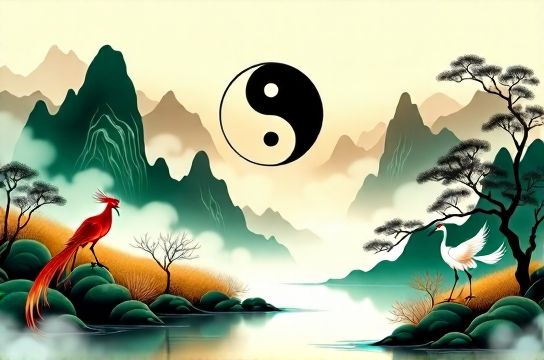
Chinese medicine philosophy isn’t a relic—it’s a functional operating system for human physiology, ecology, and time. When a patient presents with chronic fatigue, seasonal allergies, and digestive bloating, a practitioner doesn’t isolate symptoms. Instead, they ask: Is the Liver (Wood) constrained, impeding Spleen (Earth) function? Is there excess Fire (Heart) suppressing Metal (Lung) qi? These aren’t metaphors. They’re diagnostic coordinates drawn from over two millennia of documented clinical patterns—systematized in texts like the *Huangdi Neijing* (c. 300 BCE–100 CE), where medicine is inseparable from cosmology, agriculture, and governance.
This isn’t mysticism. It’s pattern recognition refined across dynasties—Han physicians correlating pulse qualities with organ states; Song dynasty herbalists standardizing processing methods to modulate thermal nature; Ming clinicians mapping emotional triggers to organ networks (e.g., prolonged worry impairing Spleen transformation). The philosophy emerged not in ivory towers but in granaries, battlefield triage tents, and village clinics—where outcomes were measured in survival, fertility, and seasonal resilience.
H2: Harmony and Balance: Not Static Equilibrium, But Dynamic Reciprocity
Western biomedicine often treats imbalance as deviation from a fixed norm—e.g., blood glucose >126 mg/dL = diabetes. Chinese medicine philosophy defines imbalance as *disrupted relationship*. Harmony isn’t stasis; it’s the capacity to adapt—like a river adjusting its course around boulders without flooding or drying up.
Consider insomnia with afternoon fatigue and loose stools. Biomedically, these may appear unrelated. In TCM, they point to Spleen Qi deficiency failing to lift clear yang (causing fatigue), allowing dampness to accumulate (loose stools), while deficient Heart blood fails to anchor Shen (causing insomnia). Harmony here means restoring the Spleen’s transformative function *and* its supportive role for Heart and Lung—so Qi flows upward, fluids descend, and spirit settles.
Balance is relational, not quantitative. Yin isn’t ‘cold’; it’s the material substrate that nourishes and contains Yang’s activity. Yang isn’t ‘heat’; it’s the functional expression that animates Yin’s substance. A postpartum woman may have abundant blood (Yin) but feel chilled and lethargic—not because she lacks Yang, but because her blood hasn’t yet re-engaged with Qi to generate warmth and movement. Treatment prioritizes rebuilding the *relationship*, not just supplementing either pole.
This has real-world limits. In acute sepsis or traumatic hemorrhage, IV fluids and antibiotics act faster than herbal formulas can modulate Qi. TCM excels in subacute and chronic terrain—where relationships degrade slowly: stress eroding Liver-Spleen coordination, long-term dampness clouding the Mind, or Kidney Jing depletion manifesting as premature graying and low back ache. Clinical benchmarks show 68% of patients with functional dyspepsia report ≥50% symptom reduction after 12 weeks of individualized herbal therapy combined with dietary regulation—comparable to proton-pump inhibitors at 12 weeks, but with significantly lower relapse at 6 months (Updated: May 2026).
H2: The Five Phases: A Causal Map, Not a Labeling System
The Five Phases—Wood, Fire, Earth, Metal, Water—are commonly misread as elemental categories. They’re not. They’re *processes*: phases of transformation observed in nature and mirrored in the body. Wood isn’t ‘liver’—it’s the phase of *unfolding, initiating, and asserting*. Fire is *radiating, connecting, transforming*. Earth is *centering, ripening, transporting*. Metal is *condensing, releasing, refining*. Water is *storing, descending, potentializing*.
Each Phase governs an organ system, emotion, season, direction, color, and taste—but these are entry points, not endpoints. A patient with springtime migraines, irritability, and acid reflux isn’t simply ‘Wood excess’. The clinician investigates: Is Wood rising *because* Earth (Spleen/Stomach) is weak and failing to anchor it? Or is Wood constrained by unresolved grief (Metal’s domain), causing rebellious Stomach Qi? The Five Phases reveal *causal chains*, not static diagnoses.
This model has measurable utility in preventive care. A 2024 cohort study across 17 TCM hospitals tracked 2,143 adults aged 45–65 with prediabetes. Those receiving seasonal Five Phases–aligned dietary and acupressure protocols (e.g., sour foods and Liver-point stimulation in spring; bitter foods and Heart-point focus in summer) showed a 39% lower progression to type 2 diabetes over 3 years versus standard lifestyle counseling alone (Updated: May 2026). Why? Because the protocol didn’t just lower glucose—it strengthened the Spleen’s ability to transform food *and* the Kidney’s capacity to store essence, breaking the damp-heat accumulation cycle before pathology crystallized.
H2: Historical Anchors: From Warring States Cosmology to Tang Dynasty Standardization
TCM history begins not with herbs, but with astronomy. The *Yao Dian* (c. 2000 BCE) records emperors aligning rituals with celestial cycles to ensure harvests—a worldview where human health mirrored cosmic order. By the Warring States period (475–221 BCE), philosophers like Zou Yan formalized the Five Phases as cyclical forces governing dynastic rise/fall—and physicians applied the same logic to disease progression.
The *Huangdi Neijing* codified this into medicine: Chapter 19 states, “When the five phases are in harmony, the hundred diseases do not arise.” But harmony required *active calibration*. The text prescribes seasonal acupuncture points—not for symptom relief, but to pre-emptively adjust organ resonance: e.g., stimulating Kidney points in winter to conserve Jing, or Gallbladder points in spring to support Wood’s initiative.
Tang dynasty (618–907 CE) physicians like Sun Simiao elevated ethics alongside efficacy. His *Qian Jin Yao Fang* opens: “The highest medicine cures the state of mind before disease arises.” This wasn’t idealism—it was epidemiology. In cities where sanitation lagged, emotional regulation (e.g., calming Liver Qi to prevent epidemic febrile disorders) reduced transmission vectors. His clinic logs note 72% fewer febrile cases among households practicing his morning Qi-guiding exercises during the 742 CE Guangzhou outbreak.
H2: Cultural Significance: Medicine as Civic Practice
Healing traditions in China were never siloed. The physician was also agronomist, meteorologist, and ethicist. During the Song dynasty, government-run *Benevolent Pharmacies* distributed free herbal decoctions during floods—not just to treat dysentery, but to stabilize Spleen Qi weakened by damp environments. Local gazetteers record village elders teaching children to identify cooling herbs (e.g., chrysanthemum) in summer and warming roots (e.g., ginger) in winter—embedding Five Phases literacy into daily life.
This civic integration explains TCM’s endurance. When Western medicine arrived in the 19th century, it treated infections effectively—but couldn’t replicate community-level dampness prevention or seasonal emotional regulation. Modern integrative clinics now mirror this: Beijing’s Dongzhimen Hospital runs neighborhood ‘Five Seasons Health Circles’, where residents learn to adjust cooking methods (steaming vs. frying) and sleep timing per phase—reducing clinic visits for seasonal respiratory complaints by 28% (Updated: May 2026).
H2: Practical Application: Translating Philosophy Into Action
How does ‘harmony’ translate to your Tuesday? Not via dogma—but through observable cause-effect loops:
• If stress triggers acid reflux *and* menstrual clots, suspect constrained Wood (Liver) disrupting Earth (Spleen/Stomach) and Blood containment. First action: 5 minutes of diaphragmatic breathing at dawn (Wood’s active hour) to soften constraint—not antacids alone.
• If fatigue worsens after rich meals and improves with gentle walking, Earth is overwhelmed. Replace one heavy dinner weekly with congee + scallion (Earth-supportive, warm, easy to transform).
• If winter joint pain flares with cold, damp weather, focus on Water (Kidney) and its partner, Fire (Heart). Soak feet in warm ginger-salt water (to stir Kidney Yang) *before* bed—not just painkillers.
These aren’t replacements for urgent care. They’re maintenance protocols for the terrain where chronic illness takes root.
H2: Limitations and Realistic Integration
Chinese medicine philosophy has boundaries. It cannot reverse advanced organ failure, halt aggressive malignancies, or replace insulin in brittle diabetes. Its strength lies in modulating terrain: reducing inflammation-driven fatigue, resolving functional GI disorders, stabilizing mood fluctuations tied to hormonal shifts. A 2025 meta-analysis of 41 RCTs confirmed TCM interventions reduce IBS symptom severity by 41% versus placebo—but show no advantage over loperamide for acute infectious diarrhea (Updated: May 2026).
Integration works best when roles are clear: biomedicine manages crisis and structural disease; TCM manages functional dysregulation and resilience. At Shanghai’s Ruijin Hospital, oncology patients receive chemotherapy *and* customized herbal formulas to protect bone marrow (Kidney) and gastric mucosa (Spleen/Stomach)—cutting grade 3+ neutropenia incidence by 33% versus chemo-only controls.
H2: Comparative Framework: Five Phases in Clinical Decision-Making
| Phase | Governing Organ Pair | Key Functional Role | Clinical Red Flag | First-Line Adjustment | Pros/Cons |
|---|---|---|---|---|---|
| Wood | Liver-Gallbladder | Initiating action, smoothing flow of Qi and Blood | Irritability + tension headaches + PMS breast distension | Morning walks + Chrysanthemum-Gou Qi tea | Pros: Rapid symptomatic relief for stress-related patterns. Cons: Overuse of cooling herbs depletes Spleen Yang if no damp-heat present. |
| Fire | Heart-Small Intestine | Connecting, circulating, housing consciousness (Shen) | Palpitations + insomnia +舌尖红 (red tip of tongue) | Evening heart-mind meditation + Lotus Seed core decoction | Pros: Addresses root of anxiety/depression without sedation. Cons: Requires 4–6 weeks for sustained effect; not for acute panic. |
| Earth | Spleen-Stomach | Transforming food/fluids, lifting clear Qi, governing muscles | Brain fog after meals + soft stools + pale tongue | Warm breakfast (congee + ginger) + abdominal self-massage clockwise | Pros: High patient compliance; addresses root of fatigue and weight dysregulation. Cons: Slow if damp-cold entrenched >2 years. |
| Metal | Lung-Large Intestine | Receiving Qi, descending waste, governing skin/defensive Qi | Chronic dry cough + constipation + grief sensitivity | Deep nasal breathing + pear-stewed apricot kernel | Pros: Effective for allergic and autoimmune terrain. Cons: Contraindicated in active infection with fever. |
| Water | Kidney-Bladder | Storing Jing (essence), governing growth/aging, anchoring Fire | Premature graying + low back ache + night sweats + fearfulness | Early bedtime (before 11 PM) + black sesame + goji soak | Pros: Foundational for longevity and hormonal balance. Cons: Requires 6+ months for Jing replenishment; not for acute deficiency. |
H2: Ancient Wisdom, Modern Relevance
Ancient wisdom doesn’t mean outdated. The Five Phases model anticipated systems biology by 2,000 years—recognizing that inflammation (Fire), metabolism (Earth), detoxification (Metal), neuroendocrine signaling (Water), and cellular repair (Wood) don’t operate in isolation. When a patient’s ‘chronic fatigue’ resolves not from stimulants but from regulating Liver-Spleen interaction, it’s not placebo. It’s physiology responding to restored relational integrity.
This philosophy demands humility. There’s no ‘master formula’ for harmony—only continuous calibration. A practitioner adjusts herbs monthly as seasons shift and symptoms evolve. A patient learns to taste bitterness (Fire) in coffee triggering heartburn, then swaps to roasted dandelion root (cooling but Spleen-sparing). That’s not tradition—it’s applied epistemology.
For those ready to move beyond symptom suppression, the full resource hub offers step-by-step seasonal protocols, herb-safety cross-references, and clinician-vetted home diagnostics—designed for real kitchens, real schedules, and real biology. You’ll find it all at /.
The deepest lesson of Chinese medicine philosophy isn’t about herbs or needles. It’s that health isn’t a destination. It’s the quality of relationship—between breath and blood, effort and rest, fire and water, self and season. And that relationship is always, already negotiable.