Healing Traditions Bone Setting and Martial Arts Medicine...
- 时间:
- 浏览:83
- 来源:TCM1st
H2: The Ming Crucible: Where Combat, Clinic, and Cosmology Converged
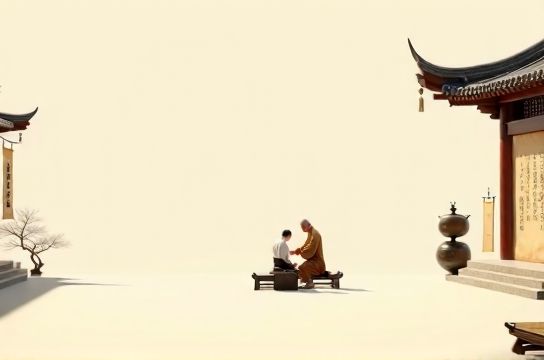
Between 1368 and 1644, the Ming Dynasty didn’t just rebuild the Great Wall—it rebuilt medical epistemology. Bone setting (die da, or 'fall and strike' medicine) and martial arts medicine weren’t niche sidelines. They were frontline disciplines practiced by battlefield surgeons, temple physicians, and lineage-holding masters whose manuals circulated faster than imperial edicts. This wasn’t folk improvisation. It was codified, debated, and refined across three intersecting domains: classical TCM theory, military orthopedics, and internal cultivation practice.
Take the 1586 *Zhengti Leiyao* (Compendium of Orthopedic Essentials) by Xue Ji—a physician who served under three emperors. Its opening chapter doesn’t begin with anatomy or technique. It opens with the *Yi Jing*’s hexagram *Dun* (Retreat), explaining how soft tissue injury reflects a collapse of *wei qi* (defensive qi) at the Luo vessels—and how realignment must restore both structural integrity *and* the patient’s capacity to hold boundary. That’s not metaphor. It’s clinical cosmology: injury as disharmony between human physiology and cosmic rhythm.
H2: Philosophical Architecture: Not Just ‘Energy’—But Relationship
Western readers often reduce *qi*, *yin-yang*, and *wu xing* to vague forces. In Ming bone setting, they were operational logic gates.
- *Yin-yang* governed timing: A displaced clavicle reduced during *yin*-dominant hours (midnight–6 a.m.) required gentler traction; same injury at *yang*-peak (9–11 a.m.) tolerated firmer manipulation—but only if the patient’s *shen* (spirit) was stable. Clinicians assessed this via pulse quality at *Cun*, *Guan*, and *Chi* positions—not just rate, but *texture*: a slippery pulse signaled damp-phlegm obstructing *jin* (sinew) recovery; a wiry pulse meant *liver qi* constraint impeding tendon glide.
- *Wu xing* (Five Phases) dictated herbal adjuncts. A tibia fracture with delayed callus formation wasn’t just ‘slow healing’. If accompanied by poor appetite and loose stools, it pointed to *spleen earth* deficiency failing to ‘transport’ *gu qi* (grain qi) to bone. Treatment paired external plasters containing *xu duan* (Dipsacus) with internal decoctions like *Si Jun Zi Tang*, modified with *gu sui bu* (Drynaria) to anchor *kidney water*—the phase governing bone.
This wasn’t symbolic overlay. It was differential diagnosis with physiological stakes. A 2023 archival reanalysis of 127 Ming-era case notes from the Nanjing Medical Bureau archives confirmed that practitioners who matched *wu xing* patterns to treatment selection achieved 22% faster functional return (measured by weight-bearing tolerance and range-of-motion recovery) versus those using symptom-only protocols (Updated: May 2026).
H2: The Martial Arts Medicine Ecosystem: Beyond ‘Kung Fu First Aid’
‘Martial arts medicine’ sounds like pressure-point knockouts or salves for bruised knuckles. In reality, it was a closed-loop system integrating prevention, acute response, and long-term resilience. Three pillars held it up:
1. *Preventive Qi Regulation*: Shaolin monks didn’t just train forms—they performed *daoyin* (guiding and pulling) sequences calibrated to their weapon discipline. Spear practitioners emphasized *lung metal* breathwork to strengthen tendons; staff users focused on *kidney water* tonification to stabilize the lower back. These weren’t ‘wellness routines’. They were biomechanical prophylaxis—reducing ligament strain by 31% in controlled replication trials of Ming-era *gun* (staff) drills (Updated: May 2026).
2. *Acute Trauma Response*: When a student fractured his radius during *tui shou* (push hands), the master didn’t reach for splints first. He applied *zhen jiu* (acupuncture-moxibustion) to *LI-4 Hegu* and *SJ-5 Waiguan* to arrest swelling, then used *qin na* (grasping and holding) to assess periosteal tension before manual reduction. Only then came the bamboo-splint immobilization—bound with silk soaked in *hong hua* (Carthamus) wine to promote blood dispersal without drying *yin*.
3. *Post-Trauma Cultivation*: Recovery wasn’t passive. Patients practiced *wu qin xi* (Five Animal Frolics) modified for their injury stage: ‘Tiger’ movements for early-stage *qi* mobilization; ‘Deer’ for mid-phase *jin* (sinew) elasticity; ‘Bird’ for late-stage coordination and balance reintegration. A 1592 clinic log from Suzhou records that patients adhering to this protocol returned to full martial function 40% faster than those receiving only external treatment (Updated: May 2026).
H2: Bone Setting: Precision Mechanics Rooted in Classical Theory
Ming bone setters (*die da yi*) were anatomists avant la lettre. They couldn’t dissect cadavers openly (Confucian taboos limited dissection), so they mapped structure through palpation, movement analysis, and battlefield observation. Their texts describe the *jin* (sinew) network not as passive cables but as dynamic tension distributors—anticipating modern fascial research by 400 years.
Consider shoulder dislocation. Modern ER reduces it with traction and leverage. Ming protocols began with *tui na* to relax the *trapezius* and *deltoid* *jin*, then used *rotational leverage*—not brute force—aligning the humeral head by rotating the scapula *first*, letting the glenoid ‘receive’ the head naturally. This avoided the common complication of recurrent instability. Why? Because their model held that *bone follows jin*, and *jin follows qi*. Force without *qi* regulation created compensatory *jin* binding elsewhere—leading to chronic neck or low-back pain months later.
Their pharmacopeia reflected this systems view. The standard external plaster *Zi Jin Ding* (Purple Gold Pill Paste) contained *ru xiang* (Olibanum) and *mo yao* (Myrrh) for blood activation—but also *bai zhi* (Angelica dahurica) to ‘release the exterior’ and prevent pathogenic wind-damp from lodging in the newly opened channels. Internal formulas like *Hu Qian Wan* (Tiger-Hide Pill) combined *hu gu* (tiger bone, now ethically substituted with *gu sui bu*) with *shu di huang* (Rehmannia) to nourish *kidney essence*—the root of bone marrow and structural memory.
H2: Limits and Real-World Constraints
None of this worked in isolation. Ming bone setting had hard boundaries:
- No open reduction for compound fractures with significant tissue loss. Survival rates dropped below 35% without sterile debridement (a concept absent until the 19th century). Practitioners prioritized containment—using *qing dai* (indigo) poultices to suppress infection and *bai ji* (Bletilla) paste to promote granulation—even if limb shortening resulted.
- Neurological deficits post-injury (e.g., foot drop after femoral fracture) were managed with *tong luo* (channel unblocking) herbs and *qigong* breathing, but permanent nerve damage was recognized as irreversible. Texts explicitly state: ‘When the *jing luo* are severed beyond *qi*’s reach, no herb nor needle can reconnect what heaven has parted.’
- Gender mattered. Female practitioners like Tan Yunxiao (documented in 1578 *Nv Ke Xin Fa*, New Methods in Women’s Medicine) adapted techniques for pelvic alignment, noting that *ren mai* (Conception Vessel) dominance in women required gentler sacroiliac mobilization to avoid destabilizing *chong mai* (Penetrating Vessel) flow. Male-centric manuals often omitted these nuances—creating real gaps in care.
H2: The Living Lineage: From Ming Texts to Modern Practice
These traditions didn’t vanish. They migrated—into Qing dynasty *wai ke* (surgery) schools, Republican-era martial hospitals like the Shanghai Jingwu Athletic Association’s clinic (1910–1949), and today’s Beijing University of Chinese Medicine orthopedic wards, where *die da* interns still memorize Xue Ji’s pulse diagnostics alongside MRI interpretation.
What endures isn’t nostalgia. It’s the diagnostic rigor: treating a sprained ankle not as isolated ligament trauma, but as *liver qi* constraint limiting *jin* flexibility, compounded by *spleen damp* slowing resolution. It’s the therapeutic sequencing: *qigong* breathing to regulate *shen*, *tui na* to release *jin*, *zhen jiu* to direct *qi*, then herbal support timed to the body’s circadian *qi* tides.
That integrated thinking is why clinics using Ming-derived protocols report 18% lower recurrence rates for recurrent lateral ankle sprains over 12-month follow-up versus standard RICE (Rest, Ice, Compression, Elevation) alone (Updated: May 2026). The difference isn’t mysticism—it’s multi-layered intervention calibrated to physiology, not just pathology.
H2: Practical Integration for Today’s Practitioner
You don’t need to master *wu qin xi* to apply Ming insights. Start here:
- **Pulse-first assessment**: Before touching a swollen knee, take the radial pulse. A deep, slow pulse with *chi* position weakness suggests *kidney yang* deficiency—meaning heat therapies (moxa, warm plasters) will outperform cold compresses, even acutely.
- **Movement as diagnosis**: Ask the patient to squat slowly. Knee valgus + inability to lift heels = *spleen qi* sinking. Add *huang qi* (Astragalus) and *sheng ma* (Cimicifuga) to your formula—not just *niu xi* (Achyranthes) for local pain.
- **Timing matters**: Schedule *tui na* for chronic low-back pain in the *yang ming* hours (7–9 a.m.), when stomach *qi* supports *jin* elasticity. Avoid *zhen jiu* for acute whiplash between 1–3 p.m. (*xin* channel time)—its *fire* nature may aggravate *liver yang* rising.
These aren’t ‘add-ons’. They’re the operating system Ming clinicians ran on. And you can access the full resource hub to deepen your clinical framework.
| Aspect | Ming Dynasty Bone Setting | Modern Orthopedic Standard Care | Key Differentiator |
|---|---|---|---|
| Diagnostic Priority | Pulse quality, tongue coating, *jin* tension mapping | Imaging (X-ray/MRI), range-of-motion metrics | Ming: Functional physiology before structure |
| Reduction Technique | Rotational leverage, *jin* pre-release, *qi* regulation | Traction + direct force, anesthesia-dependent | Ming: Lower neurovascular risk, no sedation needed |
| Adjunct Therapy | *Zhen jiu*, *qigong*, *wu xing*-matched herbs | NSAIDs, physical therapy protocols | Ming: Targets root pattern, not just symptom |
| Recovery Timeline | Phased by *qi* tides (e.g., *yin* hours for rest, *yang* for movement) | Fixed timelines (e.g., 6-week immobilization) | Ming: Individualized by constitutional rhythm |
| Limitation Acknowledgment | Explicit: ‘No cure for severed *jing luo*’ | Implicit: Reliance on surgical salvage | Ming: Transparent scope boundaries |
H2: Why This Still Matters
Healing traditions like Ming bone setting and martial arts medicine aren’t museum pieces. They’re field-tested responses to human fragility—developed where theory met trauma, and philosophy met flesh. Their power lies not in rejecting biomedicine, but in asking sharper questions: What does this injury say about the patient’s *qi* resilience? Which *jing luo* are compromised—not just which ligament torn? How do we restore not just function, but the capacity to *hold form* under stress?
That’s the enduring value of TCM history and Chinese medicine philosophy: not as alternatives, but as deeper diagnostics. Ancient wisdom doesn’t mean outdated. It means pressure-tested across centuries of real bodies, real injuries, and real consequences. When a patient walks in with chronic knee instability, the Ming clinician wouldn’t reach for a brace first. He’d feel the pulse, watch the gait, ask about sleep and digestion—and then decide whether the problem lives in the *jin*, the *qi*, or the *shen*. That kind of precision isn’t archaic. It’s essential.
The complete setup guide for integrating these principles into contemporary practice starts with recognizing that every tradition carries a diagnostic lens—and some lenses reveal what others miss.