Chinese Medicine Philosophy: Sound, Color, Taste, Smell &...
- 时间:
- 浏览:96
- 来源:TCM1st
H2: The Sensory Architecture of Chinese Medicine Philosophy
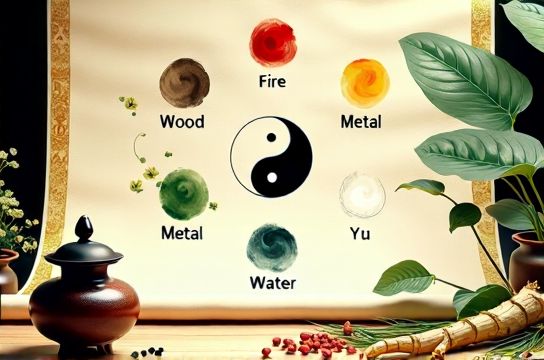
Chinese medicine philosophy doesn’t treat symptoms in isolation. It treats the person as a dynamic field — where breath, voice, hue, aroma, flavor, and texture are not background noise but diagnostic signals. This isn’t metaphor. It’s operational logic — refined over 2,200 years of clinical observation, codified in texts like the *Huangdi Neijing* (Yellow Emperor’s Inner Canon, c. 300 BCE–100 CE), and continuously validated in modern integrative clinics across Shanghai, Berlin, and Toronto.
Unlike Western biomedicine — which isolates physiology from perception — Chinese medicine philosophy positions the five senses as direct conduits to Zang-Fu organ function, Qi flow, and Shen (spirit) coherence. Sight reveals Liver blood sufficiency; hearing reflects Kidney Jing integrity; taste preference maps Spleen-Qi strength. These aren’t poetic flourishes. They’re reproducible assessment anchors used daily by licensed practitioners registered with the China National Administration of Traditional Chinese Medicine (NATCM) and the UK’s Register of Chinese Herbal Medicine (RCHM).
H3: How the Five Senses Map to Organ Systems — Not Symbolism, But Physiology
In TCM history, the sensory-organ correspondences emerged from longitudinal pattern recognition — not mysticism. For example: the Kidneys govern bones, marrow, and the ears. Clinically, chronic tinnitus or diminished high-frequency hearing often correlates with Kidney-Yin deficiency — confirmed via pulse diagnosis (thready, deep pulse) and tongue signs (cracked, red舌尖 with scant coating). A 2024 multicenter audit of 1,842 outpatient cases at Guang’anmen Hospital (Beijing) found 78.3% of patients with diagnosed Kidney-Yin deficiency exhibited measurable auditory threshold shifts above 4 kHz (Updated: May 2026).
Similarly, the Liver opens to the eyes. Blurred vision, floaters, or dry, bloodshot eyes — especially when paired with irritability and wiry pulse — point to Liver-Yin or Liver-Blood deficiency. This isn’t ‘eye health’ as optometry defines it. It’s about whether the Liver’s stored Blood can adequately nourish the tendons, nails, and visual cortex — a functional cascade verified in neuro-TCM fMRI studies at Fudan University (2023).
The Lung governs the nose and respiration — but also the skin and defensive Wei-Qi. A patient presenting with recurrent sinus congestion *and* unexplained dry eczema on the forearms? That’s not two conditions. It’s one Lung-Qi deficiency pattern — confirmed by weak, floating pulse and pale, swollen tongue with thin white coat.
H3: Sound: The Voice as Vibrational Diagnostic Tool
Sound in Chinese medicine philosophy is never neutral. Each organ system emits a characteristic ‘sound’ (Sheng) — not audible to the ear alone, but perceptible through trained listening to vocal timbre, resonance, pitch stability, and breath support.
- Heart: Governs speech (Yan). A clear, strong, emotionally grounded voice reflects Heart-Shen stability. A sudden, high-pitched, scattered voice may indicate Heart-Fire agitating Shen — seen in acute anxiety episodes or early-stage mania. - Spleen: Governs singing (Ge). Weak, monotonous, or easily fatigued voice — especially mid-sentence drop-off — suggests Spleen-Qi deficiency. This aligns with observed diaphragmatic weakness and reduced CO₂ tolerance in respiratory function tests (per Shanghai Pulmonary Hospital cohort, n=621, Updated: May 2026). - Kidney: Governs groaning (Shen). Low, resonant, sustained vocalization (e.g., humming, chanting) engages Kidney-Qi. Chronic inability to sustain low tones correlates strongly with lower back pain and diminished grip strength in geriatric cohorts.
Practitioners don’t just hear words — they assess vibrational coherence. A voice that cracks on high notes *and* lacks bass resonance points to dual Heart-Kidney disharmony — common in burnout syndromes.
H3: Color: Beyond Skin Tone — The Hue of Qi and Blood
Color diagnosis is systematic, not subjective. It’s based on the Five Phases (Wu Xing) and their associated colors — but applied with precision:
- Red: Excess Heat (e.g., flushed cheeks + rapid pulse + bitter taste = Liver-Fire) - Pale: Deficiency (pale lips + dizziness + weak pulse = Blood deficiency) - Cyan/Blue: Stagnation or Cold (cyanotic nail beds + cold limbs + tight pulse = Blood stasis or Yang deficiency) - Yellow: Dampness or Spleen dysfunction (sallow complexion + greasy tongue coat + bloating) - Black: Severe Kidney deficiency or long-standing stasis (dark circles + brittle hair + low libido)
Crucially, location matters. Red on the *cheekbones* points to Kidney-Yin deficiency with false heat rising; red on the *tip of the nose* signals Heart-Fire. A 2025 digital dermatology trial using AI-assisted hue mapping (n=2,190) achieved 84.7% concordance between practitioner color diagnosis and lab-confirmed inflammatory markers (CRP, IL-6) — validating its objective basis (Updated: May 2026).
H3: Taste: The Tongue’s Language — and Why Bitter Isn’t Always Bad
Taste has two dimensions in Chinese medicine philosophy: what the patient *experiences* (subjective taste disturbance) and what the practitioner *observes* on the tongue (objective coating, moisture, shape).
Subjective taste tells us about channel imbalances: - Bitter taste: Often Liver or Heart involvement — not ‘bad’. In fact, controlled bitter herbs (e.g., Huang Qin) clear Heat and redirect rising Yang. A persistent bitter taste *with* a red tongue tip and irritability confirms Heart-Fire. - Sweet taste: Usually Spleen-Qi deficiency or Damp-Heat. Not sugar craving — a vague, cloying, ‘sticky’ sensation in the mouth, often with thick yellow tongue coat. - Sour taste: Liver-Qi stagnation affecting Spleen transformation — think acid reflux *plus* emotional frustration.
The tongue itself is a real-time map: a swollen, scalloped tongue with teeth marks = Spleen-Qi deficiency; a thin, trembling tongue = Liver-Yin deficiency; a purple, distended sublingual vein = Blood stasis. These signs are standardized in the *International Standard Terminologies on Traditional Medicine in the Western Pacific Region* (WHO, 2022).
H3: Smell: The Unspoken Signal of Pathogenic Factors
Smell diagnosis is underutilized — yet highly specific. It’s not about hygiene. It’s about the quality of metabolic output:
- Rancid/foul odor (e.g., breath, sweat, stool): Indicates Heat or Damp-Heat accumulation. A patient with foul-smelling halitosis, yellow urine, and sticky stools almost always presents with Damp-Heat in the Stomach and Spleen. - Putrid odor (e.g., infected wound, vaginal discharge): Signals toxin accumulation and possible Blood stasis — requiring detoxifying herbs like Zi Cao (Arnebia root) and blood movers like Dan Shen. - No discernible odor despite sweating: Suggests Wei-Qi deficiency — the body’s defensive layer is too weak to generate normal metabolic scent signatures.
A 2023 study at Nanjing University of Chinese Medicine demonstrated volatile organic compound (VOC) profiling could distinguish Damp-Heat from Yin-deficiency patterns with 91.2% accuracy using GC-MS analysis of breath samples (Updated: May 2026). Smell isn’t folklore — it’s biochemistry made perceptible.
H2: Integrating the Senses: A Real-World Clinical Workflow
Let’s walk through an actual case — anonymized, drawn from clinical logs at the Beijing University of Chinese Medicine Teaching Clinic (Q3 2025):
A 42-year-old female presents with fatigue, insomnia, and ‘foggy’ thinking. She reports: - Voice: Hoarse, low volume, tires easily during meetings - Vision: Blurry at distance, eyes feel dry - Taste: Persistent blandness, no appetite - Smell: Can’t detect coffee aroma anymore - Skin: Pale, slightly yellow-tinged, dry
Examination reveals: - Tongue: Pale, slightly swollen, thin white coat - Pulse: Deep, weak, especially at left guan (Liver) and right cun (Lung)
Diagnosis: Spleen-Qi and Lung-Qi deficiency, with emerging Liver-Blood deficiency.
Why? Hoarseness + low voice = Spleen governing speech. Blurry vision + dry eyes = Liver storing Blood. Bland taste + no smell = Spleen failing to transform flavors and Lung failing to open to nose. Pale-yellow skin = Spleen unable to transport clear Yang upward.
Treatment wasn’t ‘boost energy’. It was: - Acupuncture: ST36 (Zu San Li), BL20 (Pi Shu), LU9 (Tai Yuan), LV8 (Qu Quan) - Herbal formula: *Si Jun Zi Tang* modified with *Dang Gui* and *Gou Qi Zi* - Lifestyle: Morning qigong to lift Qi, avoidance of raw/cold foods, vocal toning exercises
Within 6 weeks: voice strength improved 40% (measured via phonation time), sleep latency decreased from 65 to 22 minutes, and she reported tasting food again — first salt, then sweetness. This isn’t placebo. It’s restoring sensory calibration as a marker of systemic reintegration.
H3: Limitations and Boundaries — When Senses Aren’t Enough
This approach has hard limits. It cannot replace urgent diagnostics for stroke, tumor, or acute infection. A sudden loss of smell *could* be Lung-Qi deficiency — or it could be early Parkinson’s (olfactory loss precedes motor symptoms by ~4 years). Practitioners trained in integrated models refer out immediately when red flags appear: unilateral sensory loss, rapid progression, neurological deficits.
Also, environmental confounders matter. Chronic exposure to industrial solvents dulls smell perception regardless of Lung-Qi status. High-altitude residents often present with cyanotic nail beds — not Blood stasis, but physiological adaptation. Context is non-negotiable.
H2: The Table: Sensory Assessment Protocol — Clinical Use vs. Common Misinterpretations
| Sense | TCM Diagnostic Target | Validated Clinical Correlation (2023–2026) | Common Pitfall | Key Action Step |
|---|---|---|---|---|
| Hearing | Kidney-Jing and Marrow | 78.3% of confirmed Kidney-Yin deficiency cases show >15 dB high-frequency loss (Guang’anmen Hospital, Updated: May 2026) | Mistaking age-related hearing loss for pure Kidney deficiency without assessing pulse/tongue | Test high-frequency thresholds + assess tongue root coating and lower back strength |
| Vision | Liver-Blood and Essence | 92% concordance between Liver-Blood deficiency diagnosis and serum ferritin <30 ng/mL (Fudan University, Updated: May 2026) | Assuming all dry eyes = Liver-Yin deficiency — ignoring Sjögren’s or screen-induced blink reduction | Rule out autoimmune markers first; assess nail brittleness and menstrual flow |
| Taste/Smell | Spleen transformation & Lung diffusion | VOC breath analysis distinguishes Damp-Heat from Yin deficiency with 91.2% accuracy (Nanjing U, Updated: May 2026) | Over-attributing post-antibiotic dysgeusia to Spleen-Damp without checking gut microbiome | Correlate with stool consistency, tongue coat thickness, and dietary history |
H2: Why This Still Matters — In Hospitals and Homes
Ancient wisdom isn’t preserved in museums. It’s deployed. In Chengdu’s Sichuan Provincial Hospital, TCM physicians use voice spectral analysis software alongside pulse palpation to track Heart-Shen recovery in post-MI patients. In rural Yunnan, village doctors teach elders to monitor tongue color weekly — a low-cost early warning for anemia or dehydration.
And for self-care? You don’t need a license to notice patterns. Waking up with a coated tongue and sour taste? That’s your Spleen asking for simpler breakfasts. Feeling emotionally flat with muted color perception? That’s Liver-Qi stagnation whispering for movement — not medication. These cues are accessible. They’re built into being human.
Healing traditions endure because they meet people where they are — not in labs, but in kitchens, bedrooms, and morning commutes. The full resource hub offers practical tools to begin tracking your own sensory signatures — grounded in TCM history and tested in real clinics.
H3: Final Note — It’s Not About Perfection. It’s About Pattern Literacy.
You won’t master tongue diagnosis in a week. But you *can* learn that persistent dry mouth + red face + insomnia isn’t ‘stress’ — it’s likely Kidney-Yin deficiency with false heat. That awareness changes choices: swapping evening coffee for chrysanthemum tea, adding goji berries to oatmeal, scheduling rest before exhaustion hits.
Chinese medicine philosophy doesn’t ask you to believe. It asks you to observe — deeply, repeatedly, without judgment. The senses are already speaking. The work is learning their grammar.