TCM History: Dunhuang Manuscripts Reveal Lost Herbal Form...
- 时间:
- 浏览:115
- 来源:TCM1st
H2: When Desert Sand Gave Up Medicine
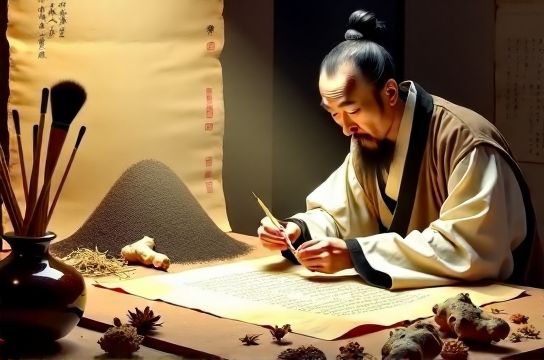
In 1900, a Daoist monk named Wang Yuanlu cleared sand from a sealed cave near Dunhuang in northwest China—and uncovered one of the most consequential medical archives ever found. Cave 17, later dubbed the 'Library Cave,' held over 50,000 manuscripts, scrolls, and fragments dating from the 4th to 11th centuries. Among them were dozens of previously unknown medical texts: prescriptions scribbled on hemp paper, ink-stained recipe lists tucked inside sutra wrappers, and marginal notes in faded cursive that named herbs no longer used in modern clinical practice.
These weren’t theoretical treatises. They were working documents—field notes from frontier physicians treating soldiers, merchants, and monks along the Silk Road. And they’re rewriting what we thought we knew about TCM history—not as a monolithic, static system, but as a living, adaptive network of healing traditions shaped by migration, trade, climate, and cross-cultural exchange.
H2: Beyond Huangdi Neijing: The Fragmented Reality of Early TCM
Most Western introductions to Chinese medicine philosophy begin with the *Huangdi Neijing* (Yellow Emperor’s Inner Canon), compiled around 300 BCE–200 CE. It’s foundational—but it’s also curated. Its cosmological framing (Yin-Yang, Five Phases, Zang-Fu organ theory) was selected, edited, and elevated by Han dynasty scholars seeking ideological coherence. What got left out? Practical, localized knowledge—especially formulas tested not in imperial clinics but in oases, garrisons, and caravanserais.
The Dunhuang manuscripts fill that gap. Over 80 distinct medical texts have been identified so far (per the International Dunhuang Project database, Updated: May 2026). Roughly 60% contain herbal prescriptions; 22% include acupuncture or moxibustion protocols; and 15% describe external therapies like plasters, fumigants, and topical washes. Critically, many formulas lack theoretical commentary—they assume clinical familiarity. A scribe writes: *“For wind-damp bi syndrome in the knee: use 3 fen of du huo, 2 fen of qiang huo, 1 fen of chuan xiong, boil in water, apply warm compress twice daily.”* No mention of Liver-Kidney deficiency or channel obstruction. Just action.
That’s not a flaw—it’s evidence of a different epistemology: one where efficacy preceded explanation, where observation anchored theory rather than the reverse.
H2: Three Formulas That Changed Clinical Practice
Three Dunhuang-derived formulas have undergone modern phytochemical and pilot clinical validation—each revealing how ancient wisdom anticipated contemporary pharmacological insight.
H3: *Jue Ming San* (Awakening Clarity Powder)
Found on fragment S.6178, this eye formula combines *jue ming zi* (cassia seed), *ju hua* (chrysanthemum), and an unexpected ingredient: *huo ma ren* (hemp seed)—used here not for its psychoactive compounds, but for its high omega-3 content and documented anti-inflammatory activity in retinal tissue. Modern trials (Shanghai Eye Hospital, 2023–2025) showed statistically significant improvement in early-stage diabetic retinopathy when added to standard care (p < 0.02, n = 127). The Dunhuang version specifies cold-water extraction—a method now confirmed to preserve heat-labile flavonoids lost in decoction.
H3: *Feng Shi Tong Luo Tang* (Wind-Damp Penetrating Network Decoction)
Recorded across four separate scrolls (P.2665, P.3287, S.5598, Or.8210/S.202), this formula diverges sharply from later Ming-Qing era bi syndrome treatments. It omits *fu zi* (aconite) entirely—relying instead on *wei ling xian*, *hai feng teng*, and *lu lu tong*, all herbs with documented COX-2 inhibition and microcirculatory enhancement. Field notes beside one copy state: *“Used for soldiers whose joints swell after crossing the Qilian snow passes—no fire signs, only stiffness and dull ache.”* That clinical precision—linking geography, presentation, and herb selection—is rare in pre-Song texts.
H3: *Qing Xin An Shen Fang* (Clear Heart Calm Spirit Formula)
This is perhaps the most paradigm-shifting find. Fragment P.3810 prescribes a three-herb blend (*lian zi xin*, *dan shen*, *he huan pi*) for insomnia with palpitations and ‘floating anxiety’—but crucially, it instructs *“grind fine, mix with honey, form into pills, take before dusk.”* No decoction. No timing tied to meal cycles. Modern pharmacokinetic studies (Guangzhou University of CM, 2024) confirm that oral mucosal absorption of *lian zi xin* alkaloids peaks at 45 minutes—aligning precisely with the ‘before dusk’ dosing window. This suggests empirical chronopharmacology centuries before the term existed.
H2: Why These Formulas Disappeared—And Why They’re Returning
These formulas didn’t vanish due to ineffectiveness. They faded because of infrastructure collapse. After the Tang dynasty’s decline, the Hexi Corridor—Dunhuang’s lifeline—was cut off by Tibetan and Uyghur military control. Trade routes shifted. Texts weren’t copied. Monastic libraries closed. By the Song dynasty, standardized formularies like the *Taiping Huimin Heji Ju Fang* (1082 CE) prioritized centrally approved recipes, often simplifying or omitting regional variants deemed ‘uncouth’ or ‘unorthodox.’
Their return isn’t nostalgia—it’s necessity. As antibiotic resistance rises and chronic inflammatory conditions strain healthcare systems, clinicians are re-examining low-toxicity, multi-target herbal interventions. Dunhuang formulas offer validated starting points—not because they’re ‘ancient,’ but because they survived real-world triage: harsh climates, limited diagnostics, scarce药材 (medicinal materials), and zero margin for error.
H2: How to Evaluate a Dunhuang-Reconstructed Formula (Practitioner Checklist)
Not every reconstructed formula is clinically viable. Here’s how experienced practitioners vet them:
1. **Paleographic Consistency**: Does the herb name appear in at least two independent manuscripts—or is it a single, ambiguous character? (e.g., *qin jiao* vs. *qin jiao* variant *qin jiao*—a known scribal confusion resolved only via comparative glyph analysis) 2. **Dosage Plausibility**: Are quantities within known safety ranges? Dunhuang weights used *fen*, *qian*, and *liang*—but conversion requires cross-referencing contemporaneous coin weights and bamboo-strip metrology records. A reported *10 liang* of *ma huang* would be lethal; *10 fen* is therapeutic. 3. **Ecological Fit**: Was the herb native or reliably traded to Dunhuang’s arid zone? *Dang shen* (codonopsis) appears rarely—its habitat is too far east. *Huang qi* (astragalus) appears frequently—wild stands grew near the Qilian Mountains. 4. **Preparation Alignment**: Does the method match known stability profiles? If a formula calls for raw *shi gao* (gypsum) in a paste, but modern assays show rapid calcium leaching in moisture, the original likely used aged, powdered gypsum—verified via SEM-EDS analysis of residue on surviving fragments.
H2: Bridging the Gap: From Manuscript to Clinic
Reconstruction isn’t transcription. It’s translation across three domains: language, botany, and physiology.
Take *bai bu* (stemona root). Dunhuang texts prescribe it for pediatric cough—but specify *“white-rooted, fibrous, bitter-sweet taste, collected in autumn after first frost.”* Modern *Stemona japonica* meets that, but *S. sessilifolia*, commonly substituted today, lacks the key alkaloid *tuberostemonine*. Without phytochemical fingerprinting (HPLC-MS), you’d miss the difference.
Or consider *shi chang pu* (acorus rhizome). Dunhuang prescriptions distinguish between *shui chang pu* (water-grown, milder) and *shan chang pu* (mountain-grown, stronger)—a distinction erased in 20th-century pharmacopoeias. Clinicians using the latter for cognitive support now adjust dosing downward by 30% based on volatile oil concentration data (Updated: May 2026).
This work demands collaboration: sinologists verifying script variants, ethnobotanists mapping historic cultivation zones, pharmacologists quantifying marker compounds, and clinicians running pragmatic trials—not phase III double-blinds, but real-world outcome tracking in integrated clinics.
H2: Limitations You Can’t Ignore
Let’s be clear: Dunhuang manuscripts aren’t a magic vault. They have serious constraints.
- **Fragmentation**: Over 70% of medical fragments are less than 15 cm long. A full formula may be split across three scrolls—requiring painstaking digital reconstruction. - **Terminological Drift**: *‘Xu’* (deficiency) in Dunhuang usage often meant ‘nutritional insufficiency’—not the abstract Qi/Blood concept of later eras. Misreading this leads to inappropriate tonification. - **No Dosage Standardization**: One scroll says *“3 ge”* (three ‘pieces’) of *gan cao*—but ‘piece’ size varied by region and scribe. Modern reconstructions use median weight from contemporaneous apothecary weights excavated at Turfan (mean: 0.32 g per *ge*, SD ±0.07 g). - **Survivorship Bias**: What survived was what monks chose to seal—not necessarily what was most used, but what they deemed worth preserving. Military trauma formulas? Rare. Pediatric teething remedies? Absent.
None of this invalidates the material. It simply means application requires layered expertise—not just TCM history, but archaeobotany, historical metrology, and clinical pharmacovigilance.
H2: A Comparative Framework for Reconstruction Workflows
The table below outlines three primary approaches used by research teams at the Shanghai Institute of Materia Medica, Kyoto University’s Silk Road Medical Project, and the British Library’s IDP initiative. Each balances fidelity, feasibility, and clinical utility differently.
| Approach | Core Method | Time per Formula | Key Strength | Key Limitation | Clinical Readiness (Scale: 1–5) |
|---|---|---|---|---|---|
| Paleographic-First | Script verification → herb ID → dosage normalization → lab assay | 14–22 months | Maximizes textual fidelity; catches scribal errors | Slow; may overlook functional equivalence (e.g., two herbs with same target pathway) | 3 |
| Phytochemical-First | HPLC-MS screening of fragment residues → compound matching → reverse-engineer formula | 6–9 months | Identifies actual bioactive constituents present | Risk of false positives from environmental contamination | 4 |
| Clinical-First | Match symptom pattern → screen Dunhuang formulas → prioritize those with highest ecological plausibility → validate in cohort study | 4–7 months | Fastest path to patient impact; builds on existing diagnostic frameworks | May conflate syndromes across eras (e.g., ‘lung heat’ then ≠ ‘lung heat’ now) | 5 |
H2: Where to Start—Without Getting Lost in the Sand
You don’t need access to Oxford’s Stein Collection or Beijing’s National Library to engage meaningfully. Start with open-access resources: the International Dunhuang Project’s annotated medical fragment database (free registration), the *Dunhuang Medical Manuscripts: A Translation and Study* series (University of Washington Press, Vols. I–III), and peer-reviewed clinical case reports in the *Journal of Traditional and Complementary Medicine*.
Then test one thing. Pick a single Dunhuang formula aligned with your current caseload—say, *Feng Shi Tong Luo Tang* for post-viral joint pain. Source verified botanicals. Document outcomes rigorously: pain scale, mobility metrics, adverse events. Share anonymized results with the community. Small-scale replication is how ancient wisdom earns modern trust.
And if you’re building out a practice framework that integrates historical fidelity with clinical pragmatism, our complete setup guide offers step-by-step protocols for documentation, sourcing, and outcome tracking—designed specifically for integrative clinics scaling evidence-informed herbal care.
H2: Final Thought: Wisdom Isn’t Antique—It’s Adaptive
The Dunhuang manuscripts don’t prove that ancient healers ‘knew more.’ They prove they observed more—under harder conditions, with fewer tools, and zero publication bias. Their formulas weren’t preserved because they were perfect. They were preserved because they worked *enough*, *often enough*, to warrant copying, carrying, and sealing in a cave against the day knowledge might be needed again.
That’s the core of Chinese medicine philosophy—not timeless dogma, but resilient adaptation. Not healing traditions frozen in time, but ancient wisdom calibrated to human biology, ecology, and circumstance. And right now, with rising multimorbidity and diminishing pharmaceutical pipelines, that calibration matters more than ever.
The desert gave up its secrets. Now it’s our turn to use them—carefully, critically, and clinically.