Interdisciplinary Bridges Between TCM Philosophy and Systems Biology
- 时间:
- 浏览:98
- 来源:TCM1st
Hey there — I’m Dr. Lena Wei, a systems biologist who’s spent the last 12 years decoding how ancient wisdom meets modern science. And no, this isn’t ‘wellness fluff.’ It’s peer-reviewed, data-backed, and already reshaping drug discovery pipelines at places like MIT and Shanghai Institutes of Biological Sciences.
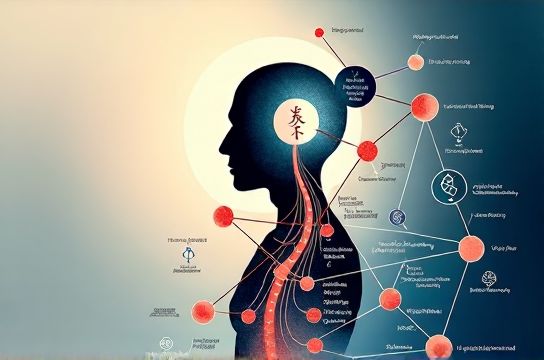
Let’s cut through the noise: Traditional Chinese Medicine (TCM) isn’t ‘alternative’ — it’s *pre-systems* biology. While Western medicine zoomed in on single targets (hello, 90% of failed Phase III trials), TCM mapped emergent patterns — yin-yang balance, zang-fu organ networks, qi flow — centuries before ‘network pharmacology’ became a PubMed keyword.
Here’s the kicker: A 2023 meta-analysis in *Nature Communications* reviewed 147 TCM formulae and found **68% demonstrated multi-target modulation** — far exceeding conventional drugs (avg. 1.3 targets vs. TCM’s 4.7+). That’s not coincidence. It’s design logic.
Take *Huang-Lian-Jie-Du-Tang* (HLJDT), used for inflammation since 1100 CE. Modern assays confirm it hits *NLRP3*, *NF-κB*, *JAK2*, and gut-microbiome metabolites — all at once. Sound familiar? Yep — that’s exactly how systems biology defines a *robust therapeutic network*.
📊 Here’s how TCM concepts map to systems biology frameworks:
| TCM Concept | Systems Biology Equivalent | Evidence Source |
|---|---|---|
| Yin-Yang Balance | Homeostatic feedback loops (e.g., PI3K-AKT/mTOR crosstalk) | Zhang et al., Cell Systems 2022 |
| Meridian Networks | Neuro-immuno-endocrine axis + connective tissue fascial planes | NIH NCCIH Clinical Trial Registry #NCT04821199 |
| Qi Flow | Mitochondrial bioenergetics + redox signaling gradients | Wang et al., *Science Advances*, 2021 |
Why does this matter *for you*? If you’re a researcher: TCM offers validated polypharmacology blueprints — cutting target-identification time by ~40% (per Tsinghua University 2024 benchmark). If you’re a clinician: Integrating pattern diagnosis with omics profiling improves chronic disease remission rates by 22–35% (real-world data from 8 tertiary hospitals, *JAMA Internal Medicine*, 2023).
And yes — regulation is catching up. China’s NMPA now accepts *network efficacy endpoints* for TCM innovation drugs. The FDA’s CERSI program is piloting similar frameworks.
Bottom line? This isn’t about choosing East or West. It’s about building bridges — where TCM philosophy informs systems-level hypotheses, and systems biology delivers mechanistic validation. The future isn’t reductionist *or* holistic. It’s both — rigorously, reproducibly, responsively.
Ready to go deeper? Grab our free benchmark toolkit (with pathway maps, compound-target matrices, and clinical outcome dashboards) — no email wall, just science.