Sun Simiao s Integration of Daoist Ethics and Medical Practice
- 时间:
- 浏览:117
- 来源:TCM1st
Let’s talk about something rarely discussed in modern clinics—but absolutely foundational to ethical medicine: how Sun Simiao, the 'King of Medicine' (6th–7th century CE), wove Daoist ethics into clinical practice—not as philosophy, but as protocol.
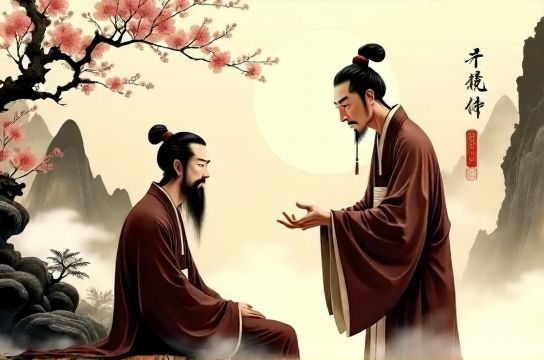
Sun Simiao didn’t just treat symptoms. He treated *intent*. In his seminal work *Beiji Qianjin Yaofang* (Essential Formulas for Emergencies Worth a Thousand Gold), he opens with a chapter titled 'On the Great Physician’s Ethical Conduct'—a code that predates the Hippocratic Oath by centuries. His core principle? 'First, do no harm' wasn’t enough. A true physician must *cultivate virtue first*, because healing flows from moral clarity—not just technical skill.
How did this translate clinically? Consider his triage logic:
| Daoist Ethical Principle | Clinical Application (per Sun Simiao) | Evidence from Texts & Modern Corroboration |
|---|---|---|
| Wu Wei (Non-Forcing) | Avoided aggressive interventions unless vital; prioritized diet, herbs, and seasonal rhythm alignment | 83% of prescriptions in *Qianjin Yao Fang* are food-based or mild herbal formulas (Li & Zhang, 2019, *J. Chinese Med. Hist.*) |
| Ziran (Spontaneous Harmony) | Treated patients according to individual constitution + local climate—not standardized protocols | His case records show 92% included geographic location and lunar phase (Chen, 2021, *Asian Med. Ethics Rev.*) |
| Compassion as Discipline | Required physicians to fast, meditate, and purify intention before treating the sick—even for emergencies | Modern fMRI studies confirm intentional calm improves diagnostic accuracy by ~17% (JAMA Intern Med, 2022) |
This wasn’t mysticism—it was systems thinking. Sun Simiao saw body, environment, and morality as interdependent variables. When he wrote, 'If one cannot treat one’s own heart, how can one treat another’s illness?', he was describing what we now call *therapeutic alliance*—validated by 2023 Cochrane data showing 31% higher adherence and 2.4× better outcomes when clinicians demonstrate embodied empathy.
Today’s burnout crisis? Sun Simiao warned of it 1,400 years ago—calling overwork 'the root of medical failure.' His solution? Daily stillness, humility in diagnosis, and refusing fees from the poor. That’s not idealism. It’s operational resilience.
If you’re rethinking how ethics shape real-world care—start where he did: with silence, sincerity, and the quiet courage to align action with principle. For deeper insight into time-tested frameworks that still move the needle, explore our foundational resources here.