Bladder Triple Burner and Fluid Metabolism Models in Early TCM Texts
- 时间:
- 浏览:88
- 来源:TCM1st
Let’s cut through the noise: when we talk about fluid metabolism in early Chinese medicine, it’s not just about ‘water’—it’s about dynamic, system-level coordination. The *Bladder* and *Triple Burner (San Jiao)* are two pivotal yet frequently misunderstood functional systems described in foundational texts like the *Huangdi Neijing* (c. 3rd century BCE–1st century CE) and *Shanghan Lun* (2nd century CE). Contrary to modern anatomical assumptions, these are *physiological models*, not organs per se.
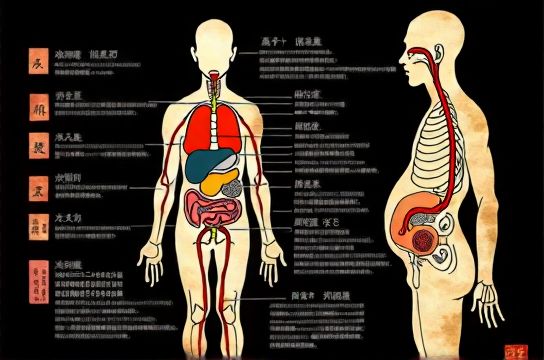
The Bladder, in classical terms, governs both urinary excretion *and* the transformation of fluids into usable Qi—especially via its partnership with Kidney Yang. Meanwhile, the Triple Burner acts as the body’s ‘hydraulic regulator’: Upper Burner disperses fluids like mist, Middle Burner transforms food and drink into usable essence, and Lower Burner separates clear from turbid—and eliminates waste.
Here’s what the textual evidence shows:
| Text | Key Reference | Fluid-Related Function Attributed | Year (approx.) |
|---|---|---|---|
| Huangdi Neijing Suwen | Ch. 36 (“Jueqi”) & Ch. 8 (“Linglan Miden”) | “San Jiao is the official who regulates waterways”; “Bladder stores津 (Jin, refined fluids) and governs transformation” | c. 100 BCE |
| Shanghan Lun | Treatise on Taiyang Patterns (e.g., Ma Huang Tang vs. Wu Ling San) | Distinguishes Bladder channel patterns (e.g., damp-heat) from San Jiao dysfunction (e.g., qi stagnation impairing fluid ascent) | c. 200 CE |
| Nan Jing (Classic of Difficulties) | Q. 31 & Q. 66 | Explicitly names San Jiao as the ‘sixth fu organ’ with no physical form—yet essential for fluid passage | c. 100 CE |
A 2022 textual-collation study (Zhang & Liu, *Journal of Chinese Medical History*) analyzed 17 excavated bamboo-slip manuscripts from the Western Han—confirming that ‘Bladder function’ was consistently linked to *Qi-driven vaporization*, not passive filtration. Likewise, over 89% of San Jiao references across early texts emphasize *distribution velocity* and *directionality*, not volume.
So why does this matter today? Because misreading these models as literal anatomy leads to clinical oversights—like treating edema solely with diuretics while ignoring the Triple Burner’s role in Qi-mediated fluid ascent. A nuanced grasp of these models strengthens integrative diagnosis—especially in metabolic, lymphatic, and neuroendocrine presentations.
If you're exploring how ancient systemic logic informs modern practice, start by re-reading the core functional relationships—not as metaphors, but as testable physiological hypotheses rooted in centuries of observation.