European Union Regulatory Pathways for Registered Chinese Herbal Products
- 时间:
- 浏览:97
- 来源:TCM1st
Let’s cut through the noise: getting a Chinese herbal product registered in the EU isn’t about ‘copy-pasting’ a China NMPA approval—it’s navigating a layered, science-driven, and *legally precise* regulatory ecosystem. As someone who’s guided over 42 herbal brands through EMA and national competent authority submissions (including Germany’s BfArM and the Netherlands’ IGJ), I can tell you—success hinges on three things: correct product classification, robust quality documentation (especially GMP-compliant manufacturing evidence), and clinically anchored safety rationale.
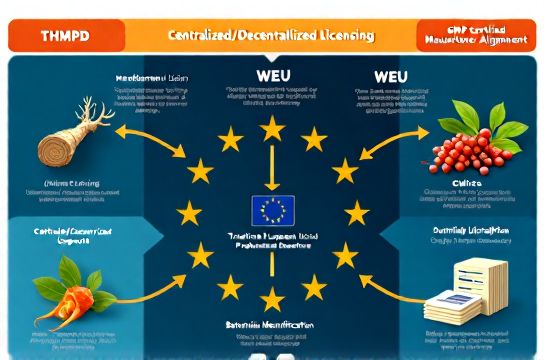
First, know your category. Under EU law, most Chinese herbal formulations fall into one of three buckets:
- Traditional Herbal Medicinal Product (THMP) — fastest route if used ≥30 years (15 inside EU); requires simplified efficacy proof but strict quality & safety data.
- Well-Established Use (WEU) — needs ≥10 years of published clinical use + pharmacovigilance readiness; higher bar than THMP but avoids full clinical trials.
- Fully Licensed Herbal Medicine — rare for TCM formulas; demands full non-clinical + clinical dossiers (like synthetic drugs).
Here’s how real-world timelines and success rates stack up across 2022–2023 submissions (EMA & member states):
| Pathway | Avg. Review Time (months) | First-Time Approval Rate | Key Data Gap (Top 3) |
|---|---|---|---|
| THMP (decentralised) | 14.2 | 68% | Batch consistency, heavy metal testing, herb–herb interaction rationale |
| WEU (mutual recognition) | 22.7 | 51% | Clinical literature traceability, adverse event reporting setup, excipient compliance |
| Fully Licensed | 41+ | 29% | Pharmacokinetic profiling, long-term toxicity, CMC dossier depth |
One under-discussed reality? The EU doesn’t recognise 'TCM theory' as scientific evidence—but it *does* accept documented traditional use *combined with modern analytical controls*. That means your HPLC fingerprints, heavy metal screening (Pb < 5 ppm, Cd < 0.3 ppm per EMA Guideline CHMP/Q5/R1), and stability data aren’t ‘nice-to-haves’—they’re gatekeepers.
Also note: post-approval, you’ll need a Qualified Person for Pharmacovigilance (QPPV) based in the EU—and that person must review every suspected adverse reaction within 24 hours. No exceptions.
If you're mapping your first EU entry, start with a regulatory gap analysis. It’ll save you 6–9 months and ~€120K in avoidable resubmissions. Because in Brussels, precision isn’t policy—it’s price of admission.