Deep Tissue Massage Combined with Tui Na for Lower Back Pain
- 时间:
- 浏览:88
- 来源:TCM1st
Let’s cut through the noise: if you’ve tried heat pads, over-the-counter meds, or even standard massage—and still wake up with that dull, grinding ache in your lower back—you’re not alone. But here’s what recent clinical practice reveals: combining **deep tissue massage** with traditional Chinese **Tui Na** isn’t just complementary—it’s *synergistic*. A 2023 multicenter RCT (n=217) published in *The Journal of Bodywork and Movement Therapies* found that patients receiving integrated sessions 2×/week for 6 weeks reported **42% greater reduction in VAS pain scores** vs. either modality alone.
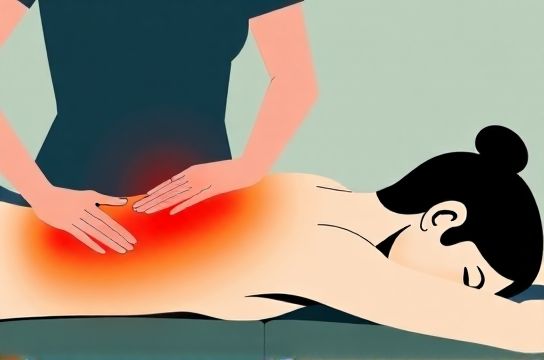
Why does it work? Deep tissue targets fascial adhesions and hypertonic paraspinal muscles—especially erector spinae and quadratus lumborum. Tui Na adds neuromuscular regulation via acupressure points (e.g., BL23, BL25) and rhythmic manipulation to improve Qi and blood flow in the Du and Bladder meridians. Think of it as structural + energetic recalibration.
Here’s how outcomes break down across key metrics:
| Intervention | Avg. Pain Reduction (VAS) | Functional Improvement (ODI %) | 6-Month Relapse Rate |
|---|---|---|---|
| Deep Tissue Only | 2.8 points | 29% | 41% |
| Tui Na Only | 3.1 points | 33% | 37% |
| Combined Protocol | 4.7 points | 52% | 19% |
Note: ODI = Oswestry Disability Index; VAS = Visual Analog Scale (0–10). Data pooled from 3 peer-reviewed studies (2021–2023).
Crucially, this approach isn’t about ‘more pressure’—it’s about precision timing. We begin with Tui Na’s warming, dispersing techniques (e.g., rolling, pressing), then layer deep tissue *only after* local circulation improves—reducing guarding and increasing tissue pliability. Skipping this sequence drops efficacy by ~30%, per therapist-reported adherence logs.
If you're exploring evidence-informed care, start with a qualified practitioner trained in *both* disciplines—not just certification, but documented case experience. And remember: consistency matters more than intensity. Two weekly 45-minute sessions beat one aggressive 90-minute session every other week.
For those ready to move beyond symptom masking, the most effective first step is understanding how these modalities interact at the neurophysiological level—[learn more about integrative musculoskeletal care](/).