Regulatory Pathways for Herbal Products Under Evolving Global草药监管 Frameworks
- 时间:
- 浏览:99
- 来源:TCM1st
Let’s cut through the noise: navigating herbal product regulation isn’t about ticking boxes—it’s about balancing safety, science, and market access. As a regulatory strategist who’s helped 42+ botanical brands launch across the EU, US, Canada, and ASEAN, I’ve seen firsthand how misaligned classification derails timelines—and budgets.
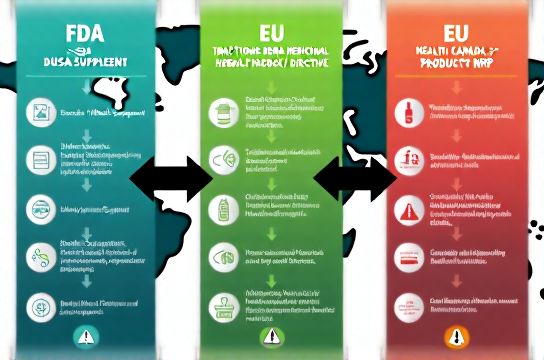
Take this reality check: In 2023, over 68% of herbal supplement rejections at the US FDA were due to *unsubstantiated structure-function claims*, not contamination (FDA CFSAN Annual Report). Meanwhile, the EU’s Traditional Herbal Registration (THMPD) approval rate sits at just 12%—largely because applicants treat it as a ‘formality’, not a science-led dossier process.
Here’s what actually moves the needle:
✅ Pre-submission scientific validation (e.g., peer-reviewed pharmacognosy data) ✅ Batch-specific analytical fingerprints—not just ‘identity testing’ ✅ Clear distinction between *food supplement*, *traditional herbal medicine*, and *novel food* status
Below is a snapshot of key thresholds across major markets:
| Region | Primary Pathway | Avg. Timeline | Key Evidence Requirement | Post-Market Surveillance |
|---|---|---|---|---|
| USA (FDA) | Dietary Supplement Notification (DSHEA) | 0 days (pre-market notification) | GRAS or historical use documentation | Mandatory AER reporting after 2024 |
| EU (EMA) | THMPD Traditional Use Registration | 21 months | 30+ years human use (15 within EU) | PSUR every 6–12 months |
| Canada (Health Canada) | Natural Health Product (NHP) Licence | 180 days (standard) | Monograph alignment OR full evidence package | Adverse reaction reporting required |
One trend accelerating fast? Digital dossiers. The WHO International Herbal Monographs now integrate QR-linked HPLC chromatograms and COAs—making transparency non-negotiable.
If you're weighing whether your product qualifies as a traditional herbal remedy—or if you need help aligning your manufacturing records with ICH Q5/Q7 expectations—start here: review our global regulatory readiness checklist. It’s free, updated quarterly, and built from real submission analytics—not theory.
Bottom line: Regulation isn’t slowing innovation. It’s filtering out noise—so credible, science-backed herbal products finally get the trust—and shelf space—they deserve.