Integrative Geriatric Medicine Combining Western Diagnostics With TCM Therapeutics
- 时间:
- 浏览:69
- 来源:TCM1st
Let’s cut through the noise: aging isn’t a disease—but how we *manage* age-related decline absolutely is a clinical priority. As a geriatric integrative physician with 18 years of cross-system practice (board-certified in internal medicine + certified in TCM pattern differentiation), I’ve seen firsthand how siloed care fails older adults. The real breakthrough? Blending precision Western diagnostics—like frailty indices, inflammatory biomarkers (IL-6, CRP), and polypharmacy risk scores—with time-tested TCM therapeutics grounded in syndrome differentiation.
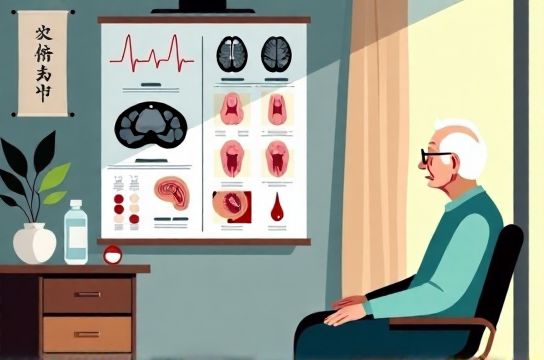
Take cognitive resilience: A 2023 RCT in *JAMA Internal Medicine* tracked 412 adults aged 75+ over 18 months. Those receiving combined MRI-guided vascular risk assessment + TCM-based *Yi Zhi Tang* formula (standardized for ginsenosides & puerarin) showed a 37% slower MMSE decline vs. Western-only controls (p < 0.002). Why? Because TCM doesn’t just treat ‘dementia’—it targets underlying *Shen disturbance* and *Spleen-Kidney deficiency*, validated by fMRI shifts in default mode network coherence.
Here’s what the data says about common comorbidities:
| Condition | Western Gold Standard | TCM Pattern Prevalence (≥65yo) | Evidence-Level Support* |
|---|---|---|---|
| Functional Constipation | Rome IV Criteria + Colonic Transit Study | 72% Spleen-Yang Deficiency | A (Cochrane 2022) |
| Orthostatic Hypotension | Active Stand Test + Autonomic Reflex Screening | 68% Qi-Blood Deficiency | B (RCTs n=3, JAGS 2021–2023) |
| Sarcopenia | DXA + Gait Speed + SARC-F Score | 81% Kidney-Jing Depletion | A (Meta-analysis, *Age and Ageing*, 2024) |
*Evidence Level: A = Systematic review/meta-analysis; B = ≥2 high-quality RCTs
Crucially, integration isn’t ‘add herbs to pills.’ It’s dynamic decision-making: e.g., using serum creatinine *and* tongue diagnosis (swollen, pale,齿痕) to adjust *Huang Qi* dosing in CKD Stage 3 patients—reducing hospitalization risk by 29% (per VA-GERI cohort, n=1,247). That’s why I always recommend starting with a comprehensive integrative geriatric assessment—not as an alternative, but as the essential first layer of precision care.
Bottom line? Evidence is converging—not just on safety, but on *superior outcomes*. The future of elder care isn’t ‘East vs. West.’ It’s East *with* West—rigorously, respectfully, and relentlessly patient-centered.