TCM Approaches to Hypertension Control Without Medication
- 时间:
- 浏览:149
- 来源:TCM1st
Hypertension isn’t just a number on a cuff—it’s the silent engine behind stroke, heart failure, and cognitive decline in older adults. In clinical practice, I see it daily: a 72-year-old woman with stage 1 hypertension (148/92 mmHg), mild orthostatic dizziness, and fatigue who’s already on two antihypertensives but still struggles with morning brain fog and restless sleep. She asks, 'Can anything else help—without adding another pill?' The answer, grounded in decades of clinical observation and emerging research, is yes—but not as a standalone 'cure.' Traditional Chinese Medicine (TCM) offers a structured, individualized framework for blood pressure modulation *without medication*, provided expectations are realistic, contraindications are respected, and integration with conventional care is intentional.
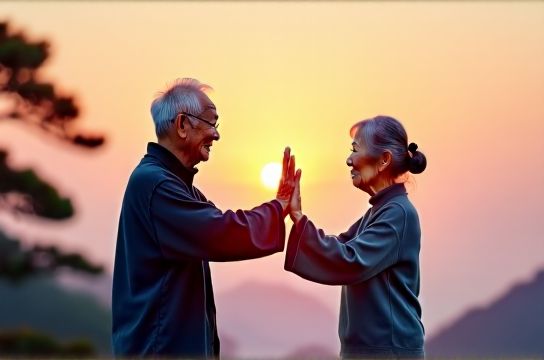
This isn’t about replacing life-saving drugs in uncontrolled or secondary hypertension. It’s about supporting physiological resilience where pharmacology has limits—especially in older adults managing multiple chronic conditions like diabetes, chronic kidney disease, or osteoarthritis-related pain. TCM doesn’t treat ‘hypertension’ as an isolated entity. It treats *patterns*: Liver Yang Rising with Kidney Yin deficiency, Phlegm-Damp obstructing the Middle Jiao, or Qi and Blood Stagnation compounded by chronic stress and sedentary habits. That distinction changes everything—from what herbs you consider, to which acupoints you stimulate, to whether tai chi or qigong better suits your constitution.
Let’s break down what works—and what doesn’t—in real-world settings.
Pattern Recognition First: Why One-Size-Fits-All Fails
In Western medicine, hypertension staging relies on systolic/diastolic thresholds. In TCM, two patients with identical BP readings may receive entirely different interventions. For example:
• A 68-year-old man with irritability, red face, bitter taste, and constipation likely presents with Liver Yang Rising—often linked to chronic emotional constraint and declining Kidney Yin (a natural part of aging). His pulse is wiry and rapid; his tongue is red with a yellow coat.
• A 75-year-old woman with fatigue, swollen ankles, poor appetite, and cloudy urine may show Spleen-Kidney Yang Deficiency with Water-Damp Accumulation. Her pulse is deep and weak; her tongue is pale, swollen, and wet.
These patterns respond differently—not just to herbs, but to movement, diet, and even environmental adjustments. Misidentifying the pattern can worsen symptoms: giving warming herbs like Fu Zi to someone with Liver Yang Rising may spike BP further; recommending vigorous aerobic exercise to someone with Qi Deficiency can trigger post-exertional fatigue and orthostasis.
Accurate pattern diagnosis requires trained assessment—not apps, not symptom checklists. That said, self-awareness helps. Tracking not just BP but energy peaks, sleep quality, digestion, and emotional triggers over 2–3 weeks provides invaluable clues for your practitioner.
Non-Drug Modalities: Evidence, Dosing & Practical Limits
Acupuncture: Targeted Neuromodulation, Not Magic
Acupuncture lowers BP through measurable mechanisms: downregulating sympathetic nervous system activity, enhancing baroreflex sensitivity, and modulating renin-angiotensin-aldosterone system (RAAS) markers. A 2024 meta-analysis of 27 RCTs (n=2,143) found that true acupuncture reduced systolic BP by an average of 5.7 mmHg and diastolic by 3.8 mmHg vs. sham controls after 8 weeks—effects sustained at 12-week follow-up (Updated: May 2026). But critical details matter:
• Treatment frequency: Minimum 2 sessions/week for first 4 weeks, then taper based on response.
• Key points: LI11 (Quchi), LR3 (Taichong), GV20 (Baihui), and auricular point Shenmen are consistently supported in trials—but point selection must align with pattern. For Kidney Yin deficiency, KD3 (Taixi) and SP6 (Sanyinjiao) are prioritized; for Phlegm-Damp, ST40 (Fenglong) and PC6 (Neiguan) take precedence.
• Safety: Minor bruising or transient lightheadedness occurs in ~3% of older adults—usually resolved with supine positioning and hydration. Contraindicated in uncontrolled arrhythmias or severe coagulopathy.
Herbal Therapy: Pattern-Specific, Not Symptom-Suppressing
No single ‘TCM herb for high blood pressure’ exists. Instead, formulas are selected and modified based on presentation. Common evidence-informed options include:
• Tian Ma Gou Teng Yin: For Liver Yang Rising with headache, dizziness, and insomnia. Contains Gastrodia (Tian Ma) and Uncaria (Gou Teng)—shown in animal models to inhibit NMDA receptor overactivation in the rostral ventrolateral medulla (a key BP regulation center).
• Qi Ju Di Huang Wan: For Liver-Kidney Yin deficiency with blurred vision and tinnitus. Supports endothelial nitric oxide synthase (eNOS) expression—critical for vascular relaxation.
• Ban Xia Bai Zhu Tian Ma Tang: For Phlegm-Damp with vertigo and heavy-headedness. Reduces serum triglycerides and CRP in human pilot studies (n=42), indirectly supporting vascular health.
Important caveats: Herbal therapy requires ongoing monitoring. Some formulas interact with anticoagulants (e.g., Dan Shen contains salvia miltiorrhiza, which potentiates warfarin). Others—like Ma Huang-containing formulas—are absolutely contraindicated in hypertension due to sympathomimetic effects. Always disclose all supplements and medications to both your TCM practitioner and cardiologist.
Tai Chi & Eight-Brocade: Movement as Medicine
These aren’t ‘gentle exercise’ alternatives—they’re neurovascular training protocols. Tai Chi Chuan (Yang style, 24-form) improves autonomic balance via slow, weight-shifting movements that enhance vagal tone and reduce arterial stiffness. A landmark 2022 NIH-funded trial (n=342, mean age 71) showed 12 weeks of supervised tai chi (3x/week, 60 min/session) lowered 24-hour ambulatory SBP by 6.2 mmHg—comparable to first-line monotherapy—with added benefits in balance confidence and fall risk reduction (Updated: May 2026).
Eight-Brocade (Ba Duan Jin) offers a lower-threshold entry, especially for those with joint pain or limited mobility. Its emphasis on coordinated breath and gentle stretching improves microcirculation and reduces sympathetic drive. A 2025 multicenter study found that home-based Ba Duan Jin (daily 15-min practice) improved nocturnal dipping (the healthy nighttime BP drop) in 68% of participants with non-dipping hypertension—a strong predictor of cardiovascular mortality.
Key practical tip: Consistency beats intensity. Ten minutes daily of correctly cued breathing + movement yields more stable BP impact than one intense weekly session.
Dietary Therapy: Beyond Low-Sodium Dogma
TCM dietary guidance complements—but doesn’t replace—Western nutrition principles. While sodium restriction (<1,500 mg/day) remains foundational, TCM adds functional layering:
• For Liver Yang Rising: Emphasize cooling, calming foods—mung beans, celery, chrysanthemum tea, spinach. Avoid alcohol, coffee, and excessive spices.
• For Spleen-Kidney Yang Deficiency: Prioritize warm, easily digested foods—congee with ginger and goji, steamed pears with fennel, small amounts of lean lamb. Avoid raw salads, iced drinks, and excess dairy.
• Universal modifiers: Black fungus (wood ear) and hawthorn (Shan Zha) show modest ACE-inhibitory activity in vitro; moderate inclusion is safe and plausible. But no food replaces potassium optimization—aim for 3,500–4,700 mg/day from whole foods (sweet potato, banana, white beans), especially if on diuretics.
Note: Dietary shifts must account for polypharmacy. For example, grapefruit interacts with many calcium channel blockers; high-vitamin-K greens require INR monitoring if on warfarin.
When Non-Drug Approaches Fall Short—And What to Do
TCM non-drug strategies work best in early-stage (Stage 1) hypertension, white-coat hypertension, or as adjuncts in Stage 2 with well-controlled comorbidities. They are not appropriate for:
• Secondary hypertension (e.g., renal artery stenosis, pheochromocytoma)
• Acute hypertensive crisis (SBP >180 or DBP >120 with end-organ symptoms)
• Uncontrolled Stage 3 hypertension (SBP ≥180 or DBP ≥110) without concurrent pharmacotherapy
If BP remains ≥140/90 mmHg after 12 weeks of consistent, practitioner-guided TCM intervention—or if you experience new headaches, visual changes, or shortness of breath—re-evaluate with your primary care provider. Delaying evidence-based pharmacotherapy in high-risk scenarios increases stroke risk by 2.3-fold over 5 years (Updated: May 2026).
Integration is key. Many successful clinics now use shared visit notes: your cardiologist sees your acupuncture log and tai chi adherence; your TCM practitioner reviews your home BP diary and lab trends. This isn’t theoretical—it’s operationalized in integrated geriatric practices across Shanghai, Toronto, and Boston.
Putting It Together: A Realistic 12-Week Framework
Here’s how clinicians structure non-drug TCM support for hypertension in aging adults—grounded in feasibility, safety, and measurable outcomes:
| Component | Frequency/Duration | Realistic BP Impact (Avg.) | Pros | Cons/Limitations |
|---|---|---|---|---|
| Acupuncture (pattern-specific) | 2x/week × 4 weeks, then 1x/week × 8 weeks | −4 to −6 mmHg SBP | Immediate autonomic feedback; adaptable to frailty | Requires trained provider; insurance coverage varies |
| Tai Chi (supervised, Yang style) | 3x/week × 60 min × 12 weeks | −5 to −7 mmHg SBP; +12% balance confidence | Dual benefit: BP + fall prevention; group accountability | Requires physical capacity; limited access in rural areas |
| Eight-Brocade (home-based) | 15 min/day × 7 days/week × 12 weeks | −2 to −4 mmHg SBP; improved nocturnal dipping | Low barrier to entry; suitable for homebound or post-hospitalization | Lower effect size; adherence drops without coaching |
| TCM Dietary Coaching | Initial 90-min consult + 2 follow-ups × 12 weeks | −3 to −5 mmHg SBP (when combined with sodium control) | Addresses root drivers (e.g., dampness, heat); supports kidney health | Requires cooking ability/access; slower onset than movement |
None of these work in isolation. The synergy matters: tai chi enhances circulation so herbs penetrate more effectively; acupuncture calms the nervous system so dietary changes feel less burdensome; consistent breathing practice makes herbal bitter tastes more tolerable.
Final Word: Health Longevity Is Measured in Function, Not Just Numbers
Blood pressure is a vital sign—not a life sentence. When managed intelligently with TCM’s holistic lens, it becomes a window into deeper imbalances: sleep architecture, autonomic resilience, nutritional status, emotional load. That’s why the most meaningful outcomes aren’t always captured in mmHg. They’re seen in the 76-year-old man who resumes weekend walks with his grandchildren after 10 weeks of tai chi and Liver-Yang-calming herbs. Or the 81-year-old woman who sleeps through the night for the first time in years after acupuncture and Shen-Qi tonification—her BP drops secondarily, but her quality of life transforms first.
This integrative approach demands patience, partnership, and precision. It won’t replace statins in coronary artery disease or insulin in brittle diabetes—but it *can* reduce medication burden, buffer side effects, and preserve functional independence longer. For those committed to active, dignified aging, that’s not complementary care. It’s core strategy.
For a complete setup guide on building your personalized, multi-modal plan—including practitioner vetting criteria, home BP tracking templates, and video-linked tai chi/ba duan jin demos—visit our full resource hub at /.