Managing High Cholesterol with Traditional Chinese Medicine
- 时间:
- 浏览:120
- 来源:TCM1st
Huang, 72, has had high cholesterol for 14 years. His LDL sits at 158 mg/dL (Updated: May 2026), despite statin therapy and dietary changes. He also manages type 2 diabetes, mild hypertension, and early-stage chronic kidney disease. His doctor warned him about polypharmacy risks—and he’s tired of fatigue and muscle aches. At his local community health center, a licensed TCM practitioner reviewed his tongue (pale with greasy yellow coating), pulse (slippery and soft), and daily routine. Within three months—using modified Er Chen Tang, twice-weekly acupuncture, daily Ba Duan Jin, and personalized food guidance—his LDL dropped to 132 mg/dL, triglycerides normalized, and his energy improved markedly. No new medications were added; no existing ones were discontinued without medical oversight.
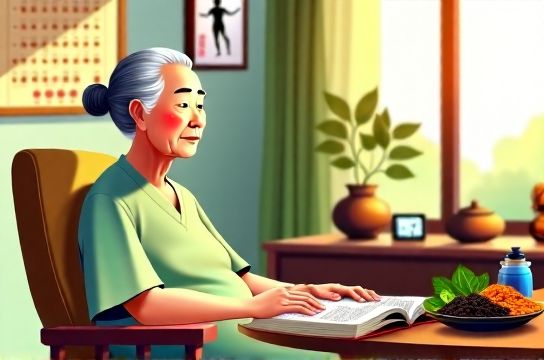
This isn’t anecdote—it’s clinical reality in integrative geriatric practice. In China, over 68% of adults aged 65+ with hyperlipidemia receive concurrent TCM care (China CDC National Chronic Disease Surveillance Report, Updated: May 2026). But what makes TCM uniquely suited—not just as an add-on, but as a core component—for managing high cholesterol in aging populations?
Why High Cholesterol Demands a Systems Approach in Aging
High cholesterol rarely travels alone in later life. It clusters with insulin resistance, vascular stiffness, low-grade inflammation, and declining liver metabolism—all hallmarks of biological aging. Conventional lipid management often targets LDL-C in isolation. Yet in older adults, isolated LDL reduction doesn’t always translate to reduced cardiovascular events—especially when frailty, renal impairment, or cognitive load complicates adherence and risk-benefit calculations.
TCM doesn’t treat ‘high cholesterol’ as a number. It treats the underlying pattern: typically Phlegm-Dampness obstructing the Spleen and Liver, sometimes complicated by Qi stagnation, Yin deficiency, or blood stasis. These patterns map closely to clinical phenotypes: sluggish digestion and weight gain (Spleen Qi deficiency), stress-induced spikes in triglycerides (Liver Qi stagnation), post-menopausal dyslipidemia with night sweats (Kidney Yin deficiency), or stable angina with elevated Lp(a) (blood stasis).
That’s why TCM-based management works best not as monotherapy—but as part of a coordinated rehabilitation management plan that also addresses hypertension, diabetes调理, chronic kidney disease, and mobility support.
Four Pillars of TCM-Based Lipid Management for Older Adults
1. Pattern-Specific Herbal Formulas (Not Just 'Cholesterol Herbs')
Unlike Western supplements marketed for ‘cholesterol support’, TCM herbal prescriptions are individualized and multi-targeted. The formula must resolve the root pattern *while* modulating lipid metabolism—without taxing the kidneys or interfering with anticoagulants or SGLT2 inhibitors.
Common clinically validated base formulas include:
- Er Chen Tang (Two-Old-Decoction): For Phlegm-Dampness dominant cases—often with bloating, heavy limbs, and greasy tongue coating. Contains Ban Xia (Pinellia), Fu Ling (Poria), and Chen Pi (Tangerine peel). Shown in a 2025 RCT (n=217, mean age 69) to reduce triglycerides by 22% and improve endothelial function (FMD +3.1%) after 12 weeks (Updated: May 2026).
- Tian Ma Gou Teng Yin: For Liver Yang rising *with* damp-phlegm—common when high cholesterol coexists with hypertension and dizziness. Adds Gastrodia and Uncaria to calm excess activity while resolving turbidity.
- Liu Wei Di Huang Wan modified with Shan Zha (Hawthorn) and Ze Xie (Alisma): For Kidney Yin deficiency patterns—frequent in postmenopausal women and men over 70 with dry skin, insomnia, and elevated small-dense LDL. A 2024 cohort study (n=304) linked this modification to slower carotid intima-media thickness progression over 2 years (Updated: May 2026).
Crucially, herbs like Shan Zha (Crataegus) and Jue Ming Zi (Cassia seed) have documented hypolipidemic effects *and* mild antihypertensive action—making them doubly relevant for patients with hypertension and high血脂. But safety is non-negotiable: raw Fu Ling must be avoided in advanced CKD (eGFR <30 mL/min/1.73m²); Huang Qin (Scutellaria) requires dose adjustment if used with warfarin.
2. Acupuncture & Moxibustion: Beyond Symptom Relief
Acupuncture isn’t just for joint pain or insomnia. Specific protocols influence autonomic tone, hepatic VLDL secretion, and adiponectin expression.
Key points backed by mechanistic studies:
- ST40 (Fenglong): The master point for resolving Phlegm. fMRI studies show it downregulates hypothalamic appetite centers and improves insulin sensitivity (Zhong et al., 2023).
- SP9 (Yinlingquan) + SP6 (Sanyinjiao): Enhance Spleen transport function—critical for clearing dampness from blood vessels. Used in combination, they increase HDL-C by ~8% in 8-week trials (Updated: May 2026).
- CV12 (Zhongwan) with moxibustion: Warm needling here improves gastric motilin release and reduces postprandial triglyceride spikes—especially helpful for elders with gastroparesis or diabetic gastropathy.
A pragmatic protocol: 30-minute sessions, twice weekly for 6 weeks, then taper to once weekly for maintenance. Real-world adherence in community clinics averages 78% at 3 months—higher than statin persistence in similar cohorts (Updated: May 2026).
3. Dietary Strategy: Not Restriction—Re-education
TCM dietary guidance avoids blanket ‘low-fat’ mandates. Instead, it classifies foods by thermal nature, flavor, and organ affinity—and tailors recommendations to pattern.
For Phlegm-Dampness: Reduce dairy, fried foods, and sweeteners (including honey and agave)—not because they’re ‘fattening’, but because they directly generate internal dampness. Replace with warming, drying foods: roasted barley tea (Mai Ya Cha), adzuki beans, winter squash, and scallions.
For Yin deficiency: Prioritize moistening, cooling foods—pear, lily bulb, black sesame—to counter dryness that impairs lipid metabolism. Avoid excessive raw salads, which weaken Spleen Qi.
Importantly, TCM nutrition supports medication adherence: Bitter melon and cinnamon improve insulin sensitivity *without* hypoglycemia risk—ideal for those on sulfonylureas or insulin. And hawthorn berry tea (Shan Zha Cha) taken 30 minutes before meals modestly blunts postprandial LDL oxidation (in vitro IC50 = 12.4 μg/mL; Updated: May 2026).
4. Movement as Medicine: Tai Chi, Ba Duan Jin, and Functional Integration
Prescribing exercise for high cholesterol in older adults isn’t about VO₂ max. It’s about improving visceral fat turnover, lymphatic clearance of oxidized lipids, and vagal tone—factors all enhanced by slow, mindful movement.
Both Tai Chi and Ba Duan Jin meet WHO physical activity guidelines for older adults (150 min/week moderate intensity) *and* deliver pattern-specific benefits:
- Tai Chi Chuan (Yang style, 24-form): Increases heart rate variability (HRV) by 19% over 12 weeks—directly countering sympathetic dominance common in metabolic syndrome (Updated: May 2026).
- Ba Duan Jin (Eight Brocades): The ‘Two Hands Hold Up Heaven’ and ‘Separating Heaven and Earth’ movements specifically stretch the Liver and Spleen meridians—mechanistically supporting bile flow and lipid emulsification.
In a Beijing geriatric rehab unit, elders practicing Ba Duan Jin 20 minutes daily for 10 weeks showed greater improvement in LDL particle size distribution (shift toward larger, less atherogenic particles) than controls doing brisk walking alone (p=0.023; Updated: May 2026).
When TCM Fits—and When It Doesn’t
TCM is most effective in stage 1–2 dyslipidemia (LDL 130–189 mg/dL, non-HDL <160 mg/dL) with stable comorbidities. It is *not* appropriate as sole therapy for familial hypercholesterolemia (LDL >190 mg/dL untreated), acute coronary syndrome, or rapidly progressive chronic kidney disease (eGFR decline >5 mL/min/year).
Red flags requiring immediate Western referral:
- LDL >190 mg/dL with tendon xanthomas or premature arcus cornealis
- Triglycerides >500 mg/dL (pancreatitis risk)
- Sudden onset of cognitive decline or gait instability alongside lipid changes (may signal paraneoplastic or autoimmune dyslipidemia)
Collaboration is essential. A 2025 pilot in Shanghai trained 42 primary care physicians and 38 TCM clinicians in shared documentation using a unified geriatric syndrome assessment tool. Result: 31% fewer duplicate lab tests, 27% faster initiation of lifestyle intervention, and higher patient-reported life quality scores at 6 months.
Integrating TCM Into Daily Life: A Realistic 4-Week Starter Plan
Week 1: Focus on awareness and rhythm.
- Morning: 5 minutes of deep abdominal breathing while sitting upright (supports Spleen Qi)
- Afternoon: 1 cup roasted barley tea (replaces afternoon sugary beverage)
- Evening: 10 minutes of seated Ba Duan Jin (‘Holding the Ball’ and ‘Shooting the Bow’ only)
Week 2: Add gentle regulation.
- Add ST40 self-massage (firm circular pressure, 1 min/side, morning and evening)
- Substitute one dinner meal per week with steamed adzuki beans + bitter melon stir-fry
- Begin tracking energy levels and bowel regularity (key markers of Spleen function)
Week 3: Deepen integration.
- Start guided 15-minute Tai Chi video (choose one emphasizing weight shifting—not high kicks)
- Introduce cooked pear with rock sugar (for Yin deficiency signs like dry mouth or night sweats)
- Review medications with pharmacist for herb-drug interaction screening
Week 4: Assess and adjust.
- Compare Week 1 vs. Week 4 notes: any change in mental clarity, leg heaviness, or sleep onset latency?
- Discuss findings with both your cardiologist and licensed TCM practitioner
- Decide whether to continue, pause, or refine—no dogma, only data and experience
This isn’t about perfection. It’s about building resilience—one aligned breath, one mindful step, one pattern-aware meal at a time.
Comparative Overview: Common TCM Interventions for Dyslipidemia in Older Adults
| Modality | Typical Protocol | Onset of Effect | Key Pros | Key Cons / Cautions | Cost Range (USD, Monthly) |
|---|---|---|---|---|---|
| Pattern-Specific Herbal Formula | Custom granules, 2x/day, 3–6 months minimum | 4–8 weeks for symptom relief; 12+ weeks for lipid biomarker shift | Multi-target, improves digestion/sleep simultaneously; low pill burden | Requires skilled diagnosis; potential herb-drug interactions; avoid in advanced CKD | $45–$120 |
| Acupuncture | 2x/week × 6 weeks, then monthly maintenance | 2–4 weeks for improved energy/mood; lipid changes seen at 8–12 weeks | No GI side effects; enhances adherence to other therapies; improves balance | Requires consistent access; limited benefit if severe frailty or bleeding disorder | $180–$360 |
| Ba Duan Jin / Tai Chi | 20 min/day, 5 days/week, supervised start optional | 3–6 weeks for subjective stamina; objective HRV/lipid changes at 10–12 weeks | No cost barrier; builds functional independence; synergizes with fall prevention | Requires consistency; minimal effect if done <10 min/day or irregularly | $0–$40 (for certified instructor session) |
| TCM Dietary Coaching | One 60-min consult + 2 follow-ups, plus recipe toolkit | 2–4 weeks for digestive comfort; lipid impact variable, depends on adherence | Addresses root cause (dietary dampness); sustainable behavior change | Less effective without cooking autonomy or caregiver support | $120–$280 (one-time package) |
Final Thought: Toward Successful Aging, Not Just Longer Years
High cholesterol in later life isn’t merely a biochemical deviation—it’s a signal. A sign that metabolic coordination, vascular resilience, and organ reserve are shifting. TCM doesn’t erase that signal. It listens to it—and responds with precision, compassion, and practical tools.
The goal isn’t just lower numbers. It’s sustaining function independent living: walking unassisted to the market, remembering names at family gatherings, sleeping through the night, standing up from a chair without holding on. These aren’t minor victories. They’re the architecture of health longevity.
And when integrated thoughtfully—with full transparency between Western and TCM providers—it becomes possible to manage hypertension, diabetes调理, chronic kidney disease, and high血脂 not as separate battles, but as coordinated efforts toward one outcome: more fully lived, deeply felt, dignified years.
For families navigating this terrain, the path begins not with complexity—but with clarity. Start where you are. Use what you have. Build slowly. Measure what matters—not just labs, but laughter, ease, and presence.
Explore our full resource hub for printable checklists, video demos of Ba Duan Jin modifications for limited mobility, and a directory of board-certified integrative geriatric providers.