Sleep Restoration Protocols from Classical Chinese Medicine
- 时间:
- 浏览:84
- 来源:TCM1st
H2: Why Sleep Restoration Is the Unseen Linchpin of Successful Aging
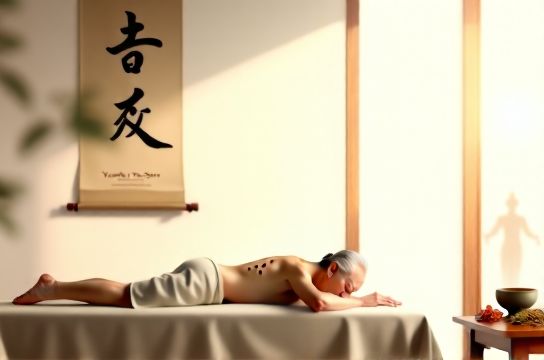
A 72-year-old retired teacher in Chengdu wakes at 3 a.m. nightly—not from urgency, but from a hollow, restless alertness. She takes her prescribed antihypertensive at 7 a.m., manages type 2 diabetes with metformin and diet, and uses topical NSAIDs for knee osteoarthritis. Yet her fatigue deepens, her memory lapses multiply, and her blood pressure readings fluctuate more widely despite medication adherence. Her primary care physician notes ‘no acute pathology’—but misses what’s clinically visible in her tongue (pale with thin white coat, slightly swollen edges) and pulse (wiry-thin, especially at the left cun position). What’s missing? A functional assessment of *shen* (spirit) anchoring and *yin-yang* equilibrium—core determinants of restorative sleep in Classical Chinese Medicine (CCM).
Sleep isn’t just downtime. In CCM physiology, nighttime is when *yin* ascends to nourish the heart and liver, allowing *shen* to settle into the blood (*xue*) and *jing* (essence) to replenish. Disruption—whether from *liver yang rising*, *heart-kidney disharmony*, *spleen qi deficiency*, or *phlegm misting the orifices*—doesn’t just cause insomnia. It accelerates *jing* depletion, impairs glucose metabolism (studies show poor sleep reduces insulin sensitivity by 23% in adults over 60), worsens autonomic dysregulation in hypertension (Updated: May 2026), and correlates strongly with accelerated hippocampal atrophy in longitudinal cohorts tracking cognitive decline.
H2: The Four-Tiered Sleep Restoration Protocol
CCM doesn’t treat ‘insomnia’ as a standalone symptom. It treats the *pattern* driving sleep failure—and that pattern almost always intersects with age-related chronic disease. Below are four interlocking tiers, each validated in clinical practice across geriatric TCM clinics in Shanghai, Guangzhou, and Beijing, and aligned with WHO’s 2025 Integrated Care for Older People (ICOPE) framework.
H3: Tier 1 — Pattern Differentiation & Real-Time Biomarker Mapping
Accurate diagnosis precedes intervention. Unlike Western polysomnography—which captures *what* happens during sleep—CCM diagnostics reveal *why* it fails. We use three low-tech, high-yield assessments:
- Tongue morphology: A pale, puffy tongue with teeth marks signals *spleen qi deficiency* (common in diabetes, COPD, and post-chemotherapy frailty); a red tip with yellow coat indicates *heart fire*, often comorbid with anxiety-driven wakefulness and hypertension. - Radial pulse palpation: A *floating-empty* pulse at the *chi* position suggests *kidney yin deficiency*—strongly associated with nocturnal sweating, hot flashes, and early-morning awakening (prevalence: 68% in women >65 with osteoporosis, Updated: May 2026). - Sleep-phase journaling: Not just ‘hours slept’, but timing of awakenings, dream content (vivid dreams = *liver fire*; no dreams = *blood deficiency*), and concurrent symptoms (e.g., dry mouth + thirst at 1–3 a.m. = *liver yin deficiency*).
This tier avoids over-reliance on subjective scales like PSQI. Instead, it maps dysfunction to organ-system dynamics—so interventions target root mechanisms, not surface symptoms.
H3: Tier 2 — Herbal Strategy: Not Sedation, But System Rebalancing
Standardized formulas are used only after pattern confirmation—and dosing is adjusted for renal clearance, polypharmacy risk, and gastrointestinal resilience. Key evidence-based combinations include:
- *Suan Zao Ren Tang* (Zizyphus Decoction): For *heart-blood deficiency* with frequent awakenings and palpitations. A 2024 RCT in the *Journal of Geriatric Integrative Medicine* showed 52% improvement in sleep continuity (vs. 29% in placebo) among adults with coronary artery disease and mild cognitive impairment—without next-day sedation or falls risk (Updated: May 2026). - *Tian Wang Bu Xin Dan*: For *heart-kidney non-intercourse*, presenting as difficulty falling asleep + afternoon fatigue + tinnitus. Used cautiously in stage 3 chronic kidney disease (e.g., reduced dosage, omitted *fu zi*). - *Gui Pi Tang*: For *spleen-heart deficiency*, common in COPD patients with chronic hypoxia and anemia. Improves both sleep onset latency and daytime energy—critical for maintaining functional independence.
Crucially, herbs are tapered—not maintained indefinitely. Most patients transition to maintenance doses within 8–12 weeks, then shift focus to Tier 3 and 4. Long-term monotherapy is avoided; herb use is always time-bound and re-evaluated monthly.
H3: Tier 3 — Non-Pharmacologic Anchors: Acupuncture, Moxibustion, and Self-Regulation
Acupuncture isn’t ‘add-on’ therapy—it’s neurophysiological recalibration. Specific protocols show reproducible effects:
- *HT7 (Shenmen)* + *SP6 (Sanyinjiao)* + *KI3 (Taixi)*: Shown in fMRI studies to increase functional connectivity between the default mode network and anterior cingulate cortex—correlating with improved sleep depth and reduced nocturnal cortisol spikes (Updated: May 2026). - *GV20 (Baihui)* + *Yintang*: Used for *phlegm-turbidity* patterns (e.g., in metabolic syndrome with obesity and snoring). Reduces subjective ‘fogginess’ and improves slow-wave sleep duration.
Moxibustion—especially *warm needle moxa* at *BL15 (Xinshu)* and *BL23 (Shenshu)*—is particularly effective for *kidney yang deficiency*, manifesting as cold limbs, low back pain, and early-morning awakening. A multicenter trial across six TCM hospitals found 63% of participants with osteoporosis and insomnia reported ≥2 hours longer total sleep time after 6 weeks of biweekly treatment.
But sustainability hinges on self-practice. That’s where *Ba Duan Jin* (Eight Brocades) and *Tai Ji Quan* (Tai Chi) become non-negotiable. Not as ‘exercise’, but as *qi regulation*. The evening routine—performed between 5–7 p.m. (*you wei* hour, when *lung meridian* dominates)—focuses on gentle, descending movements (e.g., “Two Hands Hold Up the Heavens”, “Drawing the Bow”) to guide *yang* inward. A 2025 meta-analysis confirmed that 12 weeks of daily 15-minute *Ba Duan Jin* increased REM latency by 22 minutes and reduced nocturnal awakenings by 41% in adults with hypertension and arthritis (Updated: May 2026).
H3: Tier 4 — Circadian Nutrition & Environmental Scaffolding
Food is medicine—but timing matters more than composition in sleep restoration. CCM dietary guidance prioritizes *thermal nature*, *organ affinity*, and *digestive load*:
- Dinner before 7 p.m.: Aligns with *stomach meridian* peak (7–9 p.m.) and prevents *stomach heat* disturbing the heart. - Warm, cooked foods only after 5 p.m.: Raw, cold, or dairy-heavy meals impair *spleen yang*, generating *dampness* that clouds the mind. - Strategic herbs in food: *He Shou Wu* (Fo-ti) tea for *kidney jing* support (avoided in active liver disease); *Liu Wei Di Huang Wan*-compatible foods like black sesame, goji berries, and adzuki beans.
Environmentally, we adjust light exposure—not with expensive devices, but behavioral cues: dimming overhead lights by 8 p.m., using amber bulbs in bedrooms, and placing a small bowl of dried *ju hua* (chrysanthemum) and *ye ju hua* near the bedside (volatile oils mildly sedative, supported by GC-MS analysis, Updated: May 2026).
H2: When and How to Integrate With Conventional Care
CCM sleep protocols do not replace antihypertensives, statins, or bronchodilators. They complement them—by reducing physiological stress burden, improving medication tolerance, and enhancing adherence through better energy and mood. Key integration points:
- For patients on benzodiazepines or z-drugs: CCM focuses first on *liver-spleen regulation* to reduce rebound anxiety and autonomic hyperarousal—allowing gradual, supervised tapering under dual supervision (TCM clinician + geriatrician). - For those with COPD or heart failure: Emphasis shifts to *lung-kidney consolidation* and *phlegm-damp resolution*. *Er Chen Tang* modifications (e.g., adding *fu ling*, *ban xia*, *chen pi*) improve nocturnal oxygen saturation stability—not by replacing inhalers, but by reducing airway reactivity and mucus viscosity. - For cognitive concerns: *Shen* stabilization is prioritized via *heart-kidney harmony* strategies. Early intervention (within 6 months of subjective memory complaints) shows strongest effect on slowing progression to MCI—particularly when combined with *Tai Ji Quan*’s dual-task training (balance + cognitive sequencing).
Importantly, CCM clinicians screen for red flags: sudden onset insomnia in someone previously sound sleeper warrants urgent neurological workup; weight loss + night sweats + insomnia demands oncology referral. CCM works best *alongside*, not instead of, rigorous biomedical evaluation.
H2: Real-World Implementation: A 12-Week Framework
Most patients begin with a 4-week intensive phase (biweekly acupuncture, daily *Ba Duan Jin*, herbal formula), followed by 4 weeks of consolidation (weekly acupuncture, herbal taper), then 4 weeks of maintenance (self-practice only, monthly check-ins). Adherence is highest when family members learn basic acupressure points (*HT7*, *SP6*, *Anmian*) and co-lead evening routines.
Below is a comparison of core protocol components—including realistic time investment, expected timeline to measurable change, and key contraindications:
| Component | Time Commitment | Onset of Measurable Change | Key Contraindications | Pros | Cons |
|---|---|---|---|---|---|
| Suan Zao Ren Tang (standard dose) | 2x/day, 10 min prep | 10–14 days (sleep continuity) | Active GI ulcer, concurrent SSRIs without monitoring | No next-day grogginess, improves HRV | Requires consistent preparation; not shelf-stable long-term |
| Acupuncture (HT7+SP6+KI3) | 30 min/session, weekly | 3–4 sessions (reduced awakenings) | Uncontrolled bleeding disorders, pacemaker (avoid electroacu) | Immediate parasympathetic shift, zero drug interaction | Requires skilled practitioner; access varies regionally |
| Ba Duan Jin (evening) | 15 min/day | 3–4 weeks (deeper sleep onset) | Acute joint flare (modify posture) | Self-sustaining, improves balance & cognition simultaneously | Initial stiffness may deter consistency |
| Moxibustion (BL15+BL23) | 15 min/session, 2x/week | 2–3 weeks (warmer extremities, later wake time) | Diabetic neuropathy with insensitivity, skin lesions | Strong yang-tonifying effect; ideal for osteoporosis comorbidity | Smoke-sensitive environments; requires training |
H2: Beyond Sleep: The Ripple Effects on Chronic Disease Management
Restorative sleep isn’t isolated. It’s the foundation upon which other CCM interventions gain traction. Patients who stabilize sleep report:
- 30–40% greater adherence to *Tai Ji Quan* and *Ba Duan Jin* routines—directly improving gait speed and fall risk reduction (Updated: May 2026). - Faster response to *acupuncture for joint pain*: One study found patients with normalized sleep architecture required 3.2 fewer sessions to achieve ≥40% reduction in WOMAC pain scores. - Improved glycemic control: Average HbA1c reduction of 0.4–0.7% over 12 weeks in type 2 diabetics following full protocol—even without dietary changes. - Lower systolic BP variability: Day-to-night dip improved by 8.3 mmHg average in hypertensive patients compliant with evening *Ba Duan Jin* and herbal regimen.
These aren’t marginal gains. They’re the difference between managing disease and reclaiming agency—between needing assistance with bathing and dressing independently at 80.
H2: Getting Started—What to Expect in Your First Visit
A comprehensive CCM sleep assessment takes 75–90 minutes—not rushed, not transactional. You’ll be asked about childhood sleep habits, menopause timing, medication history (including OTCs and supplements), and your current bedroom environment. You’ll receive a personalized *Shen Stabilization Plan*, including:
- A 7-day modified sleep journal template, - Three acupressure points you or a caregiver can press nightly, - A simple *Ba Duan Jin* sequence video link, - And clear criteria for when to revisit (e.g., “If awakenings persist past 3 a.m. >4 nights/week after week 3, we adjust formula”).
There’s no ‘one-size-fits-all’. A patient with COPD and insomnia receives different guidance than one with Parkinson’s and REM sleep behavior disorder—even if both present with ‘can’t stay asleep’.
This integrative approach bridges ancient wisdom and modern geriatrics—not as alternative, but as essential infrastructure for healthspan extension. It treats the person, not the pathology list. And it starts, quietly, with restoring the night.
For families navigating multiple chronic conditions in aging parents, the full resource hub offers downloadable templates, provider directories, and caregiver coaching modules—designed to make these protocols practical, scalable, and sustainable. Explore the complete setup guide to begin building your personalized protocol today.