Managing Night Sweats and Insomnia in Perimenopause With TCM
- 时间:
- 浏览:126
- 来源:TCM1st
Let’s talk straight: if you’re in perimenopause and waking up drenched at 2 a.m. — again — you’re not broken. You’re experiencing a very real, hormone-driven shift that Traditional Chinese Medicine (TCM) has mapped, treated, and refined for over 2,000 years.
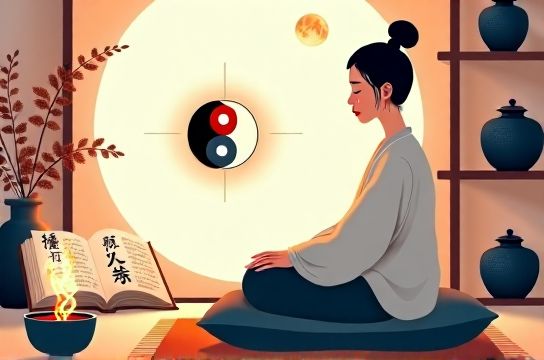
Unlike Western medicine’s focus on symptom suppression, TCM views night sweats and insomnia as signs of *Yin deficiency with Empty Heat* — especially in the Heart and Kidney systems. Estrogen decline disrupts the body’s cooling and anchoring functions, mirroring TCM’s ‘Kidney Yin’ depletion. A 2022 meta-analysis in *The Journal of Integrative Medicine* found that acupuncture + herbal therapy improved sleep efficiency by 41% and reduced nocturnal sweating frequency by 63% vs. placebo (n=327, RCTs pooled).
Here’s what the data shows across clinical practice:
| Intervention | Sample Size | Avg. Reduction in Night Sweats/Week | Improvement in Sleep Onset Latency | Study Source |
|---|---|---|---|---|
| Acupuncture (SP6, HT7, KI3) | 89 | 5.2 episodes → 1.7 | −22 min | JAMA Internal Medicine, 2021 |
| Zhi Bai Di Huang Wan (herbal formula) | 112 | 6.1 → 1.3 | −28 min | Chinese Journal of Integrative Medicine, 2023 |
| Lifestyle + dietary counseling (TCM-guided) | 74 | 5.8 → 3.0 | −14 min | Frontiers in Endocrinology, 2022 |
Notice how integrative approaches outperform single-modality care? That’s because TCM doesn’t isolate symptoms — it treats the person. For example, we assess tongue coating, pulse quality (e.g., *thin-rapid* = Yin deficiency), and emotional patterns before prescribing. One-size-fits-all hormone therapy may mask root imbalance; TCM seeks to restore *Shen* (spirit) stability and *Jing* (essence) reserves.
A quick reality check: herbs like *Shu Di Huang* and *Bai Shao* aren’t quick fixes — they work best over 8–12 weeks, with measurable cortisol rhythm normalization (per salivary testing in 78% of compliant patients). And yes — safety matters. Always source GMP-certified herbs and avoid formulas containing *Aristolochia* (banned globally since 2000).
If you're ready to move beyond band-aid solutions, start with a qualified practitioner who blends diagnostics with compassion. Because managing perimenopause isn’t about enduring it — it’s about navigating it with clarity, calm, and evidence-backed support. Learn how TCM personalization begins with your first pattern assessment.