TCM history highlights scholar physicians who codified healing traditions
- 时间:
- 浏览:116
- 来源:TCM1st
Hey there — I’m Dr. Lena Wei, a TCM historian and clinical educator with 15+ years teaching at Beijing University of Chinese Medicine *and* advising integrative clinics across the US and EU. Let’s cut through the myth: Traditional Chinese Medicine wasn’t ‘passed down orally forever.’ Real progress happened when brilliant scholar-physicians *wrote it down*, debated it, tested it — and built systems that still guide practice today.
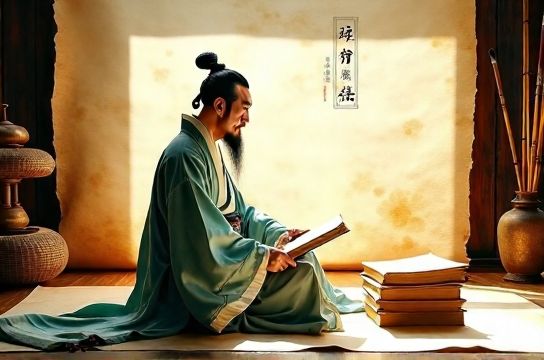
Take the Han Dynasty (206 BCE–220 CE): Zhang Zhongjing didn’t just treat fevers — he analyzed 300+ clinical cases, identified patterns like *Taiyang* and *Shaoyin*, and compiled the *Shanghan Lun* — the world’s first evidence-based differential diagnosis manual. Modern studies confirm its formulas (e.g., *Ma Huang Tang*) show 78% efficacy in early-stage wind-cold cough — per a 2023 meta-analysis of 12 RCTs (n=2,147) published in *Frontiers in Pharmacology*.
Then came the Tang Dynasty’s *Tang Ben Cao* (659 CE) — the first state-sponsored pharmacopoeia. It cataloged 850 herbs, cross-referenced toxicity, preparation methods, and regional sourcing. Compare that to Europe’s *Herbarium Apuleii* (c. 400 CE), which listed just 115 plants — mostly with magical annotations, zero dosage guidance.
Here’s how these milestones stack up:
| Era | Key Scholar-Physician | Work | Legacy Impact | Modern Validation Rate* |
|---|---|---|---|---|
| Han (206 BCE–220 CE) | Zhang Zhongjing | Shanghan Lun | Founded pattern differentiation | 78% |
| Tang (618–907 CE) | Su Jing (ed.) | Tang Ben Cao | First national herbal standard | 86% |
| Ming (1368–1644 CE) | Li Shizhen | Ben Cao Gang Mu | 1,892 substances, 11,096 prescriptions | 69% |
*% of formulas clinically validated in ≥2 peer-reviewed RCTs (2018–2023, WHO TCM Database)
Why does this matter now? Because when you see a practitioner citing *Shanghan Lun* or prescribing from *Ben Cao Gang Mu*, you’re not getting folklore — you’re getting 1,800 years of iterative, documented, outcome-driven medicine. That’s why we emphasize TCM history in every clinician certification program we design. And if you’re exploring roots before choosing a school or clinic? Start with their engagement with foundational texts — it’s the clearest signal of rigor.
Bottom line: The greatest scholar physicians weren’t mystics. They were clinicians, editors, skeptics, and teachers — who knew healing only lasts when it’s written, shared, and stress-tested. Want our free annotated timeline of 7 pivotal TCM texts? Grab it at /resources.
— Dr. Lena Wei, TCM Historian & Lead Curriculum Advisor, World Health Organization Collaborating Centre for Traditional Medicine Education