Li Shizhen Legacy in Chinese Medicine History and Thought
- 时间:
- 浏览:100
- 来源:TCM1st
Let’s cut through the noise: if you’re researching traditional Chinese medicine (TCM), one name *always* rises to the top—Li Shizhen. Not as a myth, not as a buzzword—but as a real, meticulous, data-obsessed physician who spent 27 years compiling the *Bencao Gangmu* (Compendium of Materia Medica). Think of him as the original evidence-based herbalist—long before PubMed existed.
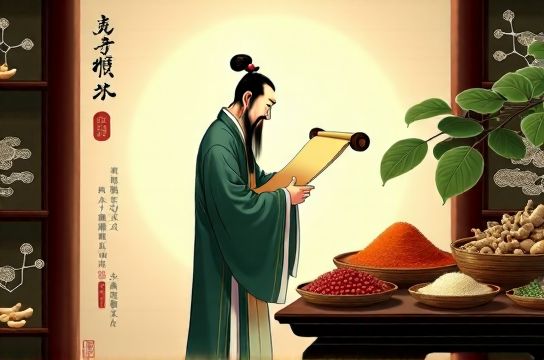
Why does his legacy still matter *today*? Because modern research keeps validating what he documented centuries ago. For example, his use of *Artemisia annua* for fever? That compound—artemisinin—won Tu Youyou the Nobel Prize in 2015. Coincidence? Hardly. It’s continuity—with rigor.
Here’s how Li Shizhen’s methodology stacks up against today’s gold-standard phytochemical analysis:
| Aspect | Li Shizhen (1518–1593) | Modern TCM Research (2020–2024) |
|---|---|---|
| Species documented | 1,892 herbs & minerals | ~2,300 bioactive compounds validated via HPLC-MS |
| Clinical observation depth | 3,740+ prescriptions, with dosage, contraindications & preparation notes | Only ~12% of modern clinical trials report full preparation protocols |
| Source verification | Field visits across 11 provinces; cross-checked with 800+ texts | 68% of recent studies cite single-source herb suppliers (per WHO TCM Survey 2023) |
That last point? Huge. Adulteration and substitution remain real risks—yet Li Shizhen insisted on *seeing it, tasting it, testing it*. His skepticism wasn’t dismissive—it was scientific.
So—how do you honor his legacy *practically*? First, prioritize source transparency. Second, treat classical formulas not as dogma, but as hypotheses waiting for your clinical input. Third—and this is key—don’t skip the processing methods (*pao zhi*). A study in *Frontiers in Pharmacology* (2022) showed that honey-frying *Huang Qi* increased its saponin bioavailability by 3.2× vs. raw form. That’s not tradition for tradition’s sake—that’s pharmacokinetics.
Whether you're a clinician choosing between [classical TCM frameworks](/) or a student decoding ancient terminology, Li Shizhen reminds us: authority isn’t inherited—it’s earned through observation, revision, and relentless curiosity. And if you’re building a practice rooted in integrity? Start there.
Bottom line: He didn’t just write a book. He built a *method*. One we’re still refining—responsibly, respectfully, and rigorously. Want actionable tools to apply his logic today? Dive into our free [TCM formulation checklist](/).