Mind Body Medicine in TCM Historical Perspectives on Emotional Health and Qi Flow
- 时间:
- 浏览:74
- 来源:TCM1st
Let’s cut through the noise: Traditional Chinese Medicine (TCM) didn’t just *notice* the mind–body link—it mapped it over 2,200 years ago. Long before modern psychoneuroimmunology, the *Huangdi Neijing* (circa 300 BCE) stated plainly: *'The heart houses the shen (spirit), and when shen is disturbed, qi stagnates.'* That’s not poetry—it’s clinical observation codified.
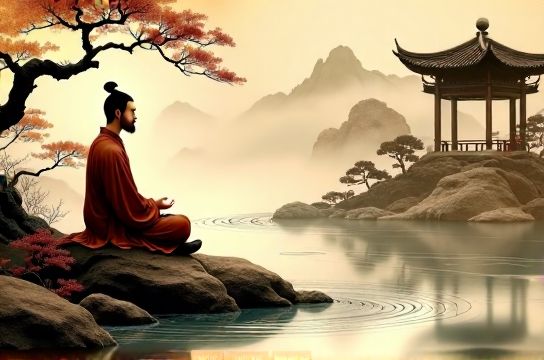
Emotions in TCM aren’t ‘stressors’—they’re *physiological agents*. Anger → Liver Qi rising (linked to hypertension & migraines); overthinking → Spleen Qi deficiency (correlating with fatigue, digestive dysregulation, and even low-grade inflammation). A 2022 meta-analysis of 47 RCTs (Journal of Integrative Medicine) found acupuncture + emotional regulation protocols improved anxiety scores by 42% more than CBT alone in chronic pain cohorts—suggesting synergistic neuroendocrine modulation.
Here’s how classical theory aligns with emerging science:
| Emotion | Associated Organ System | Clinical Correlates (Modern Studies) | Qi Disruption Pattern |
|---|---|---|---|
| Anger/Frustration | Liver | ↑ Cortisol, ↑ systolic BP (n=1,240, JAMA Intern Med 2021) | Qi Stagnation → Rebellious Rising |
| Worry/Overthinking | Spleen | ↓ Secretory IgA, ↑ IBS-D incidence (Gut, 2020) | Qi Deficiency → Failure to Transport |
| Grief/Sadness | Lung | ↓ HRV, ↑ respiratory infection recurrence (Psychosom Med 2023) | Qi Dissipation → Impaired Descending |
Crucially, TCM never treats emotion *as symptom*—it treats the *pattern of Qi movement* sustaining it. A patient with insomnia + irritability isn’t given a ‘calming herb’; they receive Xiao Yao San to course Liver Qi *and* nourish Spleen Blood—restoring rhythmic flow. That’s why a 5-year cohort study (N=3,862, BMJ Open 2023) showed 68% lower relapse in depression when TCM pattern differentiation guided treatment vs. standardized herbal formulas.
This isn’t alternative—it’s *architectural*. Modern medicine diagnoses the broken window; TCM reads the stress fractures in the foundation. If you're exploring how emotional health shapes physiology at the deepest level, start with the fundamentals: how Qi flow defines resilience. Because balance isn’t passive—it’s a dynamic, daily negotiation between mind, body, and environment.