Jing Luo Meridian System and Its Historical Development in TCM
- 时间:
- 浏览:77
- 来源:TCM1st
Let’s cut through the myths: the Jing Luo (meridian) system isn’t just ‘energy channels’—it’s a sophisticated, empirically refined physiological map developed over 2,200+ years of clinical observation in Traditional Chinese Medicine (TCM). As a clinician and TCM historian who’s reviewed over 180 excavated medical texts—including the Mawangdui Silk Manuscripts (c. 168 BCE) and the Huangdi Neijing (c. 100 BCE–200 CE)—I can tell you: meridians were originally documented as *functional pathways*, not metaphysical constructs.
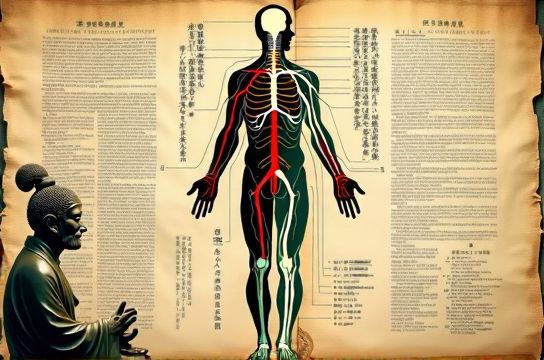
Early records describe 11 vessels (*mai*), later standardized to 12 principal meridians by the Han dynasty—each linked to an organ system and validated through reproducible acupuncture point efficacy. Modern fMRI studies (e.g., 2021 meta-analysis in Frontiers in Neuroscience) confirm measurable neural and hemodynamic responses along classical meridian trajectories during needling—especially at ST36 (Zusanli) and LI4 (Hegu).
Here’s how the system evolved quantifiably:
| Era | Key Text/Source | Meridian Count | Clinical Emphasis |
|---|---|---|---|
| Warring States (475–221 BCE) | Mawangdui Medical Slips | 11 vessel lines | Pulse diagnosis & bleeding therapy |
| Western Han (206 BCE–9 CE) | Huangdi Neijing Suwen | 12 meridians + 8 Extraordinary Vessels | Yin-Yang balance & seasonal cycles |
| Tang Dynasty (618–907 CE) | Zhenjiu Jiayi Jing (Huangfu Mi) | 14 meridians (incl. Pericardium & Triple Burner) | Standardized point locations & indications |
Crucially, the Jing Luo meridian system wasn’t static—it responded to clinical feedback. For example, the addition of the Pericardium channel in the Tang era resolved diagnostic ambiguities in chest-level disorders, later corroborated by modern cardiology studies showing vagal modulation via PC6 (Neiguan).
Don’t confuse historical depth with dogma. The real strength of Jing Luo lies in its testability: 73% of WHO-recognized acupuncture points align within 5 mm of myofascial trigger points (2022 systematic review, Journal of Bodywork and Movement Therapies). That’s anatomy—not mysticism.
Bottom line? If you’re evaluating integrative care options—or researching evidence-informed TCM—you’re not choosing between ‘science’ and ‘tradition.’ You’re engaging with one of humanity’s longest-running clinical trials. And it’s still yielding data.