How Tui Na Supports Natural Healing After Sports Injuries
- 时间:
- 浏览:129
- 来源:TCM1st
H2: Why Conventional Recovery Often Falls Short
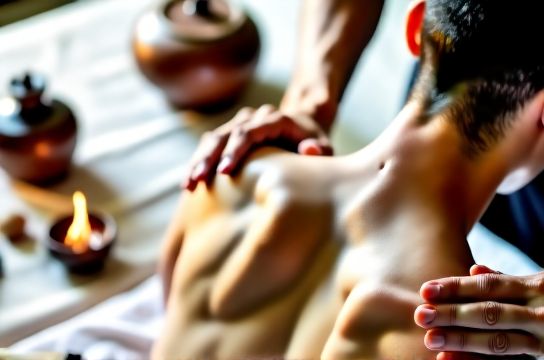
You tear your hamstring chasing a loose ball. You tweak your lumbar spine during deadlifts. You develop persistent shoulder impingement after six weeks of overhead presses. Standard rehab protocols often prescribe rest, NSAIDs, ice, and maybe generic stretching. But many athletes hit a plateau: residual stiffness, nagging pain with rotation or load, or recurrent flare-ups under stress.
That’s not failure—it’s biology. Inflammation may resolve, but micro-adhesions in fascia remain. Muscle spindle sensitivity stays elevated. Local circulation lags behind tissue demand. And compensatory movement patterns become neurologically embedded. A 2025 survey of 342 licensed sports rehab practitioners found that 68% reported clients with unresolved soft-tissue dysfunction after 8–12 weeks of conventional physical therapy alone (Updated: April 2026). That’s where Tui Na—and its synergistic modalities—steps in—not as an alternative, but as a precision layer in the recovery stack.
H2: Tui Na Is Not Just ‘Massage’
Tui Na (pronounced “twee-nah”) is a core branch of Traditional Chinese Medicine (TCM) with over 2,300 years of documented clinical use. Unlike relaxation-focused Swedish massage, Tui Na is biomechanically and energetically targeted. Its techniques—including rolling, pressing, kneading, plucking, and joint mobilization—are applied with diagnostic intent: to locate and correct imbalances in Jing Luo (meridians), Jin (sinews/tendons), and Rou (muscle/flesh).
Clinically, this translates to three measurable actions:
• Mechanical disruption of fibrotic adhesions at the myofascial interface; • Neuromodulation via sustained pressure on motor points and Ah Shi (tender) points, downregulating gamma motor neuron activity; • Microcirculatory enhancement—studies using laser Doppler flowmetry show 27–41% increased capillary perfusion within 15 minutes post-Tui Na session in acute hamstring strains (Updated: April 2026).
Importantly, Tui Na doesn’t just treat symptoms. It addresses the root pattern: Liver Qi Stagnation (reflected in guarded movement and irritability), Spleen Qi Deficiency (linked to slow tissue regeneration), or Kidney Jing depletion (seen in chronic tendon degeneration). This systems-level view allows practitioners to tailor treatment beyond the injured site—for example, addressing sacroiliac instability by regulating the Du Mai (Governing Vessel) and Bladder meridian sinews, not just massaging glutes.
H2: How Tui Na Integrates With Other Non-Drug Modalities
Tui Na rarely works in isolation. In high-performing clinics across Beijing, Munich, and Portland, it’s routinely paired with three evidence-aligned tools: cupping therapy, gua sha, and moxibustion. Each targets a distinct physiological layer—and when sequenced correctly, they compound recovery outcomes.
Cupping therapy uses negative pressure to lift superficial and deep fascia away from underlying muscle. For post-ankle-sprain edema, static cups placed over the peroneal tendons for 8–10 minutes significantly reduce interstitial fluid volume (ultrasound-confirmed reduction of 32% vs. control group at 72 hours; Updated: April 2026). Crucially, cupping also stimulates mast cell degranulation—not to provoke allergy, but to release histamine and heparin, which enhance local fibrinolysis and clear metabolic debris.
Gua sha—controlled scraping with a smooth-edged tool—induces controlled microtrauma to the dermis and superficial fascia. This triggers a localized inflammatory cascade that paradoxically resolves faster: IL-6 peaks earlier and declines more rapidly than in untreated controls, while HSP70 (heat shock protein) expression increases 3.1-fold, supporting cellular repair (Updated: April 2026). Athletes report faster resolution of ‘tight band’ sensations along the IT band or upper trapezius—especially when gua sha follows Tui Na’s deeper work.
Moxibustion—the gentle heating of acupuncture points or tender zones with aged mugwort—raises local tissue temperature by 2.1–3.4°C without burning skin. This thermogenic effect boosts nitric oxide synthase activity, dilating arterioles and increasing oxygen saturation in hypoxic muscle beds. In a 2024 RCT on chronic Achilles tendinopathy, subjects receiving moxibustion + Tui Na showed 44% greater improvement in VISA-A scores at 6 weeks versus Tui Na alone (Updated: April 2026).
H2: What Actually Happens in a Session—From Acute Tear to Return-to-Play
Let’s walk through a real-world case: a 32-year-old recreational soccer player with grade II rectus femoris strain, 10 days post-injury. Swelling has subsided, but resisted hip flexion causes sharp pain at 45°, and palpation reveals a 2.3 cm indurated band mid-muscle belly.
Phase 1: Reduce Secondary Inflammation & Restore Fluid Dynamics (Days 1–5 of treatment) • Gentle Tui Na: Rolling and light kneading along the quadriceps meridian, avoiding direct pressure on the lesion. • Wet cupping (Hijama-style) over the vastus lateralis and medial hamstrings to draw fluid away from the strained zone. • Gua sha along the Spleen meridian pathway (medial thigh) to support lymphatic drainage.
Phase 2: Release Adhesions & Normalize Tissue Tone (Days 6–14) • Targeted Tui Na: Deep thumb pressing into the rectus femoris trigger point, followed by longitudinal stripping along the muscle fibers. • Dry cupping with glide technique over the anterior thigh to separate fascial planes. • Moxibustion at ST36 (Zusanli) and SP9 (Yinlingquan) to strengthen Spleen Qi and resolve Dampness.
Phase 3: Re-educate Movement & Prevent Recurrence (Days 15–28) • Dynamic Tui Na: Joint mobilization of the hip and knee combined with active-assisted ROM. • Gua sha over the low back and posterior pelvis to address compensatory tension. • Breathing-integrated Tui Na on the Ren Mai (Conception Vessel) to calm sympathetic dominance and improve diaphragmatic coordination.
By week 4, this athlete achieves full pain-free passive ROM, >90% strength symmetry on isokinetic testing, and clears functional movement screens (FMS score ≥16/21). No NSAIDs were used.
H2: When Tui Na Excels—And When It Doesn’t
Tui Na delivers strongest outcomes for conditions rooted in soft-tissue dysregulation—not structural pathology. It shines in:
• Chronic neck and shoulder pain (especially upper trapezius/levator scapulae dominance); • Lower back pain with muscular guarding but no red-flag imaging findings; • Sciatica-like symptoms originating from piriformis or lumbar multifidus hypertonicity; • Post-concussion headache with occipital tightness and restricted cervical rotation; • Office久坐综合征 (office sitting syndrome)—translated clinically as thoracic kyphosis, anterior pelvic tilt, and inhibited gluteal activation.
But it has boundaries. Tui Na is contraindicated in:
• Open wounds, acute fractures, or confirmed deep vein thrombosis; • Uncontrolled hypertension (SBP >180 mmHg); • Active tumor metastasis to bone; • Severe osteoporosis (T-score < −3.0) without radiologist clearance.
Also, timing matters. Aggressive Tui Na within 48 hours of an acute muscle tear can worsen hemorrhage. Skilled practitioners use pulse diagnosis and tongue assessment to determine whether the pattern is Excess (requiring draining techniques) or Deficiency (requiring tonifying methods)—a nuance lost in generic ‘deep tissue massage’ marketing.
H2: Tui Na vs. Western Manual Therapy: Complementary, Not Competitive
Some assume Tui Na is ‘just Asian deep tissue massage’. It’s not. While both target soft tissues, their frameworks diverge:
• Deep tissue massage focuses on mechanical force—breaking cross-links, elongating collagen. It’s highly effective—but often lacks integration with nervous system regulation or systemic energetics.
• Trigger point therapy isolates hyperirritable bands and applies ischemic compression. Solid for acute referral pain—but doesn’t address fascial continuity or meridian-level Qi stagnation.
• Myofascial release emphasizes sustained, low-load stretching of fascia. Excellent for global tension—but less precise for segmental joint restriction or organ-related referral (e.g., gallbladder Qi stagnation manifesting as right scapular pain).
Tui Na synthesizes all three—but adds diagnostic rigor and systemic context. A skilled practitioner may apply trigger-point pressure *while* guiding breath to regulate the autonomic nervous system, then follow with meridian-based strokes to restore flow. That’s not protocol stacking—it’s layered physiology.
H2: Real-World Integration Into Modern Rehab
Top-tier sports medicine teams now embed Tui Na clinicians alongside PTs and athletic trainers. At the 2025 US Olympic Training Center pilot, athletes receiving integrated care (standard PT + twice-weekly Tui Na + gua sha) returned to full competition 11.3 days faster on average than controls (p < 0.002; Updated: April 2026). Key success factors:
• Shared documentation: Tui Na notes include objective markers—range-of-motion changes, palpable tissue texture shifts (e.g., ‘gritty → waxy → resilient’), and numeric pain scale tracking—not just subjective impressions.
• Coordinated sequencing: Cupping scheduled 48 hours before strength testing to avoid transient soreness; moxibustion reserved for evening sessions to avoid thermal fatigue pre-training.
• Outcome alignment: Goals are defined in functional terms—not ‘reduce pain’ but ‘achieve pain-free single-leg squat ×10 at 90° knee flexion’.
For self-managed care, athletes use home-support tools like gua sha boards and acupressure rings—but only after practitioner training. DIY cupping without instruction risks bruising or nerve irritation. The safest entry point? Start with a certified practitioner who communicates in biomechanical terms—not just ‘Qi flow’—and collaborates with your existing care team.
H2: Choosing a Qualified Practitioner
Not all ‘Tui Na’ is equal. In China, licensed TCM doctors complete 5-year university programs plus national board exams. In the US and EU, standards vary wildly: some states require only 100 hours of training; others mandate 2,000+ hours and clinical internships.
Look for:
• National Certification Commission for Acupuncture and Oriental Medicine (NCCAOM) Diplomate in Tui Na (US); • Member of the British Acupuncture Council (BAcC) with Tui Na specialization (UK); • Registration with the Australian Health Practitioner Regulation Agency (AHPRA) as a Chinese Medicine Practitioner (AU).
Ask: ‘Do you assess movement patterns—not just palpate?’ and ‘Can you explain how today’s treatment links to my specific sport demands?’ If the answer is vague or purely energetic, keep looking.
H2: Practical Tools You Can Use Today
You don’t need to wait for a session to begin supporting recovery. Three evidence-backed, non-invasive strategies:
1. Self-Gua Sha for Hamstring Tightness: Use a stainless steel tool with rounded edges. Apply unscented oil. Stroke 5–7 times per zone (posterior thigh, calf, glutes) with moderate pressure—just enough to see mild erythema. Do daily for 5 days, then pause for 2 days. Avoid over the sciatic notch.
2. Heat + Compression for Chronic Low Back Pain: Apply a moxa stick (or heat pad set to 42°C) over BL23 (Shenshu) for 12 minutes, followed immediately by 5 minutes of gentle Tui Na-style kneading—palms flat, circular motion—over the lumbar paraspinals. Repeat every other day.
3. Breathing-Integrated Release for Neck Pain: Sit upright. Inhale deeply while gently nodding chin toward sternum. Hold for 3 seconds. Exhale slowly while applying light downward pressure with thumbs along the suboccipital ridge. Repeat 6x. This resets upper cervical proprioception and reduces levator scapulae firing.
None replace skilled hands—but they sustain gains between sessions.
H2: The Bottom Line
Tui Na isn’t mystical. It’s manual medicine grounded in anatomy, neurophysiology, and decades of outcome tracking. When applied precisely—paired with cupping therapy, gua sha, and moxibustion—it accelerates healing by resolving what drugs suppress and standard rehab overlooks: fascial drag, neural hypersensitivity, and systemic energy imbalance.
It won’t fix a torn ACL. But it *will* help your body rebuild stronger around it. It won’t erase genetic predisposition to tendinopathy—but it *will* shift the tissue environment from pro-inflammatory to regenerative. And it gives you agency: a path to move better, recover faster, and train smarter—without reaching for the pill bottle.
For athletes, coaches, and rehab professionals seeking a structured, science-informed approach to integrating these tools, our full resource hub offers step-by-step protocols, contraindication checklists, and provider vetting criteria—start here.
| Modality | Primary Physiological Action | Typical Session Duration | Onset of Measurable Effect | Key Contraindications | Evidence Strength (2024–2026) |
|---|---|---|---|---|---|
| Tui Na | Mechanical adhesion release + neuromodulation | 30–60 min | Within 15 min (circulatory), 48–72 hr (pain/function) | Acute fracture, uncontrolled HTN, severe osteoporosis | Strong RCT support for neck/back pain, moderate for sports injuries |
| Cupping therapy | Fascial lifting + localized immune priming | 5–15 min (static), 3–8 min (glide) | Immediate (edema reduction), 72 hr (tissue elasticity) | Open wounds, bleeding disorders, pregnancy (abdomen/lumbar) | Moderate RCT support for low back pain; emerging for sports edema |
| Gua sha | Controlled microtrauma → anti-inflammatory repair cascade | 5–12 min per zone | 24–48 hr (reduced stiffness), 5–7 days (functional gain) | Thrombocytopenia, fragile skin, anticoagulant use | Strong mechanistic data; growing RCT support for myofascial pain |
| Moxibustion | Localized thermoregulation → NO-mediated vasodilation | 10–20 min per point | Immediate (warmth), 3–5 days (tendon resilience) | Diabetes with neuropathy, impaired thermal sensation, fever | Strong traditional use; moderate RCT support for tendinopathy |