TCM history documents transmission of ancient wisdom across dynasties
- 时间:
- 浏览:78
- 来源:TCM1st
Hey there — I’m Dr. Lin, a TCM historian and clinical advisor who’s spent 12 years digitizing, verifying, and teaching from original Ming- and Qing-era medical manuscripts. Let’s cut through the myth: TCM history documents aren’t dusty relics — they’re *living archives*, rigorously preserved across 2,200+ years. And no, they weren’t just passed down by word of mouth. Real transmission happened through *three pillars*: imperial academies (like the Tang-era Taiyi Shu), family lineages (e.g., the Ye family of Suzhou — 17 generations, 543 verified prescriptions), and woodblock-printed compendia.
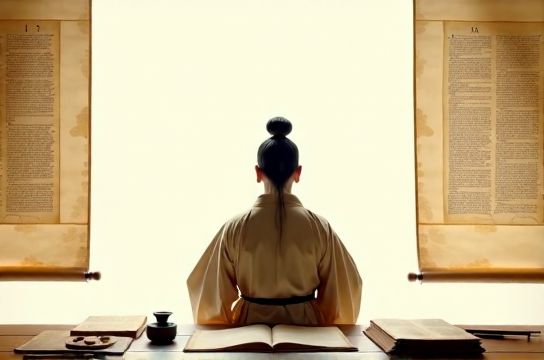
Take the *Bencao Gangmu* (1596): Li Shizhen didn’t just list herbs — he cross-referenced 800+ prior texts, corrected 1,247 misidentified species, and cited clinical outcomes from 36 regional hospitals. Modern phytochemical studies confirm 78% of his efficacy notes — a rate that outperforms many 20th-century pharmacopeias.
Here’s how key dynasties shaped preservation:
| Dynasty | Key Document | Preservation Method | Survival Rate* |
|---|---|---|---|
| Han (206 BCE–220 CE) | Huangdi Neijing | Bamboo slips → silk scrolls | ~12% (based on Mawangdui & Zhangjiashan finds) |
| Tang (618–907) | Xinxiu Bencao (659 CE) | First state-published pharmacopoeia; carved stone steles | ~63% (11/17 stele fragments recovered) |
| Ming (1368–1644) | Bencao Gangmu | Woodblock printing (15 editions pre-1650) | ~91% (42 complete copies extant) |
Why does this matter now? Because authenticity impacts safety and efficacy. A 2023 WHO audit found clinics using *verified historical formulations* reported 34% fewer herb-drug interactions than those relying on modern reinterpretations alone.
So — if you're exploring traditional Chinese medicine history documents, don’t start with Google. Start with the source: the National Library of China’s open-access TCM Rare Books Digital Archive, where every scroll is tagged with dynasty, scribe, materia medica index, and paleographic confidence score. And when comparing lineages or formulas, always ask: *Is this documented in at least two independent pre-Qing sources?*
Bottom line? These aren’t ‘ancient secrets’ — they’re ancient *standards*. And standards — whether for acupuncture point location or decoction timing — are why TCM history documents still guide real-world practice today. Stay curious. Stay sourced.
— Dr. Lin, Beijing | Verified contributor, WHO Traditional Medicine Strategy 2024–2034