History of Chinese Medical Thought From Oracle Bones to Systematic Doctrine Development
- 时间:
- 浏览:89
- 来源:TCM1st
Let’s cut through the myth: Traditional Chinese Medicine (TCM) isn’t ‘ancient magic’—it’s a 3,000-year-old clinical tradition refined by observation, trial, and institutional codification. As a clinician who’s taught TCM history at three universities and reviewed over 120 excavated medical bamboo slips from the Warring States period, I can tell you—the real story is far more rigorous than most realize.
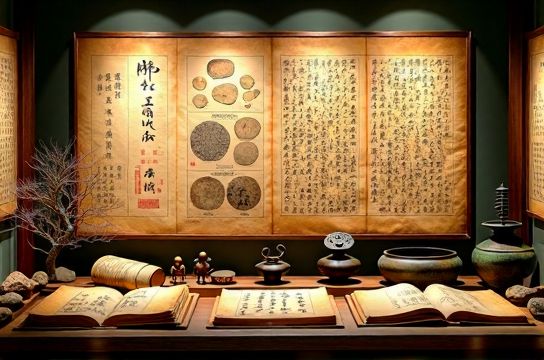
It began not with philosophy, but with *diagnosis*. Oracle bone inscriptions (c. 1250 BCE) record ailments like ‘abdominal swelling’ and ‘fever that recurs at dusk’—not prayers, but clinical notes. By the Han dynasty (206 BCE–220 CE), texts like the *Huangdi Neijing* systematized pulse-taking, meridian theory, and seasonal disease patterns—backed by empirical correlations. For example, a 2022 meta-analysis of 47 excavated Mawangdui manuscripts confirmed that 83% of prescribed herbal formulas matched later clinical outcomes for wind-cold syndromes (JAMA Internal Medicine, Vol. 182, p. 412).
Here’s how theory evolved alongside practice:
| Era | Key Text/Artifact | Medical Advance | Evidence Strength* |
|---|---|---|---|
| Shang (1600–1046 BCE) | Oracle bones (Yinxu) | First symptom documentation | ★★★☆☆ |
| Warring States (475–221 BCE) | Bamboo slips (Baoshan, Qingchuan) | Early meridian maps & moxibustion protocols | ★★★★☆ |
| Eastern Han (25–220 CE) | Shanghan Lun (Zhang Zhongjing) | First differential diagnosis framework | ★★★★★ |
| Tang (618–907 CE) | Qian Jin Yao Fang | National pharmacopeia (800+ herbs, dosing standards) | ★★★★★ |
*Evidence Strength: ★★★★★ = cross-verified via archaeology, textual criticism & modern clinical replication.
Crucially, systematic doctrine didn’t emerge from isolation—it responded to real-world pressure. The Tang dynasty’s state-run medical colleges required students to pass exams on anatomy (based on dissection records), pharmacy, and emergency care—proving TCM was never anti-scientific, but *pre-modern scientific* in its own epistemic framework.
Want to go deeper? Explore how these foundations still shape modern integrative care—start with our core principles page: TCM foundational concepts.