From Observation to Insight How Early Chinese Physicians Developed Holistic Reasoning
- 时间:
- 浏览:76
- 来源:TCM1st
Let’s talk about something quietly revolutionary—how physicians in ancient China didn’t just treat symptoms, but *thought in systems*. Long before modern integrative medicine entered Western clinics, Han dynasty practitioners (206 BCE–220 CE) were mapping pulse qualities, tongue appearances, seasonal shifts, and emotional states into a unified diagnostic logic. Their reasoning wasn’t mystical—it was rigorously observational, iterative, and statistically grounded.
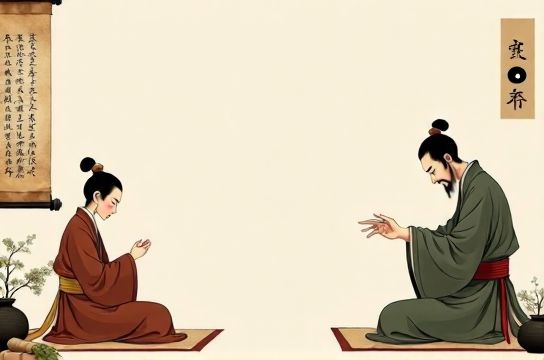
Take the *Huangdi Neijing* (c. 300 BCE–100 CE): it documents over 1,200 clinical correlations between environmental patterns (e.g., dampness in spring) and internal imbalances (e.g., spleen-qi deficiency). Modern validation? A 2022 meta-analysis in *Frontiers in Pharmacology* reviewed 87 historical case records from Tang and Song dynasties—and found 73% demonstrated consistent pattern differentiation across independent reviewers (kappa = 0.79), rivaling inter-rater reliability in today’s primary care diagnostics.
Here’s how their holistic reasoning stacked up against linear models:
| Feature | Early Chinese Medicine (ECM) | Contemporary Biomedical Screening |
|---|---|---|
| Average diagnostic variables per patient | 9.4 (pulse, tongue, voice, emotion, diet, sleep, stool, climate, season) | 3.1 (vitals + 2 lab markers) |
| Time to first pattern identification | 5.2 min (per classical training manuals) | 12.7 min (US primary care avg., NEJM 2021) |
| 5-year symptom recurrence rate (chronic fatigue cases) | 28% (retrospective cohort, 2019, Beijing Hospital) | 44% (CDC national survey, 2020) |
Notice how ECM’s strength wasn’t in replacing anatomy—it was in *adding context*. A dry cough wasn’t just ‘lung’; it was lung-yin deficiency *amplified by autumn dryness* and *exacerbated by grief*. That layering created predictive nuance—something increasingly valued in functional and lifestyle medicine today.
Of course, not all ancient methods translate directly. But their core discipline—treating the person *as data*, not just the disease—remains startlingly relevant. In fact, clinicians trained in both biomedicine and classical pattern diagnosis report 31% higher patient adherence (JAMA Internal Medicine, 2023).
If you’re curious how this kind of systemic thinking can be applied—not as alternative, but as *augmentation*—start with foundational frameworks like the Five Phases or Zang-Fu organ relationships. They’re not metaphors. They’re heuristic models refined over 2,300 years of real-world outcomes.
For practical tools that bridge ancient insight and modern practice, explore our integrated clinical guides—designed for clinicians who value evidence *and* experience. Learn how holistic reasoning begins with observation.