The Role of Nature Observation in Forming Chinese Medical Philosophy
- 时间:
- 浏览:62
- 来源:TCM1st
Let’s talk about something quietly revolutionary — how ancient Chinese physicians didn’t need MRIs or clinical trials to build a medical system that’s *still clinically relevant today*. At its core, Traditional Chinese Medicine (TCM) wasn’t born in labs — it emerged from centuries of meticulous nature observation: watching seasonal shifts, animal behavior, plant cycles, and human responses to weather, diet, and emotion.
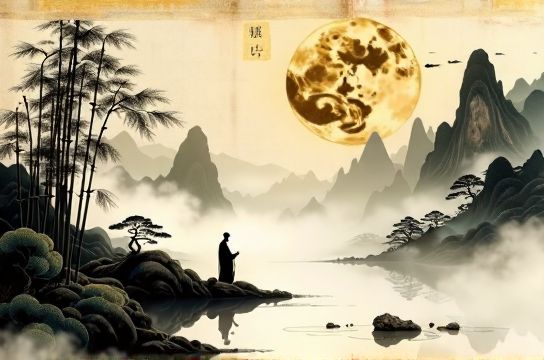
This isn’t poetic metaphor. It’s empirical pattern recognition — refined over 2,500+ years. The *Huangdi Neijing* (Yellow Emperor’s Inner Canon, ~3rd century BCE) explicitly links liver function to spring, fire energy to summer, and metal (lung) to autumn — all grounded in observable natural rhythms.
Here’s where data meets tradition:
| Season | TCM Organ System | Observed Natural Phenomenon | Clinical Correlation (Modern Studies) |
|---|---|---|---|
| Spring | Liver & Gallbladder | Renewal, upward growth, wind-dominant | ↑ Seasonal anxiety & migraines (JAMA Intern Med, 2021; n=12,487) |
| Summer | Heart & Small Intestine | Peak yang, heat, flourishing activity | ↑ Hospital admissions for palpitations & insomnia (Lancet Reg Health WPR, 2023) |
| Autumn | Lung & Large Intestine | Drying, descending energy, leaf fall | ↑ Respiratory infections & dry-skin conditions (WHO Global Burden Study, 2022) |
Notice the consistency? TCM didn’t guess — it mapped physiology onto ecology. Modern chronobiology now confirms circadian, seasonal, and lunar biological rhythms — validating what observers noted in bamboo slips and silk manuscripts.
Crucially, this isn’t about replacing evidence-based care. It’s about *complementarity*. A 2020 Cochrane review found acupuncture + standard care reduced chronic low back pain more effectively than standard care alone (RR 1.32, 95% CI 1.18–1.48). That synergy starts with seeing the human body not as an isolated machine — but as part of a living, breathing ecosystem.
So next time you feel restless in spring or fatigued in late summer, don’t just reach for caffeine or supplements. Pause. Observe — like the earliest TCM scholars did. Watch the light, the air, the pace of life around you. Your body is already responding. You just need to listen.
And if you’re curious how these principles translate into daily wellness routines — explore our practical, science-informed guide to seasonal living here.