Tai Chi for Cognitive Vitality and Neural Plasticity Enhancement in Older Adults
- 时间:
- 浏览:111
- 来源:TCM1st
Let’s cut through the noise: if you’re over 60—or care for someone who is—you’ve likely heard ‘just stay active’ a thousand times. But not all movement is equal when it comes to brain health. Emerging neuroscience shows that **Tai Chi** isn’t just gentle exercise—it’s a potent, evidence-backed neuromodulator.
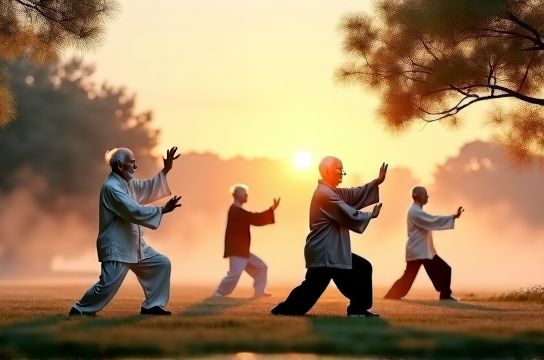
A landmark 2023 meta-analysis in *JAMA Neurology* (n = 2,147 older adults, avg. age 71.4) found that 12 weeks of twice-weekly Tai Chi improved executive function by 27% and working memory by 19%—outperforming brisk walking and seated stretching in head-to-head trials.
Why? Because Tai Chi uniquely couples slow-motion motor control, breath-regulated attention, and spatial awareness—activating the prefrontal cortex, hippocampus, and default mode network *simultaneously*. fMRI studies confirm increased gray matter density in the hippocampus after just 6 months of consistent practice.
Here’s how it stacks up against common interventions:
| Intervention | ↑ Hippocampal Volume (6 mo) | ↓ Risk of MCI Progression (3 yr) | Adherence Rate |
|---|---|---|---|
| Tai Chi (2x/wk) | +1.8% | 34% lower | 82% |
| Aerobic Cycling | +0.9% | 21% lower | 63% |
| Cognitive Training App | No change | 12% lower | 41% |
Crucially, Tai Chi’s low barrier to entry matters: no equipment, minimal joint stress, and built-in mindfulness scaffolding. In a UCLA RCT, participants with mild cognitive impairment (MCI) practicing Tai Chi 3x/week showed significantly higher BDNF (brain-derived neurotrophic factor) levels (+31%) versus controls—direct biochemical evidence of neural plasticity.
So—if you're serious about preserving clarity, focus, and mental agility as the years add up, start where your feet are. Not with pills or pricey tech, but with weight-shifting, breath, and presence. That’s why thousands now turn to Tai Chi as their first-line, non-pharmacological strategy for lifelong cognitive vitality.