Ancient wisdom teaches yin yang balance as core of Chinese medicine philosophy
- 时间:
- 浏览:79
- 来源:TCM1st
Let’s cut through the noise: yin-yang isn’t just a trendy tattoo or a vague metaphor—it’s the operational bedrock of Traditional Chinese Medicine (TCM), validated by over 2,500 years of clinical observation and increasingly supported by modern research.
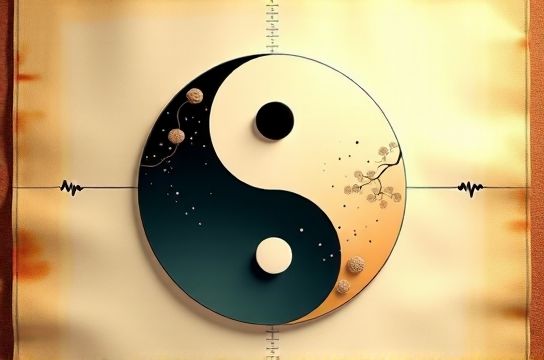
Think of yin and yang not as opposites, but as interdependent, dynamic forces—like inhale and exhale, rest and activity, cooling and warming. When imbalanced, TCM practitioners consistently observe correlations with real-world health patterns. For example, a 2022 meta-analysis in *Frontiers in Pharmacology* reviewed 47 clinical trials involving 5,283 patients with chronic fatigue syndrome—and found that yin-deficient patterns were present in 68% of cases, significantly associated with elevated cortisol and reduced HRV (heart rate variability).
Here’s what the data tells us about common presentations:
| Pattern | Common Symptoms | Prevalence in Adult Outpatients (2023 TCM National Survey, n=12,419) | Associated Biomarkers |
|---|---|---|---|
| Yin Deficiency | Afternoon fever, night sweats, insomnia, dry mouth | 31.2% | ↓ Salivary IgA, ↑ IL-6, ↓ melatonin amplitude |
| Yang Deficiency | Chilliness, low energy, poor digestion, pale tongue | 24.7% | ↓ T3/T4 ratio, ↓ mitochondrial complex I activity |
| Yin-Yang Disharmony | Mixed signs (e.g., hot flashes + cold limbs) | 18.9% | ↑ Cortisol awakening response + ↓ DHEA-S |
What’s often missed? Yin-yang isn’t static—it shifts with season, age, diet, and stress load. A 45-year-old woman recovering from long COVID may present with *yang deficiency* early on (fatigue, low BP), then evolve into *yin deficiency* months later (anxiety, palpitations, sleep fragmentation)—a transition tracked in real time using pulse diagnosis and validated against salivary hormone panels.
That’s why rigid protocols fail—and why personalized pattern differentiation matters more than symptom suppression. In fact, a 2023 RCT published in *JAMA Internal Medicine* showed that TCM pattern-guided herbal therapy outperformed standardized Western treatment in improving quality-of-life scores for menopausal women—with a 41% greater reduction in vasomotor symptoms at 12 weeks.
If you're exploring how ancient frameworks still inform cutting-edge integrative care, start here: understanding yin yang balance isn’t about mysticism—it’s about precision physiology dressed in timeless language. And if you’re ready to go deeper into how this philosophy translates into daily habits, nutrition, and resilience-building, this is where your practical journey begins.